
Storm cleanup companies in Dallas Fort Worth Metro, TX field calls year-round, from spring hail outbreaks to winter ice events that snap limbs onto roofs. Knowing what's covered, how the cleanup process unfolds, and when a professional needs to inspect your property can mean the difference between a quick repair and a drawn-out insurance fight. Here's what actually happens once the storm passes.
Types of Storm Damage DFW Storm Cleanup Companies Handle
DFW storms rarely bring just one problem. A single front can combine wind, hail, tree impact, and in winter, ice damage, all in the same event. Knowing which category your property faces helps determine the right response.
Roof & Wind Damage
Straight-line winds and sudden downbursts are common across DFW, and they don't need to reach tornado strength to cause real roof damage. Wind can lift shingles, peel back flashing, and loosen siding panels. Some shingle damage is obvious from the ground. A lot of wind damage hides along ridgelines, vents, and seams, where leaks start quietly weeks later.
Hail Damage
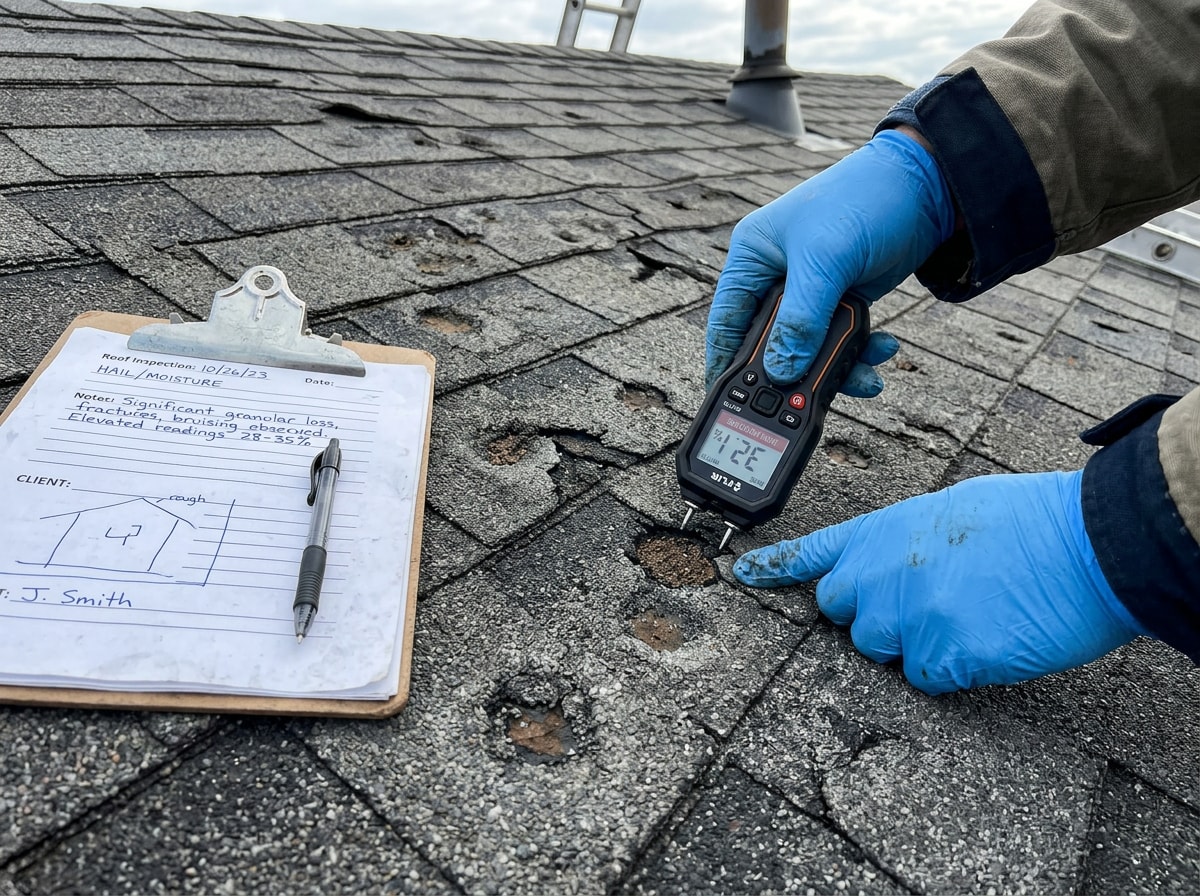
Hail is one of the most frequent storm concerns in North Texas, hitting roofing, gutters, HVAC condenser fins, and vehicles alike. The region sits inside an active hail corridor, and the risk is not theoretical: a record-large hailstone measuring 7.1 inches in diameter was discovered by storm chasers in the Texas Panhandle in June 2024 , confirmed by NOAA and partner researchers. A professional roof inspection after any sizable hail event is the only reliable way to catch bruised shingles before they fail.
Tree & Debris Impact
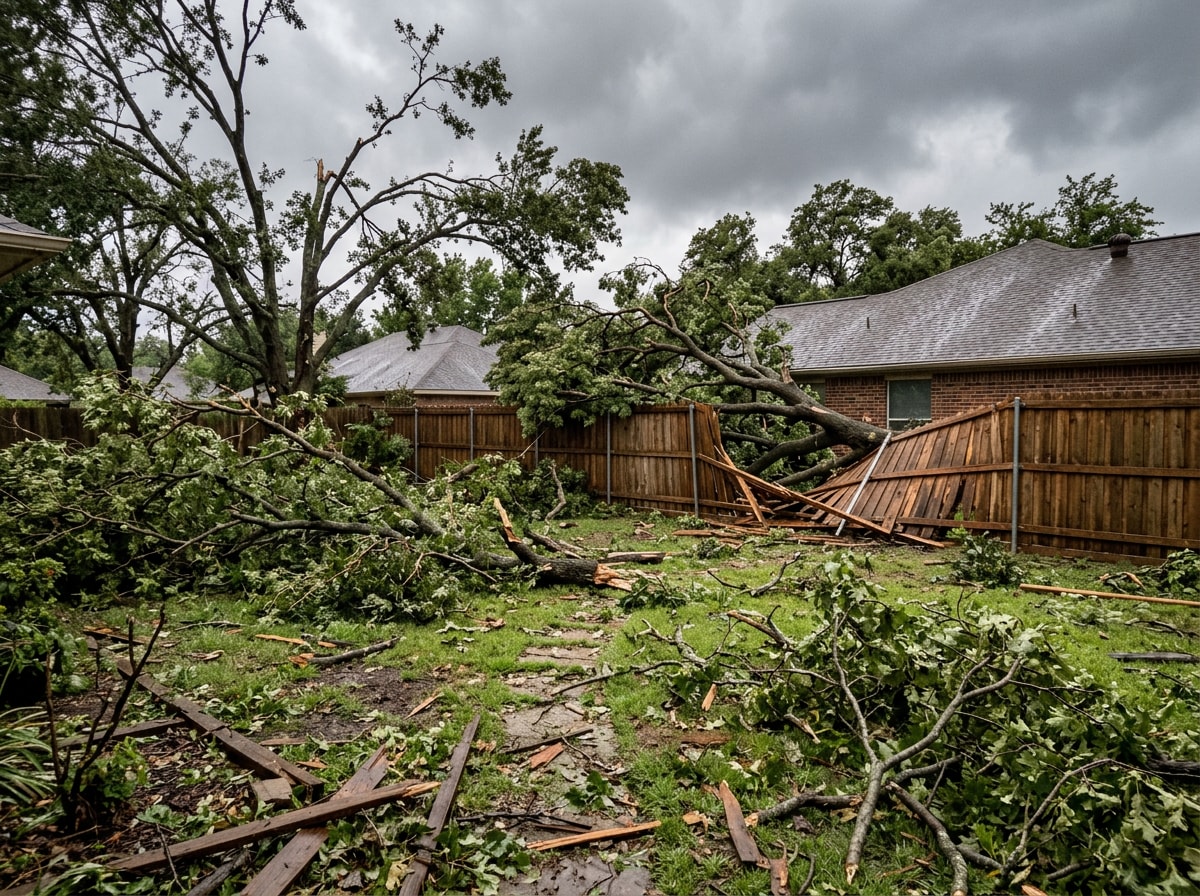
Fallen trees and heavy limbs cause some of the most visible storm damage homeowners deal with. They crack roof decking, crush fences, and dent vehicles parked below. Even a glancing tree impact can shift a roofline enough to create a leak path. Storm debris left scattered across a yard also hides secondary hazards like splintered wood and exposed nails.
Ice Storm Damage
Winter storm events bring their own risks. Ice-laden limbs grow heavy enough to snap onto roofs, decks, and power lines, while freezing temperatures threaten frozen pipes in poorly insulated walls or attics. Ice storm damage often shows up in two waves: immediate impact damage, then plumbing failures once temperatures climb back above freezing.
What to Do Immediately After a Storm (Emergency Checklist)
Safety comes before cleanup every time. Follow these steps in order:
- Stay clear of downed power lines. Treat every line as live and call the utility company instead of approaching it.
Be aware of the risk of electrocution and do not touch electrical equipment if it is wet or if you are standing in water.
- Photograph damage before touching anything. Early photos give your insurer a timestamped record to support the claim.
- Avoid entering structures with visible roof sag, cracked walls, or standing water near electrical panels.
- Walk the property only if it's clearly safe to do so.
- Contact your insurance carrier to open a claim, then schedule a professional assessment through our contact page.
Our Storm Damage Cleanup Process
A structured cleanup process catches damage that's easy to miss and keeps documentation organized for insurance. It generally runs through three stages: assessment, debris removal, and repair.
Assessment & Damage Documentation
A thorough damage assessment starts with a full walkthrough of the roof, siding, landscape, and outbuildings, not just the obvious impact points. Technicians check attics, flashing, and gutter lines for hidden damage that isn't visible from the ground. Every stage gets photographed to build the documentation an adjuster will need, which speeds up claim approval later. For water intrusion found during the walkthrough, a water damage inspection confirms how far moisture has traveled behind walls and under flooring.
Debris Removal, Repairs & Restoration
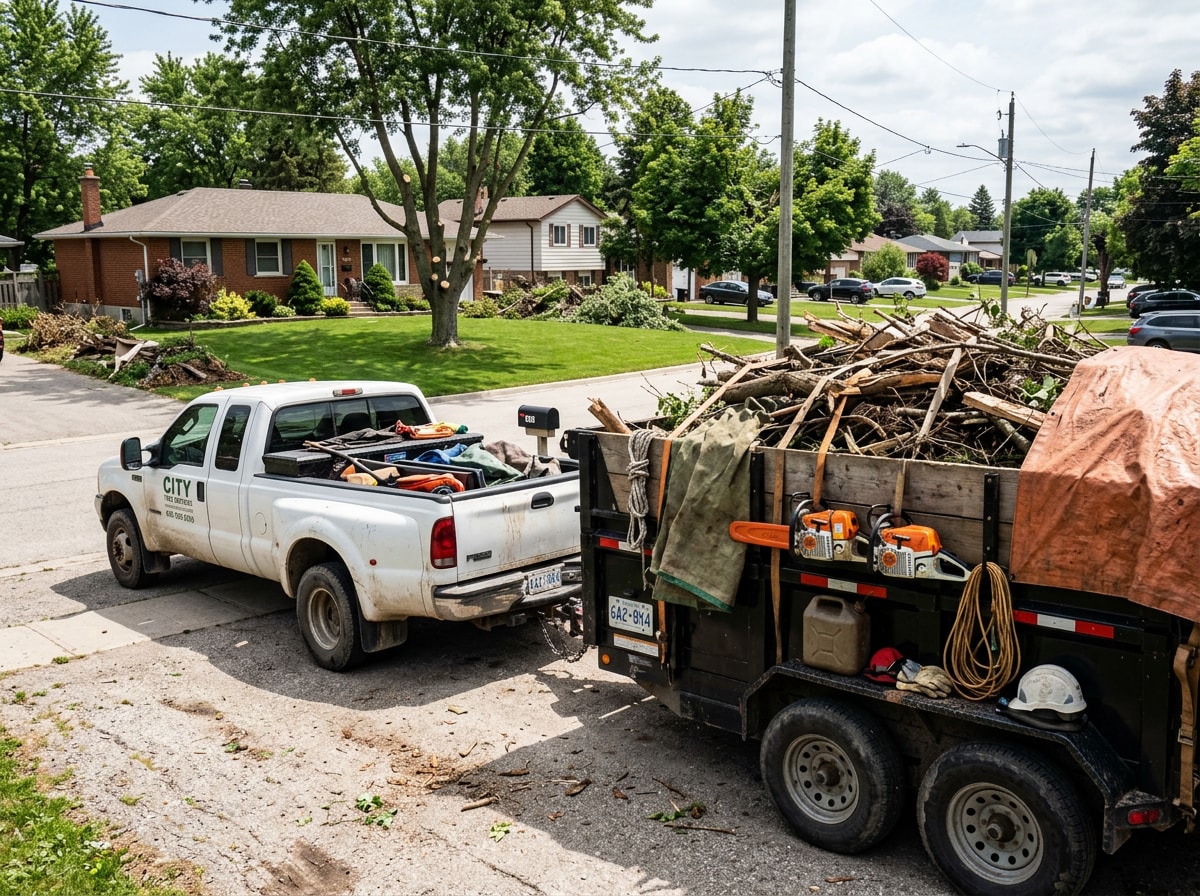
Once the assessment is complete, crews move into tree and debris removal, clearing hazards before any repair work starts. From there, the scope shifts to repair work, patching or replacing roofing, siding, and fencing, followed by structural drying services if wind-driven rain reached the interior. Larger jobs often move into full reconstruction; you can see that side of the work on our general contractors page.
Storm Debris Clean-Up: What Gets Hauled, What Gets Repaired
Not all storm debris gets cleared the same way:
- Tree limbs and branches are typically cut, hauled, and chipped as green waste.
- Torn roofing material, siding, and fencing get bagged separately for disposal.
- Downed power lines or gas-adjacent debris require utility coordination before any crew can safely approach, which is different from a straightforward debris haul on a clear lot.
- Wind-blown furniture and patio items usually get sorted last, once hazards are confirmed clear.
Why Prompt Storm Debris Cleanup Matters
Waiting on storm debris cleanup rarely saves money. Exposed roof decking lets water intrude with every additional rain, and trapped moisture under debris can start mold growth within a day or two in Texas humidity. Acting quickly limits secondary damage to insulation and drywall and keeps a small repair from turning into a larger one. If moisture has already settled in, moisture control) and a follow-up mold inspection close that gap before growth spreads.
Storm Damage and Your Insurance
Coverage depends on the peril, not just the fact that a storm occurred. Damage from windstorms, hail, lightning, and similar perils is generally covered under homeowners insurance, while damage from floods is not. That distinction matters in DFW, where a single storm can bring both wind damage and street flooding in the same afternoon.
| Damage Type | Typically Covered by Homeowners Insurance? | Notes |
|---|---|---|
| Wind (shingles, siding) | Yes | Confirm if your policy has a separate wind/hail deductible |
| Hail | Yes |
Hail-prone areas often carry a specific hail damage deductible
| Fallen tree on structure | Usually yes | Coverage depends on what caused the tree to fall |
| Ground flooding | Usually no |
Flood insurance is provided separately through the federal flood insurance program
| Frozen/burst pipes | Often yes | Depends on whether the home was reasonably maintained and heated |
Confirming these details with your agent before cleanup begins is the safest way to avoid coverage surprises. For storms that bring interior flooding along with wind damage, our water remediation process guide breaks down how that side of a claim typically works.
We respond to storm calls across the metro, including Dallas, Fort Worth, Arlington, Plano, and Irving, as well as the broader Dallas Fort Worth Metro area. If high winds were the main culprit, our wind damage cleanup guide covers shingle, siding, and fence damage specific to that peril.
Ready to get a property assessed? Request a consultation and a technician will walk the roof, attic, and exterior before any work starts.
FAQ
What Should I Do Immediately After Storm Damage?
Confirm the property is safe, avoid downed lines or unstable structures, and photograph the damage before touching anything. After that, contact your insurer and a cleanup crew for an assessment as soon as it's reasonably possible.
Does Insurance Cover Storm Damage Restoration?
Most homeowners and commercial policies cover sudden damage from wind, hail, and fallen-tree impact, though coverage details vary by carrier and policy type. Flood damage is handled separately through federal flood insurance, not a standard homeowners policy. Confirming your specific policy terms with your agent before cleanup begins is the safest way to avoid coverage surprises.
How Much Does Storm Damage Restoration Cost?
Cost depends on severity, the volume of debris removal needed, and how much structural repair the job requires. A roof with a few displaced shingles costs far less to address than one with a fallen tree through the decking. A documented assessment early on is the best way to estimate realistic costs for your situation.
How Long Does Storm Damage Restoration Take?
Emergency stabilization, like tarping a roof or clearing immediate hazards, usually happens within a day or two. Full restoration length depends on scope. Straightforward debris cleanup might wrap in under a week, while major roof or structural repairs tied to an insurance claim can take several weeks from approval to completion.
What's the Difference Between Storm Repair and Storm Cleanup?
Cleanup refers to debris removal and hazard clearing right after the event. Repair is the construction work that follows, patching or replacing roofing, siding, fencing, and any interior damage caused by water intrusion. Most jobs need both, usually in that order.
Can Storm Damage Lead to Mold Growth?
Yes, if water gets behind siding, under roofing, or into drywall and isn't dried quickly. Humid North Texas summers accelerate that timeline, which is why a moisture check often follows any storm job that involved water intrusion.
---
Written by a member of the restoration team at Spotless Restoration USA, an IICRC-trained crew that responds to wind, hail, and tree-damage calls across the Dallas Fort Worth Metro area. In two consecutive storm seasons working DFW roofs and yards, the pattern holds steady: properties documented and tarped within 48 hours settle insurance claims faster than those left exposed for a week. Questions about a specific property? Contact us or visit the homepage to see the full range of services.