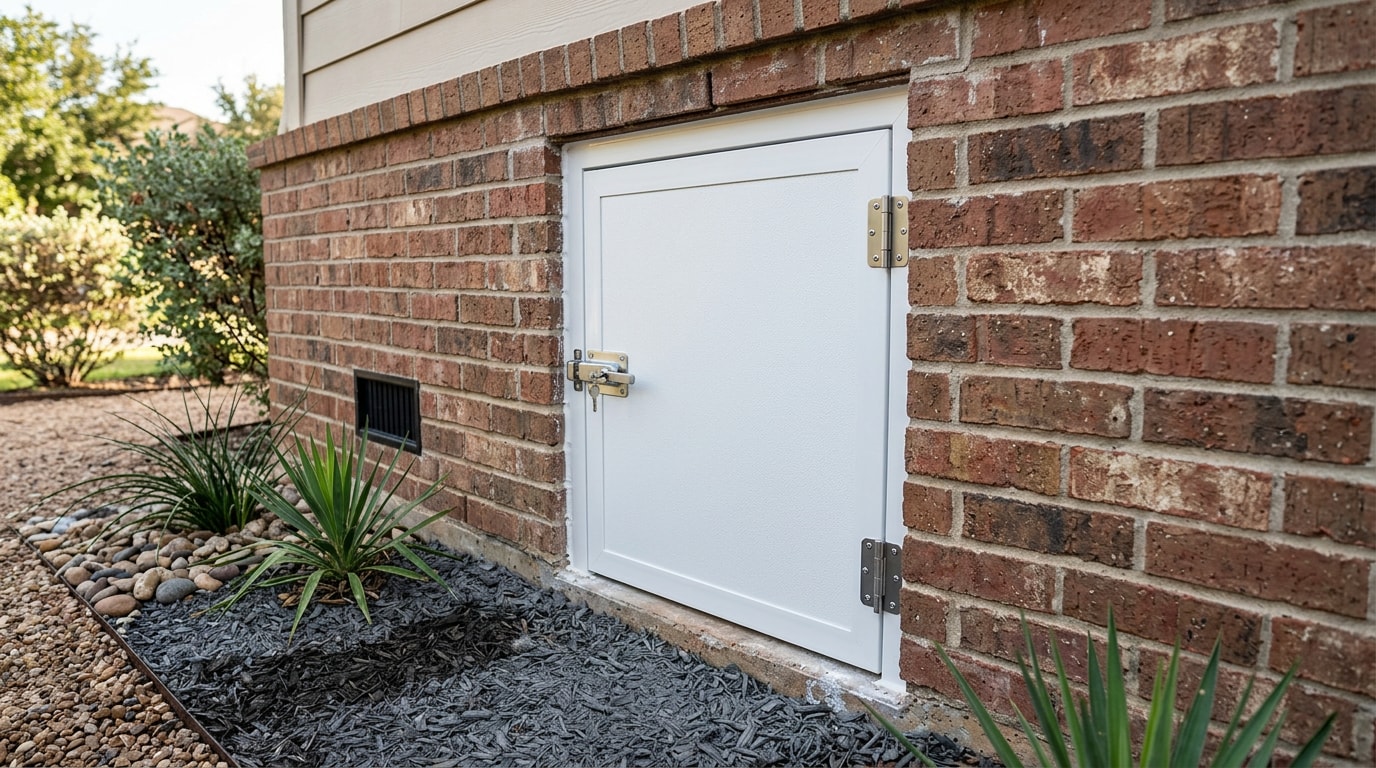
Crawlspace restoration in Arlington, TX usually starts with one of three complaints: a musty smell upstairs, a soft spot in the floor, or standing water after a storm. Arlington's clay-heavy soil swells and shrinks with every heavy rain, and that movement is hard on foundation vents, vapor barriers, and the framing underneath your home. Here's what causes the damage, how it gets fixed, and what the project typically costs.
On inspections across Arlington neighborhoods like South Davis, Pantego, and the Lake Arlington area, we see the same pattern over and over: a vapor barrier torn during old plumbing work and never replaced, left to quietly feed moisture into the floor system for years. That's the kind of damage that doesn't show up until someone finally crawls under the house to look.
Common Crawl Space Problems in Arlington Homes
Most crawl space problems trace back to one of four sources: groundwater seepage, poor drainage around the foundation, inadequate ventilation, or a vapor barrier that's torn or missing. Heavy North Texas rain pushes moisture through foundation walls and dirt floors, and once that moisture is trapped, trouble follows fast.
A quick self-check helps narrow down what's happening:
- A musty smell usually points to crawl space mold or trapped humidity.
- A sagging or bouncy floor often signals structural damage to joists or supports.
- Droppings or shredded insulation mean pests have moved in.
- Standing water or dark staining on framing is a clear sign of water damage.
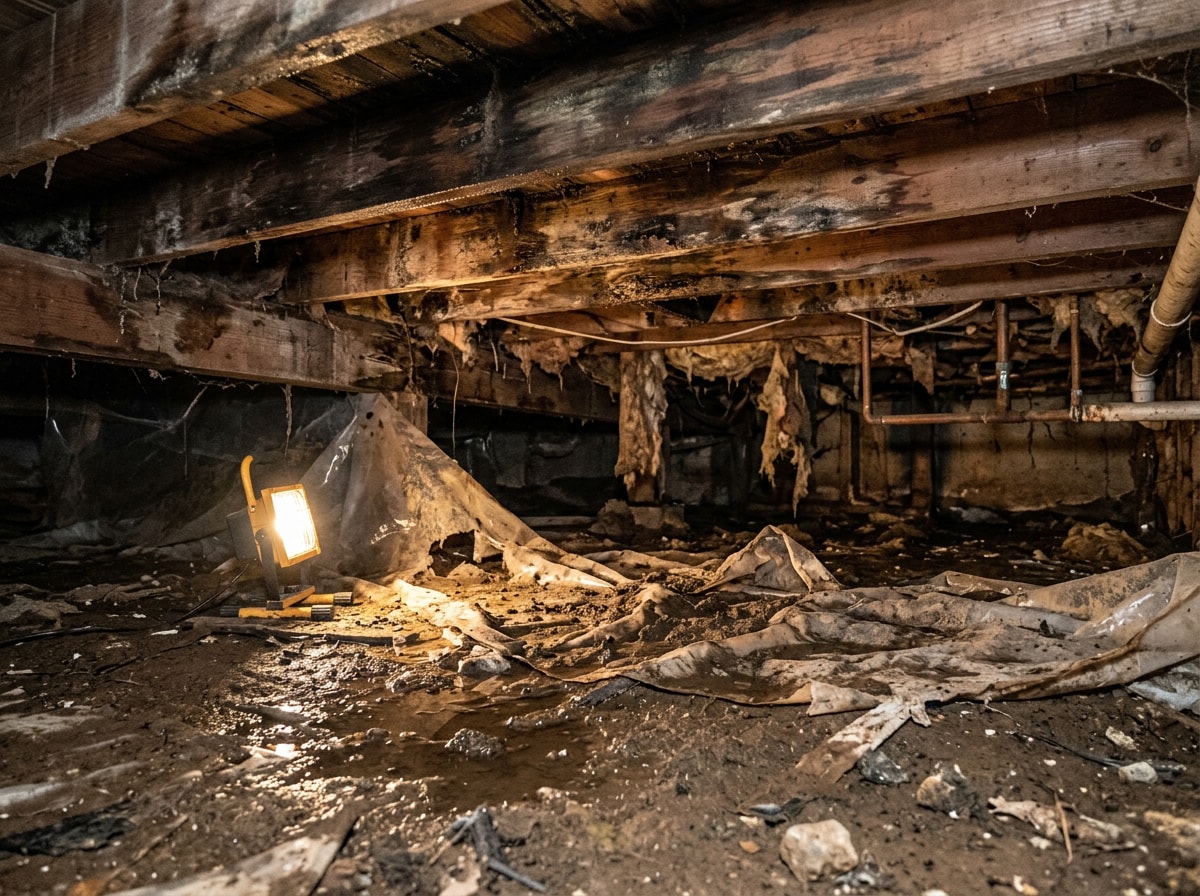
These signs rarely show up alone, which is why repair has to address the supports, the wood, and the water together. Crawl spaces where relative humidity is high are common sites of hidden mold growth, and ground water may enter a crawl space where the water table is high and weather conditions are suitable , according to the EPA's mold course. If you're noticing any of these signs, schedule an inspection before the damage spreads to the floor system above.
Crawl Space Restoration Solutions
Once the cause is identified, most Arlington crawl space restoration projects combine four elements: sealing out moisture, correcting structural issues, controlling humidity, and re-insulating, scaled to the damage found. Our mold removal and moisture control services and water damage restoration team typically work together on these projects, since moisture, mold, and structural repair are rarely separate problems once you're under the house.
Crawl Space Encapsulation
Full encapsulation is a system, not a single product. It combines a sealed vapor barrier, closed vents, rim joist insulation, and a dehumidifier working together to control moisture and humidity. A basic vapor barrier, by contrast, is just a ground liner that ignores air leaks and humidity swings.
| Feature | Vapor Barrier Only | Full Encapsulation System |
|---|---|---|
| Moisture control | Ground only | Ground, air, and vents |
| Air sealing | None | Vents and rim joists sealed |
| Humidity control | Not addressed | Dehumidifier-maintained |
| Typical cost | Lower | Higher, more comprehensive |
| Expected lifespan | 5-10 years | 15-20+ years |
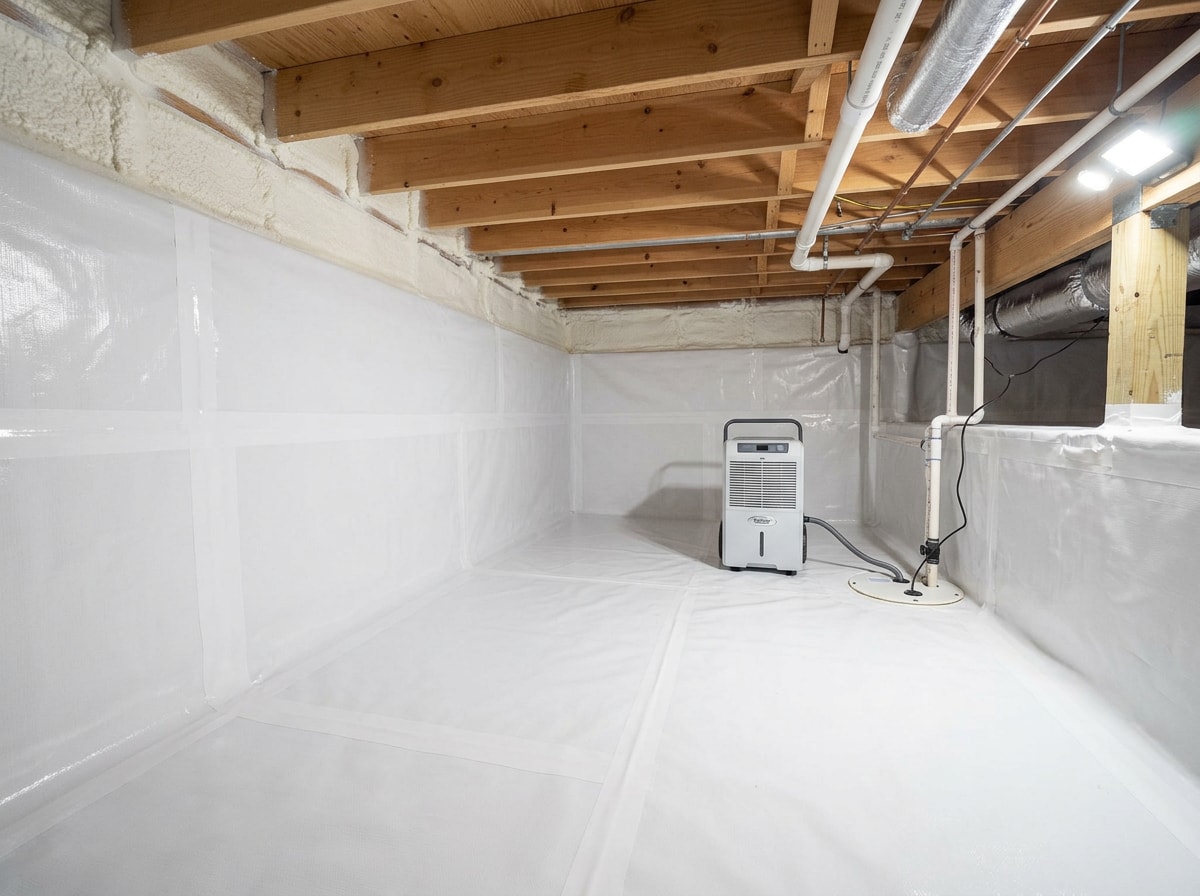
For most North Texas homes, the full encapsulation system delivers better long-term results. Sealing and insulating a crawl space can also cut energy loss through the floor: EPA estimates that homeowners can save an average of 15% on heating and cooling costs by air sealing their homes and adding insulation in attics, floors over crawl spaces, and basements , according to ENERGY STAR's air sealing guidance. See our moisture control services and mold remediation services for details on how encapsulation fits into a full restoration plan.
Structural Supports & Dehumidification
Sagging floors and shifting piers call for structural support work, typically pier and beam repair using adjustable steel or concrete supports that reinforce framing against shifting clay soil. For homes with more extensive framing damage, this can overlap with our home reconstruction services.
Structural repair alone doesn't solve long-term moisture. Pairing it with dehumidifier installation keeps humidity steady year-round, which reduces wood rot and mold regrowth. Encapsulation and dehumidification work together: one keeps moisture out, the other manages what's left.
Crawl Space Insulation
Old or water-damaged insulation needs to come out before new material goes in. Most projects start with fiberglass insulation removal, since wet fiberglass holds moisture against framing instead of blocking it. Crews then air-seal gaps and install crawl-rated insulation, which improves energy efficiency and stabilizes indoor temperatures year-round. Our structural drying services handle the drying step before any new insulation goes in.
Crawl Space Repair & Restoration Costs in Arlington, TX
Crawl space restoration cost in Arlington varies by scope. Local pricing typically runs lower for a basic vapor barrier swap and climbs significantly for full encapsulation with structural repair. Cost factors like crawl space height, standing water, and access difficulty all move these numbers, so a free on-site inspection gives the most accurate estimate for your home.
| Service | Typical Cost Range |
|---|---|
| Inspection | Often free to $300 |
| Vapor barrier only | $1,500-$3,500 |
| Full encapsulation | $5,000-$12,000+ |
| Structural repair | $1,000-$5,000 per support |
| Dehumidifier installation | $1,200-$2,800 |
If your crawl space damage is tied to a recent storm or plumbing failure, it's worth reading our guide on what to check before hiring a flood remediation company in Arlington, TX, since water intrusion and crawl space damage often get diagnosed together. A free on-site inspection is still the fastest way to get an accurate number for your specific home.
Frequently Asked Questions
How important is crawl space water cleanup before encapsulation?
Proper water cleanup is critical before encapsulation. Trapped moisture can cause mold or structural problems later, even under a sealed barrier. Pre-encapsulation prep should include removing standing water, drying framing, and fixing the drainage issue that caused it in the first place.
What materials are used for crawl space encapsulation?
Crawl space encapsulation typically uses industrial-grade polyethylene liner, often 10-20 mil thick, paired with seam tape and moisture barriers rated for local humidity. Thicker liner material resists punctures and holds up longer under foot traffic from future inspections.
Is crawl space encapsulation worth it?
For homes with ongoing moisture, mold, odors, or pests, encapsulation is typically worth it. The upfront cost is often recovered through fewer repairs, lower energy bills, and avoided mold remediation. For a dry, well-ventilated crawl space, it's a lower priority. Keeping indoor humidity below 60 percent, ideally between 30 and 50 percent, is key to limiting mold growth , per the EPA's brief guide to mold and moisture.
How long does crawl space encapsulation last?
A properly installed system typically lasts 15 to 20 years before major components need replacing. Lifespan depends on vapor barrier thickness, installation quality, and how well the seams are sealed. Annual inspections and basic maintenance help the system reach the higher end of that range.
Can I encapsulate a crawl space myself?
A basic vapor barrier is a reasonable DIY project for a dry, easily accessible crawl space. Full encapsulation is harder to DIY correctly, since it requires sealing vents, installing a dehumidifier with a working drain, and getting seams tight enough to actually control humidity. A botched seal can trap moisture instead of blocking it, which is worse than no barrier at all.
How much does it cost to remove mold from a crawl space?
Mold removal cost depends on how far the growth has spread and whether it's reached structural wood. Small, surface-level mold on a vapor barrier costs far less to treat than mold that has worked into joists or subflooring, which may require both remediation and structural repair. A mold inspection is the only reliable way to scope the job before pricing it.
Crawlspace restoration isn't a one-time fix if the moisture source never gets addressed. If you're seeing signs of water, mold, or structural damage under your Arlington home, request a consultation and we'll scope the problem before it spreads further into the house. Our team at Spotless Restoration USA serves Arlington and the surrounding Dallas Fort Worth Metro area, including Arlington, TX specifically.