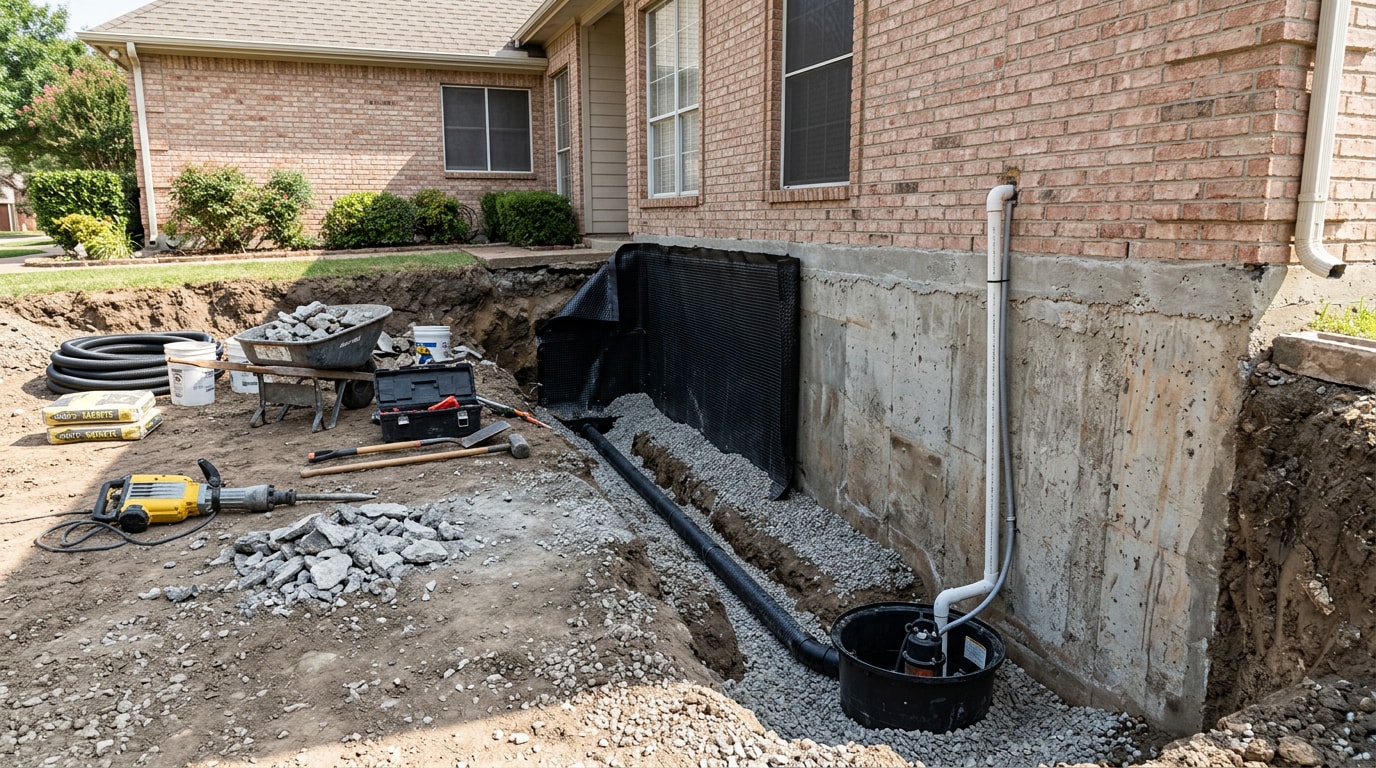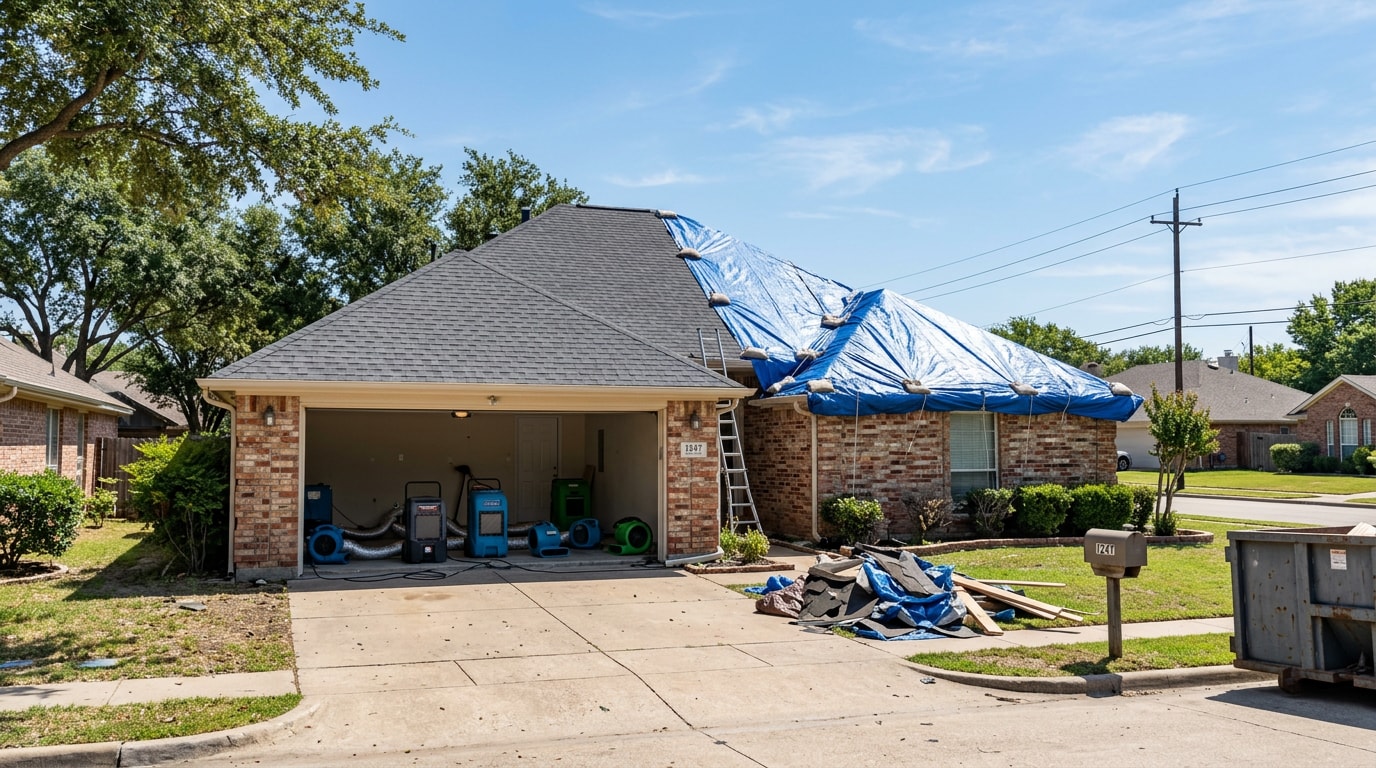
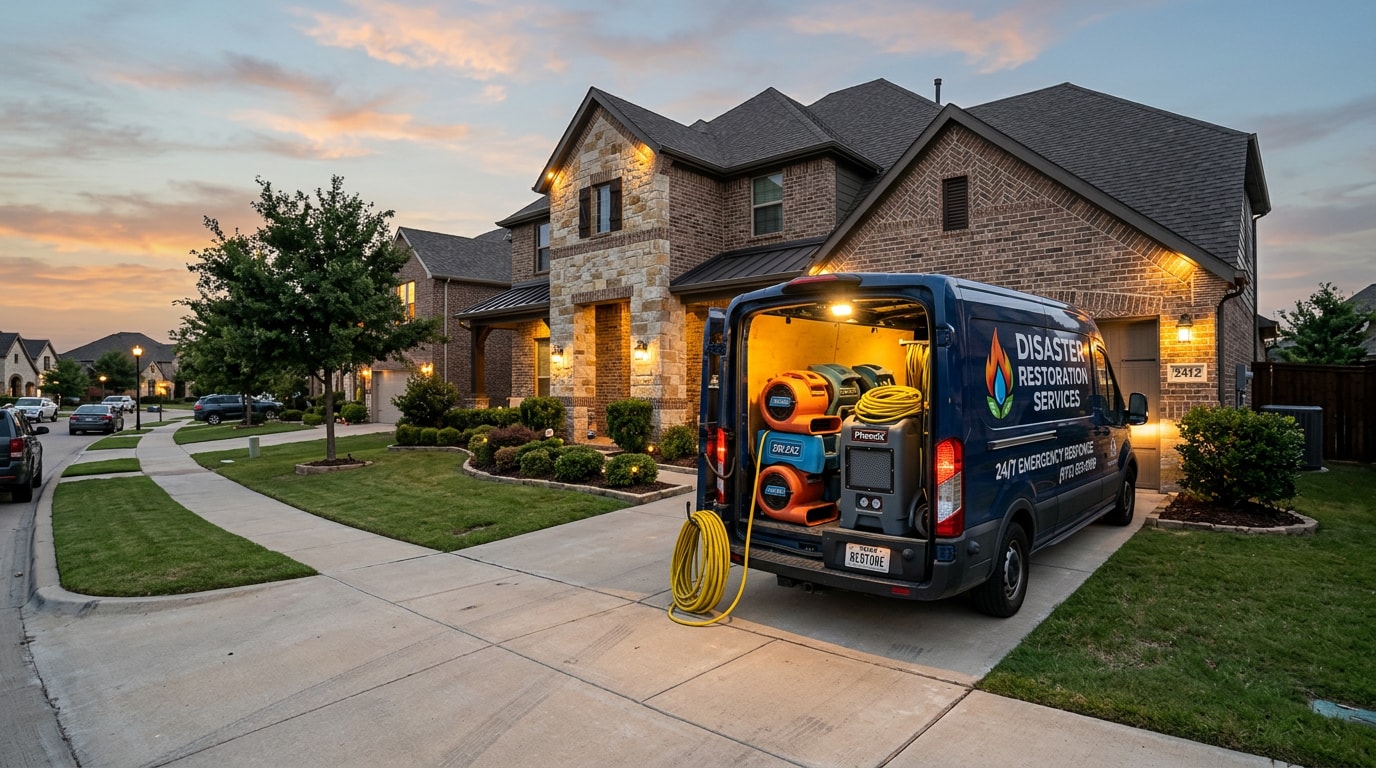
A reliable restore company in Plano, TX picks up fast, dispatches trained technicians, and starts stabilizing the damage before it spreads to a second room. Spotless Restoration USA sends IICRC-certified crews across Collin County for water, fire, mold, and storm losses, and coordinates directly with insurance adjusters from the first call. Here's what that process actually looks like, what it costs, and what to check before you sign anything.
What to Look for in a Restore Company in Plano, TX
North Texas gets hit by severe weather almost every spring.
The National Weather Service's Fort Worth office, which covers Plano, reports that large hail, damaging winds, flooding, and tornadoes occur nearly every year in the Dallas/Fort Worth Metroplex, though a single location won't see every type of event annually . That pattern is exactly why a restore company built for fast, large-scale response matters more here than in calmer markets.
Across our Plano-area jobs, the call volume tracks that seasonal pattern closely: frozen and burst pipes spike every February, and hail-driven roof leaks spike every April and May. Before hiring anyone, confirm these five things:
- IICRC certified technicians who follow documented industry standards, not guesswork
- 24/7 dispatch, since water and fire damage both worsen by the hour
- Licensed and insured, meeting Texas contracting requirements
- Local Collin County experience, including familiarity with Plano's drainage patterns and storm history
- Direct insurance coordination, so the company documents damage and communicates with adjusters on your behalf
You can see examples of finished local jobs in our project gallery, and if you want a second opinion on quotes, this breakdown of how to choose a flood restoration company in Plano covers the same vetting criteria in more depth.
Residential and Commercial Restoration Services in Plano
A full-service restoration company in Plano handles two distinct worlds: homes and businesses. Both need emergency response, but the stakes and logistics differ.
Residential restoration focuses on getting a family back into a livable space. That means drying carpets, replacing drywall, and clearing smoke odor.
Commercial restoration adds layers. Crews have to minimize downtime, work around employees or customers, and sometimes phase the job so part of a building stays open while another section gets repaired.
A company that regularly works across Dallas-Fort Worth Metro tends to carry more equipment and deeper crew benches, which matters whether you're dealing with a flooded bathroom or a warehouse fire.
Water Damage Restoration in Plano
Water damage restoration covers three core steps: extracting standing water, drying the structure, and controlling humidity so mold doesn't take hold. Local causes range from burst pipes during winter freezes to spring storms that push water into foundations and crawl spaces.
The process starts with emergency water removal using pumps and truck-mounted vacuums. From there, crews bring in air movers and dehumidifiers for structural drying, a phase that can take several days depending on how much material got wet.
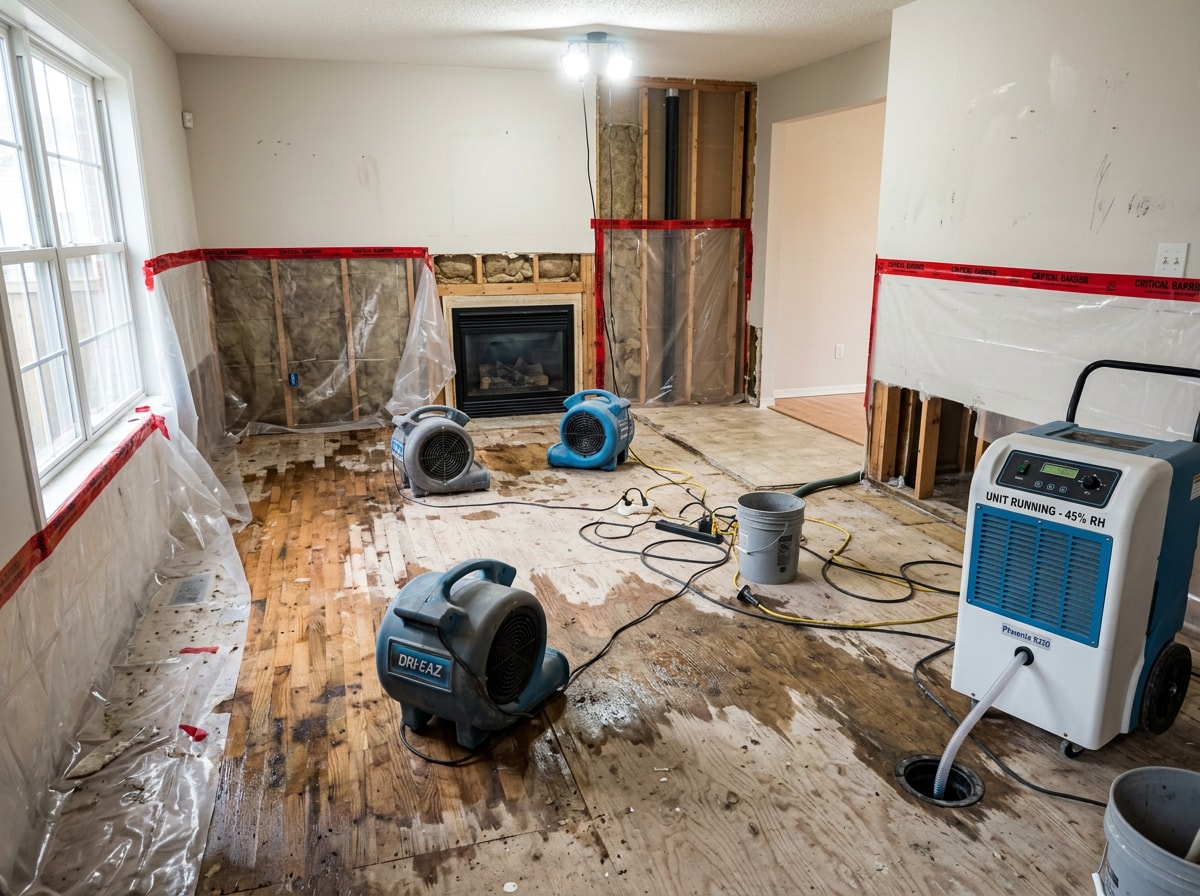
Technicians classify every loss using water category definitions from the IICRC. This standard describes the procedures and precautions for water damage restoration in residential, commercial, and institutional buildings, and the systems and personal property contained within those structures , which separates clean water, gray water, and contaminated black water losses since each requires different handling.
Skipping proper drying is one of the most common reasons a water loss turns into a mold problem weeks later. If a property has already taken on water, a water damage inspection catches hidden moisture before it becomes a bigger claim, and full-scale flood damage repair handles anything beyond a single-room leak.
Fire Damage Restoration Process in Plano
Fire damage restoration follows a fairly predictable sequence, even though every fire is different.
Crews start with a damage assessment and board-up or tarping to secure the property. From there, they move into soot removal and smoke damage cleanup throughout affected rooms.
Odor control often requires thermal foggers or ozone treatment, since smoke particles work their way into fabric, drywall, and HVAC systems.
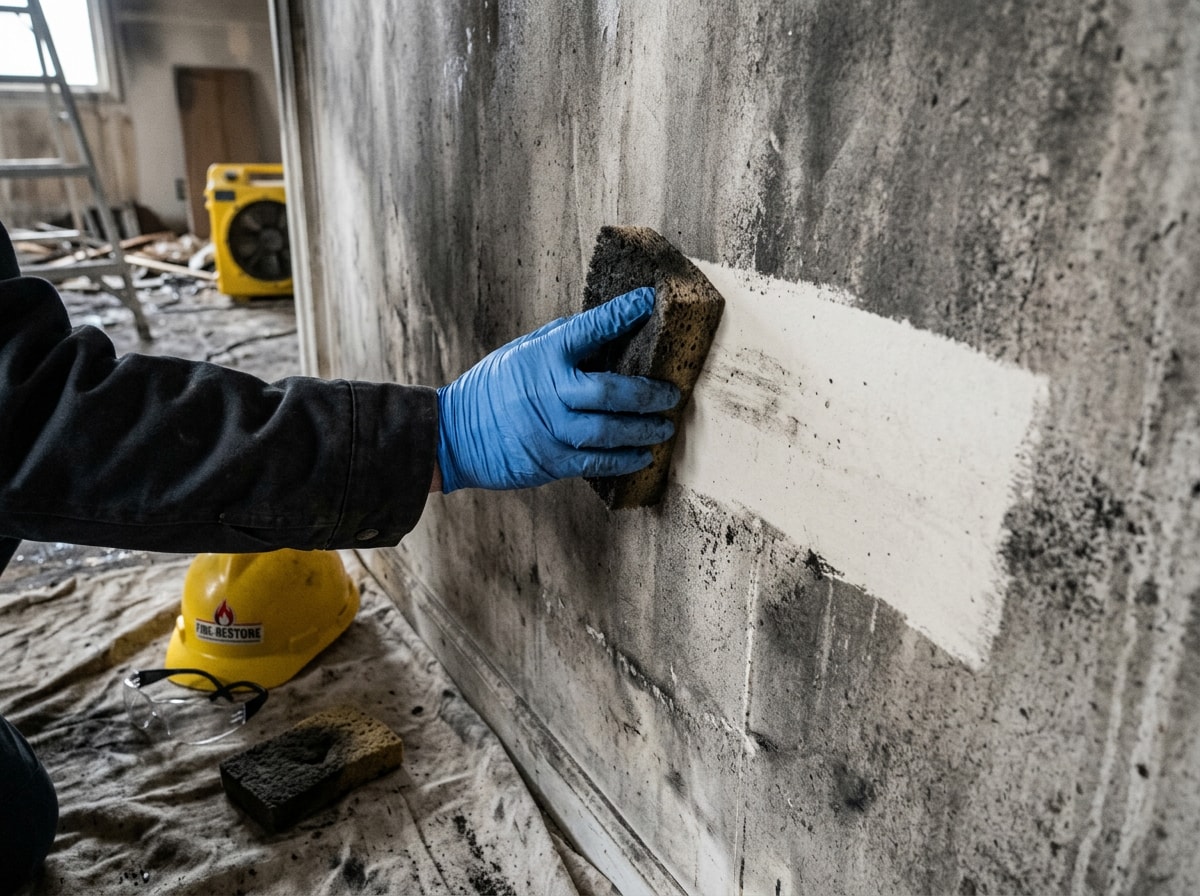
One detail that surprises some homeowners: firefighting efforts almost always leave behind significant water damage. That gets addressed with the same extraction and drying methods used on any water loss, rather than as a separate claim. Once surfaces are cleaned and deodorized, fire damage reconstruction replaces charred framing, drywall, or flooring. A fire damage inspection upfront helps document the full scope for the insurance claim before any repair work starts.
Mold Removal and Remediation Process in Plano
Mold remediation usually follows an earlier water event. North Texas humidity gives mold spores an easy foothold once materials stay wet.
The EPA's own guidance backs up why speed matters here: in general, all wet areas should be completely dried within 48 hours to prevent mold from growing . Past that window, visible colonies can establish quickly.
The remediation process starts with containment to stop spores from spreading to unaffected rooms. From there, technicians handle mold removal of contaminated materials, like soaked drywall or insulation that can't be fully cleaned, then treat remaining surfaces with antimicrobial solutions.
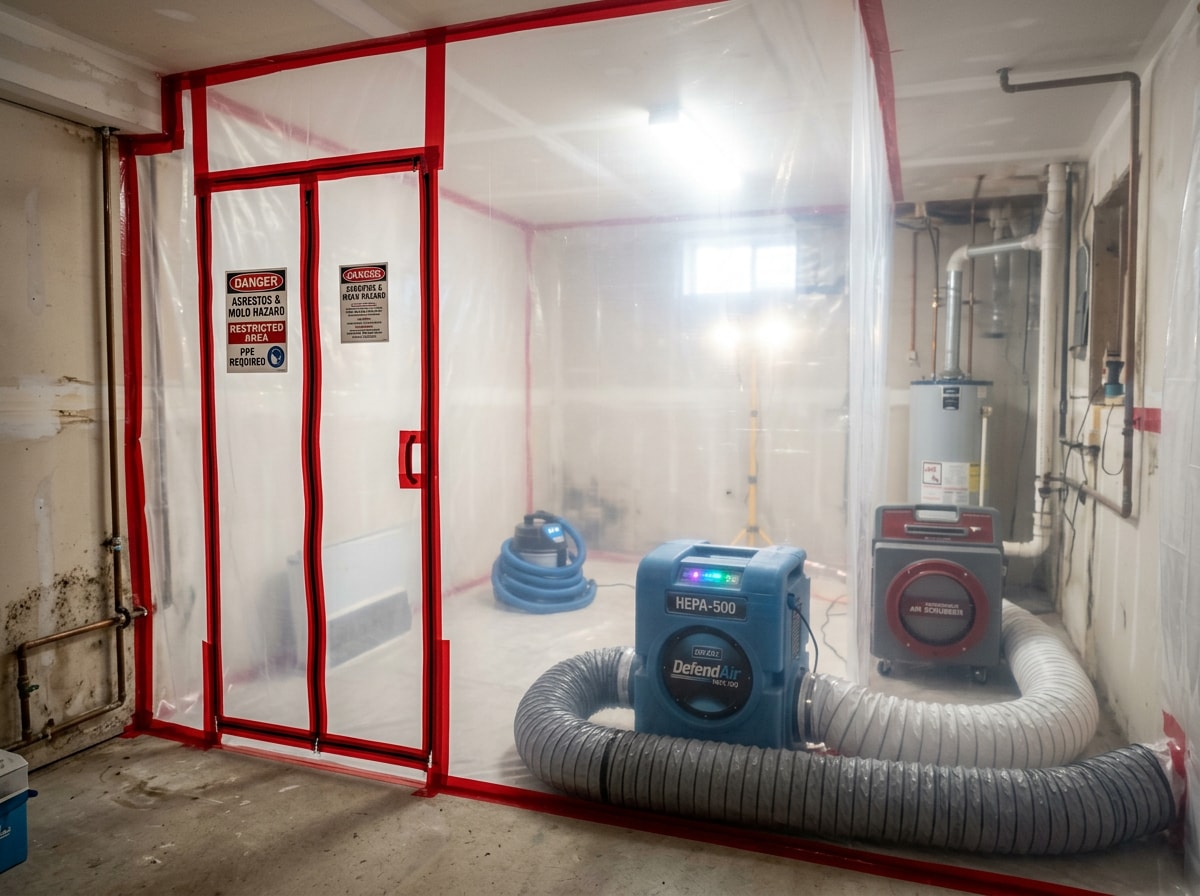
Mold removal isn't just about visible growth. A full mold inspection and ongoing moisture control address the source itself, since mold prevention depends on keeping humidity and leaks under control long-term. The underlying service category, mold remediation, covers all of this end to end.
Our 5-Step Emergency Restoration Process
Most restoration companies follow a version of this same five-step sequence. Knowing the stages helps you know what to expect after that first phone call.
- Call and dispatch — A 24/7 line routes your call to a crew, often within an hour for emergencies.
- Assessment — Technicians inspect the damage, document it for insurance, and outline a scope of work.
- Mitigation — Water extraction or board-up stops the damage from spreading further.
- Drying and cleaning — Structural drying, dehumidification, or soot and odor removal, depending on the loss type.
- Reconstruction — Repairs and rebuilding bring the property back to pre-loss condition.
That last step is where restoration overlaps with general construction. Larger losses may require full home reconstruction or interior renovation rather than a simple patch-and-paint job. This sequence applies whether it's a residential kitchen fire or a commercial water loss, though the length of each phase varies with the size of the job.
What Restoration Actually Costs
Cost is usually the first question once the shock of a loss wears off, and it's a fair one to ask before you hire anyone.
Pricing depends heavily on square footage, water category, and how much structural repair follows the mitigation work. As a general rule across the industry, fire damage restoration tends to run higher than water mitigation alone, since it layers soot removal, odor treatment, and rebuild work into the same job. Storm damage falls somewhere in between, depending on whether wind, hail, or flooding caused the loss.
| Damage Type | What Drives the Price | Typical Scope |
|---|---|---|
| Water damage | Water category, square footage, drying time | Extraction, dehumidification, possible drywall/flooring replacement |
| Fire damage | Soot/smoke extent, odor severity, structural loss | Board-up, soot removal, deodorization, reconstruction |
| Mold remediation | Contaminated material volume, containment size | Containment, removal, antimicrobial treatment, moisture fix |
| Storm damage | Wind vs. hail vs. flood source, roof/structure impact | Combination of the above, plus exterior repair |
It's also worth understanding the billing split: mitigation, meaning the emergency stabilization work like extraction, drying, and board-up, is usually billed separately from reconstruction. Insurance may treat each phase differently, so ask for a written scope before work starts. For a number specific to your property, request a consultation rather than relying on general ranges.
Why Choose a Restoration Company in Plano, TX?
Not every restoration company offers the same training, equipment, or responsiveness.
- IICRC certified technicians follow documented standards rather than guesswork.
- 24/7 emergency response matters because water and fire damage worsen by the hour.
- A licensed restoration company carries proper insurance and meets state contracting requirements.
- Local Plano experience means familiarity with the area's soil, drainage issues, and storm patterns.
- Direct insurance coordination simplifies the claims process, since the company communicates documentation directly with adjusters.
If you're ready to get a crew moving, you can request a consultation or start from the homepage to see the full range of services we cover across the metro.
FAQ
Do restoration companies in Plano offer 24/7 emergency services?
Yes. Reputable restoration companies run 24/7 emergency dispatch in Plano because water and fire damage spread quickly. Fast response genuinely limits how bad a loss gets, especially with mold risk starting within 48 hours of water exposure.
What types of emergency restoration services are offered in Plano?
Full-service companies typically offer water damage, fire damage, mold remediation, storm damage, and odor removal under one roof, so you're not juggling separate specialists for each part of the job.
Does insurance cover water and fire damage restoration in Collin County?
Generally, sudden and accidental water or fire damage is covered under standard homeowners insurance, while flooding and long-term neglect usually aren't. The National Flood Insurance Program (NFIP) is managed by FEMA and is delivered to the public by a network of more than 47 insurance companies and the NFIP Direct , so flood losses typically require that separate policy. Check your specific policy, since coverage details vary by insurer.
How long does water damage restoration take?
Structural drying usually takes three to five days for a typical residential loss. Full restoration with repairs can take one to several weeks depending on the extent of the damage.
How long does fire damage restoration take?
Minor fires with limited smoke damage can wrap up in days. Large-scale fires that require structural reconstruction often take several weeks to a few months, depending on permitting and material availability.
Should I call a plumber or a restoration company first after a leak?
Call a restoration company first for anything beyond a simple fix. A plumber stops the leak, but only a restoration crew extracts standing water, dries the structure, and documents the loss for your insurance claim.
How much does mold remediation cost in Plano, TX?
It depends on how much material is contaminated and how large the containment area needs to be. A proper quote requires an on-site mold inspection rather than a phone estimate, so request one before budgeting.