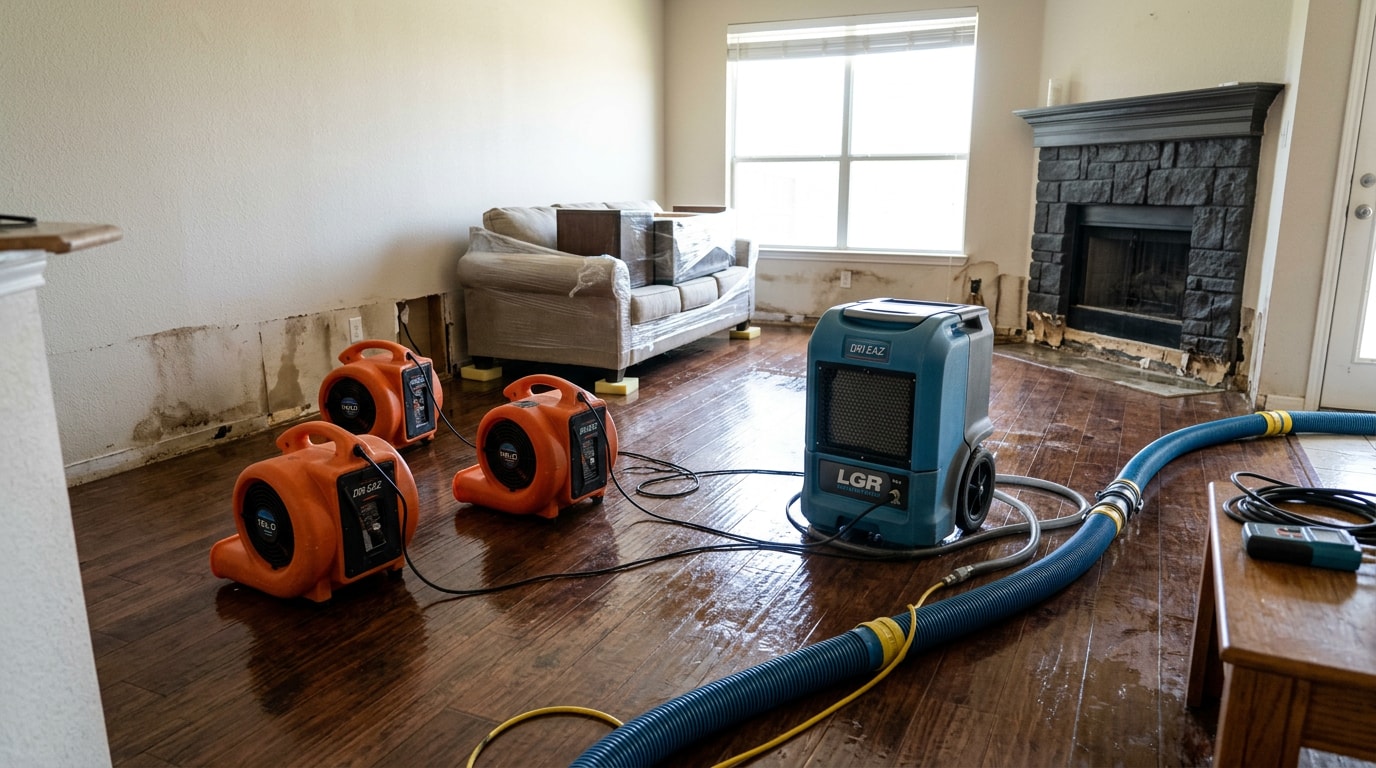
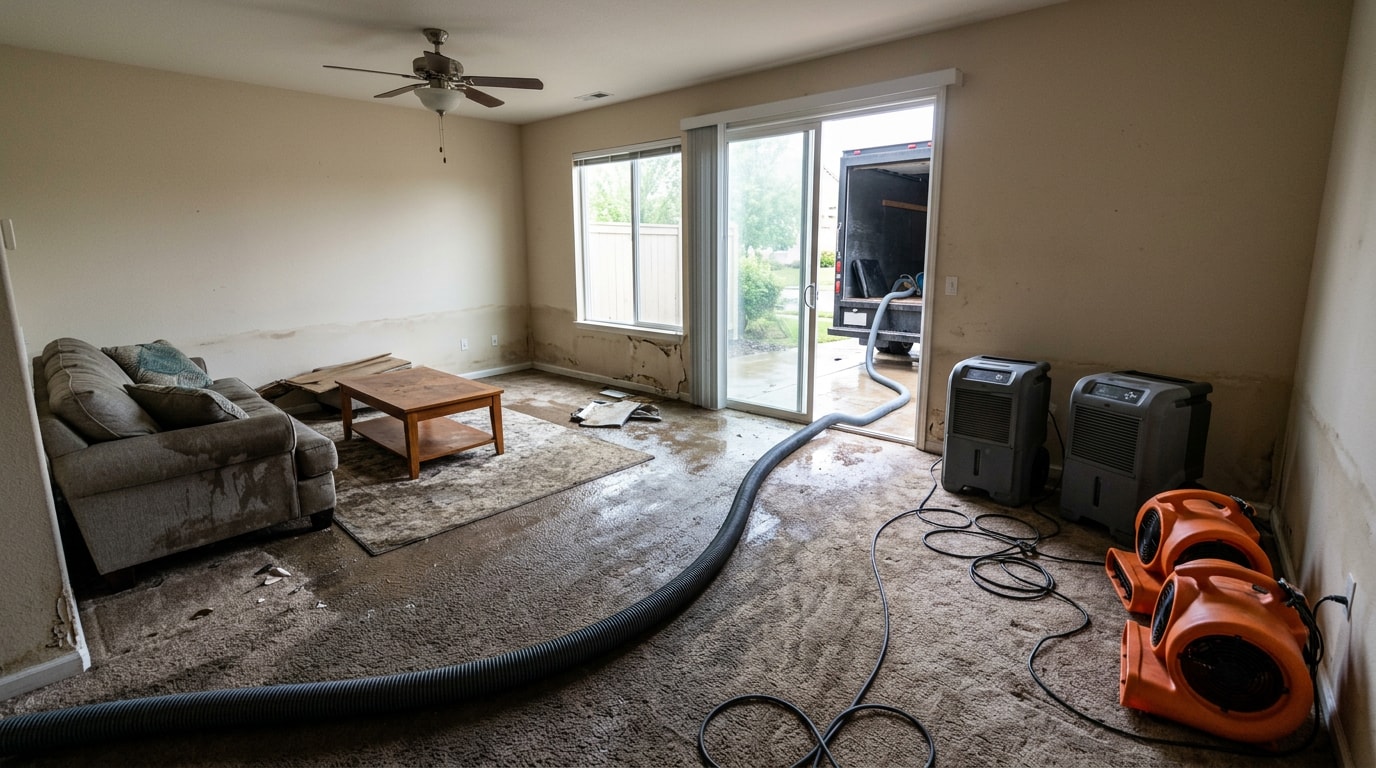
Flood water extraction in Dallas Fort Worth Metro, TX has to start within hours, not days, because North Texas clay soil turns a heavy storm into standing water before most homeowners finish checking the weather radar. Here's what separates a flooded room that dries out clean from one that turns into a mold problem and a denied insurance claim.
Why Floodwater Extraction Can't Wait
Floodwater is classified as Category 3, or "black water," because it picks up sewage, bacteria, chemicals, and debris as it travels overland or backs up through storm drains. The EPA warns that people should avoid or limit direct contact with contaminated flood water because of the hazards it can carry. That's the main reason DIY flood cleanup is discouraged here: the water itself is a health risk before it's even a property problem.
Time pressure comes next. Materials that stay wet don't just sit there, they start supporting mold growth, and federal guidance recommends you clean and dry your home and everything in it within 24 to 48 hours, if you can . In a flooded house, that window closes fast once water has soaked into drywall, baseboards, and subflooring.
Professional extraction does two things at once: it removes the hazard, and it creates a documented record of the damage. Photos, moisture readings, and contamination notes taken during extraction become the evidence an insurance adjuster will ask for later.
Our Flood Water Extraction Process
Every flood response follows the same core stages, whether the property is a single-family home or a multi-tenant building. The sections below walk through emergency extraction first, then how residential and commercial jobs differ in scope and scheduling.
Emergency Water Extraction
Emergency water extraction is the most urgent stage of any flood response. Crews choose equipment based on water depth and category:
- Submersible pumps handle deep standing water in basements and low-lying rooms.
- Truck-mounted extractors provide the strongest suction for large open areas, carpet, and pad.
- Portable extractors reach tight spaces like closets and stairwells.
| Equipment | Capacity | Best Use | Typical Job Size |
|---|---|---|---|
| Submersible pump | High volume, deep water | Basements, flooded rooms over 2 inches | Residential to mid-size commercial |
| Truck-mounted extractor | Highest suction power | Large open floor areas, carpet and pad | Whole-house or commercial floors |
| Portable extractor | Lower volume, maneuverable | Closets, stairwells, tight spaces | Spot extraction, smaller rooms |
This mix of equipment lets a crew address standing water across an entire property instead of leaving pockets of moisture behind in a utility closet or under a staircase. Our technicians have pulled standing water out of flooded living rooms in Arlington and retail floors in Plano long enough to know which materials can be saved and which need to come out immediately. If your home or business needs emergency water removal, that first call is the one that limits how much gets damaged.
Residential Flood Cleanup
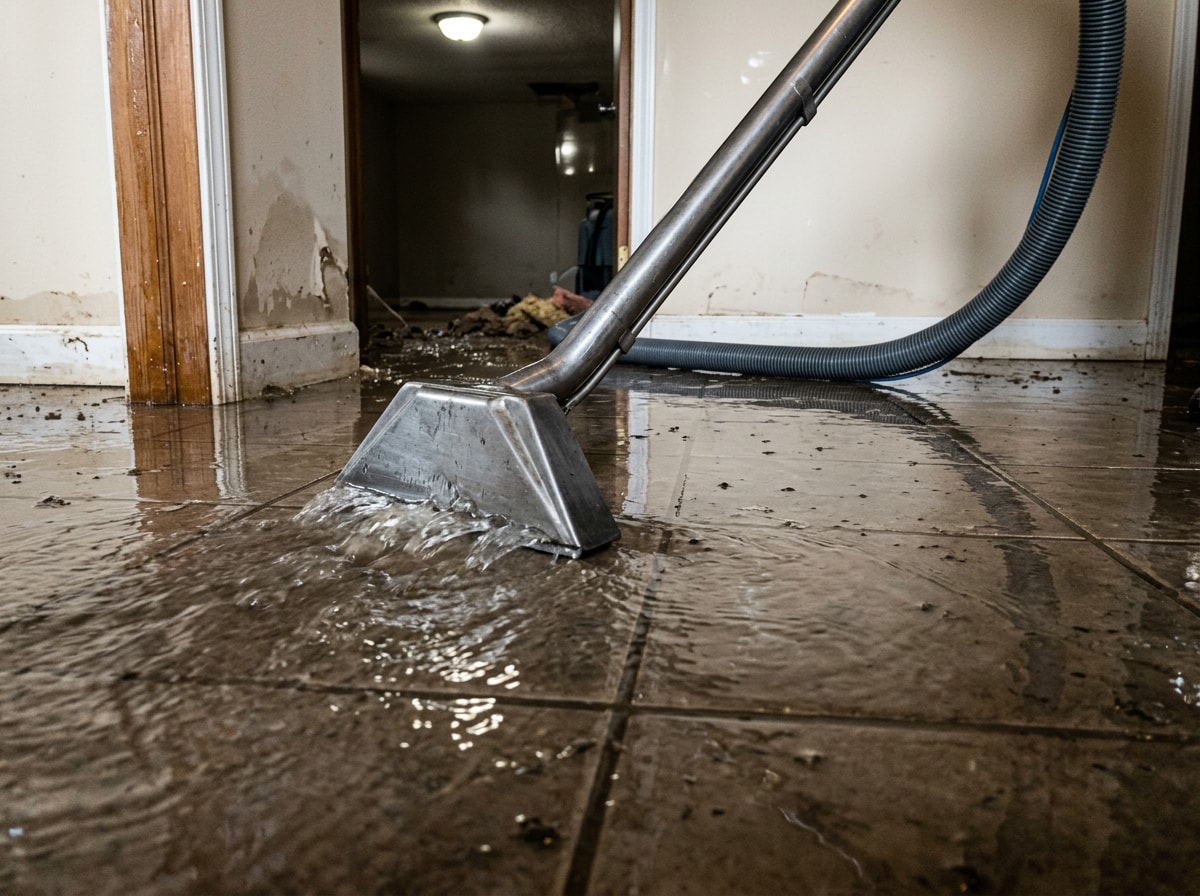
Residential flood water extraction covers living spaces, bedrooms, carpet and pad, furniture, and personal belongings affected by rising water. Crews assess what can be dried and restored versus what needs removal, since porous materials that stayed wet too long often can't be saved.
Because this happens while families are still living through the disruption, crews coordinate around pets, kids, and temporary displacement. Homeowners are kept informed about which rooms are safe to enter and when drying equipment needs to keep running. Our flood damage repair team can also walk through what's salvageable room by room before anything is removed.
Commercial Flood Cleanup
Commercial flood cleanup scales up fast. Offices, retail spaces, warehouses, and multi-family buildings need higher-capacity pumps and extractors to cover square footage that dwarfs a typical home. Crews often schedule business flood water extraction during off-hours to limit downtime and customer disruption.
Multi-family flood response adds another layer of coordination, since property managers typically oversee several units at once and need a single point of contact for scheduling and documentation.
Why DFW's Clay Soil Turns Storms Into Floods Fast
North Texas sits on Blackland Prairie clay, and that soil behaves differently from the sandy or loamy ground found in much of the rest of the country. Research on this ecoregion describes highly expansive clays, which shrink and swell with changes in moisture content, with a typical particle size distribution of 17% sand, 28% silt, and 55% clay . That much clay means the ground absorbs water slowly, so heavy rain runs off the surface instead of soaking in.
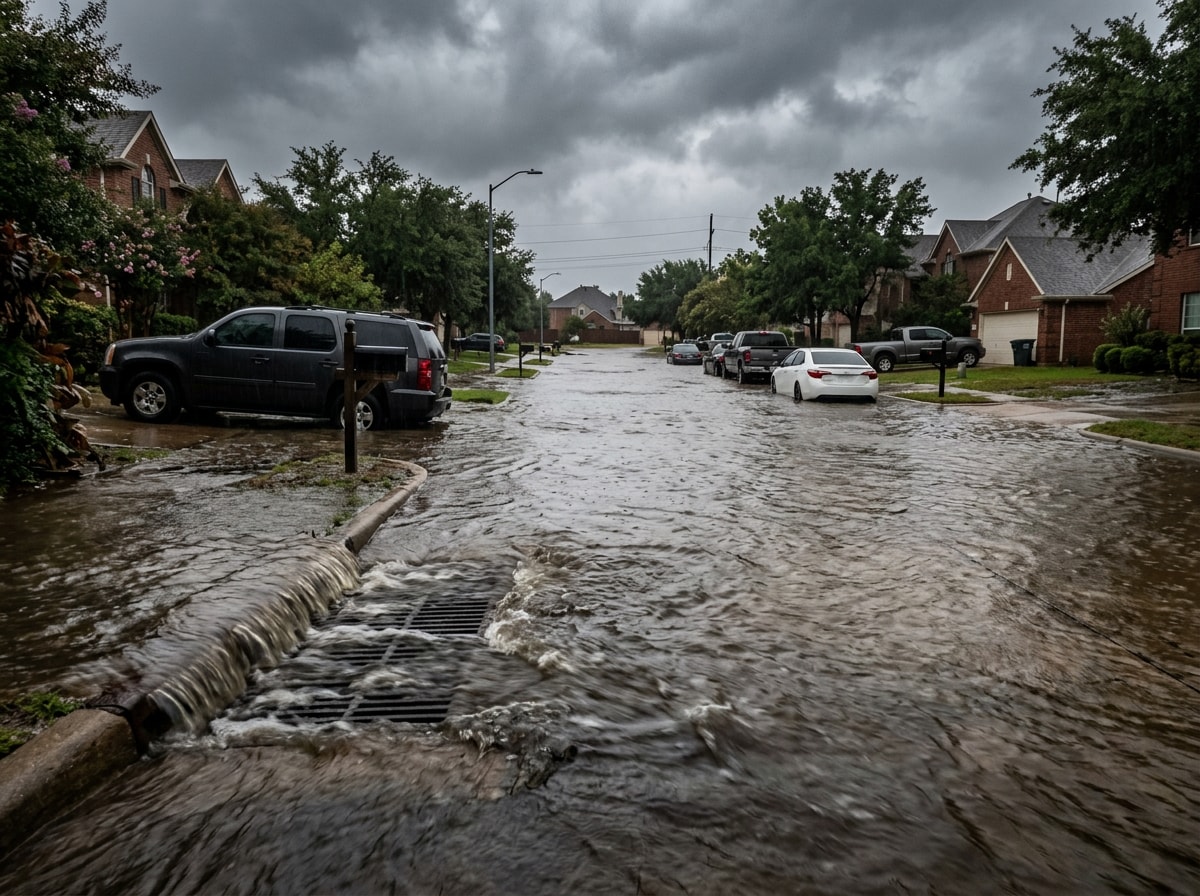
During a fast-moving storm, that surface runoff pushes toward storm drains faster than the system can handle, and a quiet street can turn into standing water within minutes. The National Weather Service's standing safety advice is blunt: turn around, don't drown when encountering flooded roads , since most flood deaths happen in vehicles, not homes.
Understanding this terrain isn't optional for a restoration crew working here. It shapes how quickly teams mobilize and how much standing water they expect to find on arrival, whether the call comes from a flooded street in Fort Worth or a backed-up storm drain in Irving.
Flood Insurance and FEMA Claim Documentation
Here's the surprise that catches a lot of DFW homeowners after a storm: most homeowners insurance does not cover flood damage . Coverage for rising external water typically requires a separate policy through the National Flood Insurance Program or a private flood insurer, not a standard homeowners policy.
That's where documentation becomes critical. Photos, moisture logs, and detailed notes gathered during extraction give adjusters the evidence they need to process a claim. A water damage inspection at the start of the job creates that paper trail before anything gets dried out or discarded. If you're unsure whether your policy covers flood losses, the FEMA flood insurance program page explains how NFIP coverage works and who's required to carry it.
Once extraction is done, the drying phase still has to meet an industry standard before a space is considered safe to rebuild. Our structural drying services use moisture meters to confirm walls, floors, and framing have actually returned to a safe moisture range, not just that they look dry.
Need a crew on-site now? Request a consultation and we'll walk you through next steps before water sits any longer.
Flood Water Extraction Service Areas
We provide flood water extraction across the Dallas Fort Worth Metro, TX area, including Dallas, Fort Worth, Arlington, Plano, and Irving. Coverage extends into the surrounding suburbs, since flash flooding rarely respects municipal boundaries. For a deeper look at how extraction and drying costs break down across the region, see our water remediation process and cost guide.
FAQ
What is the difference between water damage restoration and flood damage restoration?
The key difference is water source and contamination level. Water damage restoration typically addresses clean or gray water from leaks or appliance failures, while flood damage restoration deals with Category 3 water that entered from outside and carries contaminants. That distinction affects safety protocols and which materials can be saved versus removed.
What should I do immediately after my property floods?
If it's safe, shut off electrical power to affected areas and avoid contact with standing water. Don't wade through deep water or operate appliances that got wet. Call a professional extraction crew, and take photos of the damage before cleanup begins.
Should I call my insurance company before extraction starts?
Call your carrier as soon as it's safe to do so, but don't wait for approval before starting mitigation. Most policies expect you to prevent further damage, and a delay can make the loss worse. Ask what documentation they need and whether damaged materials should be kept for inspection.
How quickly can you respond to flood damage in Dallas Fort Worth Metro, TX?
Every hour of standing water increases material damage and cost, so crews aim for rapid response across the Metroplex. Actual arrival time can shift during widespread storms when call volume spikes across multiple cities at once.
What types of water can extraction crews safely handle?
Crews handle the full range of water categories, from clean water leaks to gray water and fully contaminated black water from flooding. The category determines what protective equipment and disposal methods are required. Visit our water damage restoration page to learn how each category is handled.
How long does drying take after the water is extracted?
Extraction itself is usually finished within hours. Structural drying runs longer, often several days, depending on how saturated the materials were and the humidity in the space. Moisture readings determine when drying equipment comes down, not a fixed calendar date.
What does flood water extraction cost?
Cost depends on water volume, contamination category, and how much square footage and material needs to be removed versus dried in place. A water damage inspection is the fastest way to get an exact number for your property instead of a general estimate.
Start with a visit to our homepage to see the full range of restoration services available across the Metroplex, or request a consultation directly if water is already standing on your property.