A burst pipe at 2 a.m. doesn't wait for business hours. An emergency water damage restoration company in Plano, TX has to treat the first hour after a loss as the one that decides how bad the rest of the week gets. Here's what fast, professional help actually looks like, and how to tell when you need it right now instead of next week.
24/7 Emergency Response in Plano, TX
Water damage doesn't follow office hours, so a reliable emergency crew doesn't either. A technician should be reachable by phone at any hour, with a crew typically on-site within about one to two hours of your call, depending on current conditions and your location in the metro.
Response time matters because drying costs climb the longer water sits untreated. A pipe that floods a kitchen at midnight and isn't addressed until morning can need two or three extra days of drying compared with a loss handled immediately. We've seen that gap play out repeatedly on calls across Plano: the homes where someone shut off the water and called before sunrise dry out faster and cost less to repair than the ones where the leak sat overnight.
Plano's clay-heavy soil shifts with every heat and moisture cycle, which puts extra strain on buried supply lines and slab plumbing year-round. Add sudden summer storms and aging appliance connections in many neighborhoods, and you get a steady stream of water emergencies: burst pipes, sewage backups, storm flooding, and appliance failures. North Texas summer humidity also pushes mold risk toward the faster end of the growth window rather than the slower end, which is one more reason delay is expensive here specifically.
If you're unsure whether your address falls inside the standard response zone, our Plano, TX service area page lists the neighborhoods and surrounding cities we cover.
When to Call for Emergency Water Damage Restoration
Not every leak needs a 2 a.m. phone call, but several situations genuinely can't wait. A good rule: if water is actively spreading, contaminated, or touching electrical systems, treat it as an emergency and call immediately rather than scheduling an appointment for later in the week.
| Situation | Emergency or scheduled visit? |
|---|---|
| Burst pipe actively flooding a room | Emergency, call now |
| Sewage backing up through drains or toilets | Emergency, call now |
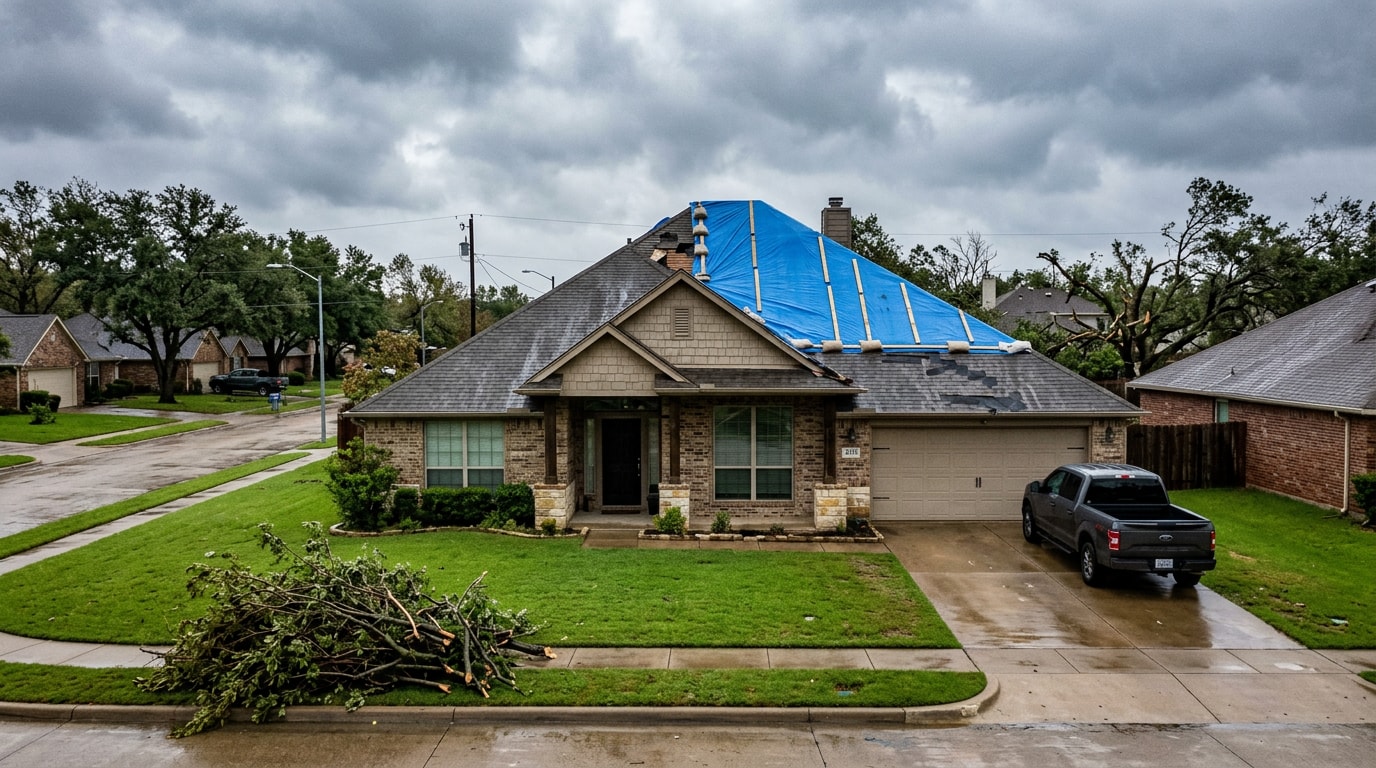
| Standing water after a storm or roof leak | Emergency, call now |
| Water heater or washing machine overflow that won't shut off | Emergency, call now |
| Small drip under a sink, no active spreading | Scheduled inspection usually works |
| Minor, non-growing ceiling stain | Scheduled inspection usually works |
While you're waiting for a crew, shut off the water at the main valve or meter box rather than just the fixture, since a failed supply line can keep feeding the leak even after the fixture shutoff is closed. Move furniture and electronics off wet flooring if it's safe to do so, and avoid walking through standing water that's near outlets or a breaker panel.
What Our Emergency Water Damage Restoration Services Include
A full emergency response covers water removal, drying, decontamination, and salvage, not just mopping up a puddle and leaving. Core components typically include:
- Water extraction to remove standing and absorbed water
- Structural drying and dehumidification to stop moisture migration into framing
- Sewage or contaminated-water cleanup for backups and floodwater
- Mold prevention treatment on at-risk materials
- Contents restoration for furniture, documents, and belongings
Which services apply depends on the water category. Clean-water losses, like a supply-line break, usually need emergency water removal and structural drying without heavy decontamination.
Sewage backups and storm floodwater fall into a contaminated category. That requires disinfection, controlled demolition of porous materials that can't be sanitized, and stricter mold prevention protocols before drying equipment ever goes in. Our flood damage repair services cover those extra decontamination steps for storm and sewage losses specifically.
Contents restoration runs alongside the structural work. Furniture, electronics, and paperwork that can be saved are inventoried, cleaned, and either dried on-site or moved to a controlled facility, depending on how saturated they are. For a broader look at how these losses are handled outside of true emergencies, our water damage restoration services page breaks down scope and typical timelines.
Our Emergency Water Damage Restoration Process
The process follows a predictable sequence, even though every property is different. Here's a realistic walkthrough of what typically happens after you call.
- Phone intake and dispatch (0 to 15 minutes): A technician gathers details about the water source and current conditions, then dispatches a crew.
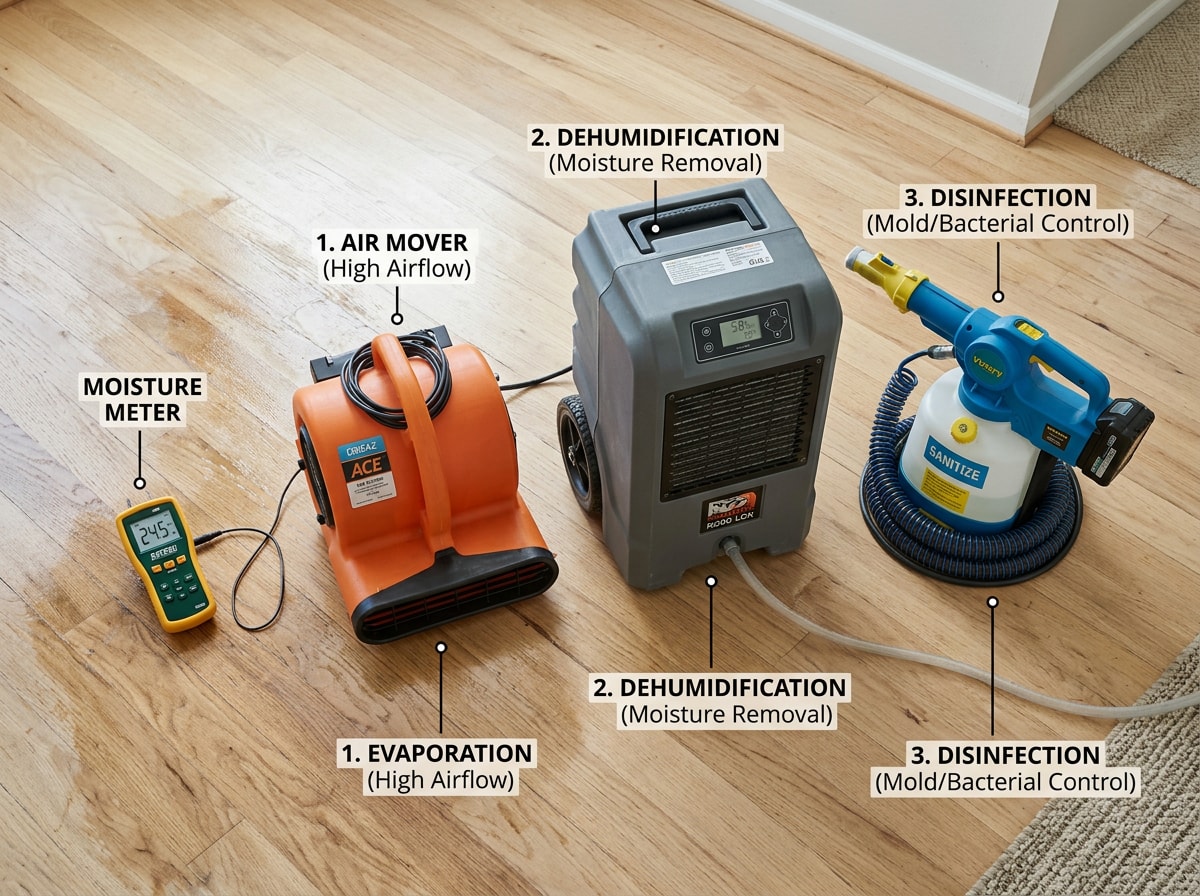
- On-site inspection (within 60 to 90 minutes in most cases): Technicians use moisture meters and thermal imaging to map how far water has traveled, including inside walls and under flooring. This step feeds into a full water damage inspection and documentation record.
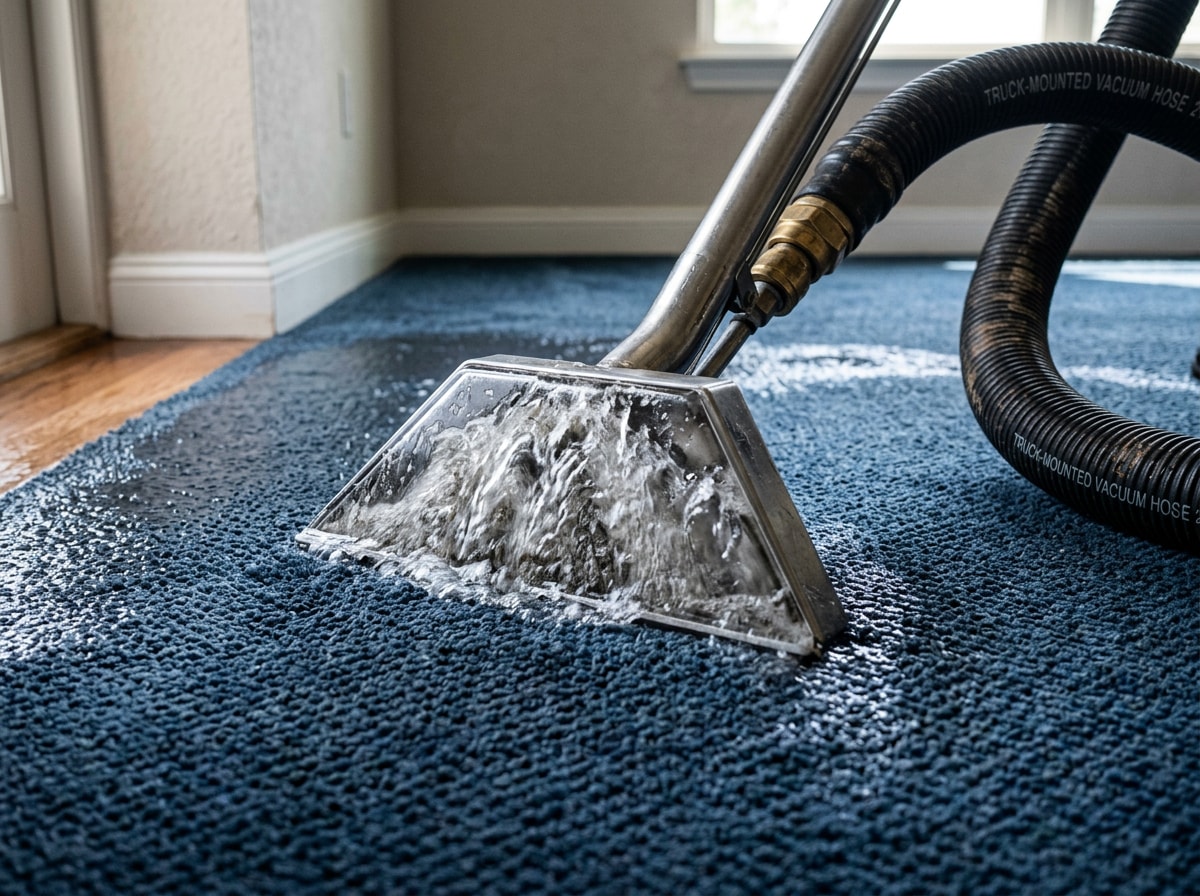
- Water extraction (first 1 to 3 hours on-site): Pumps and extraction wands remove standing and absorbed water before drying equipment goes in.
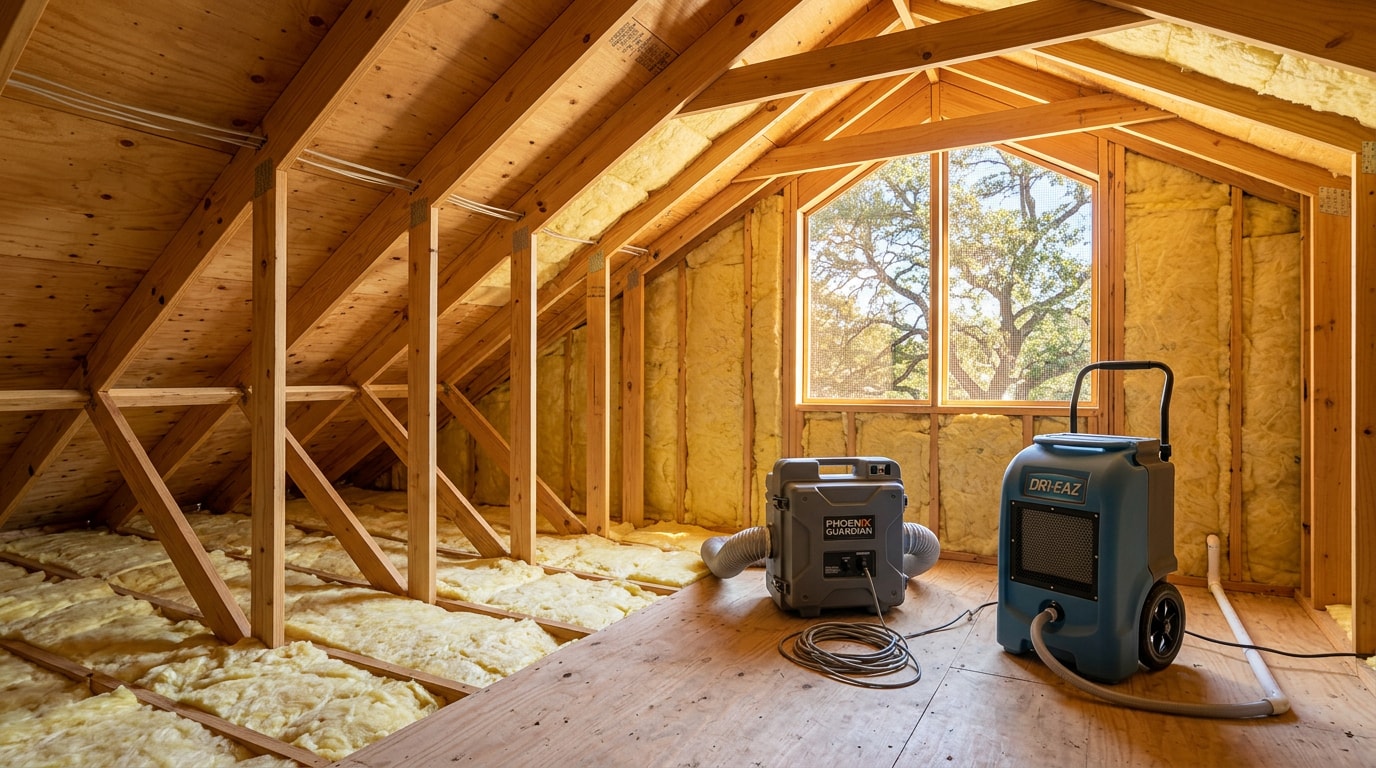
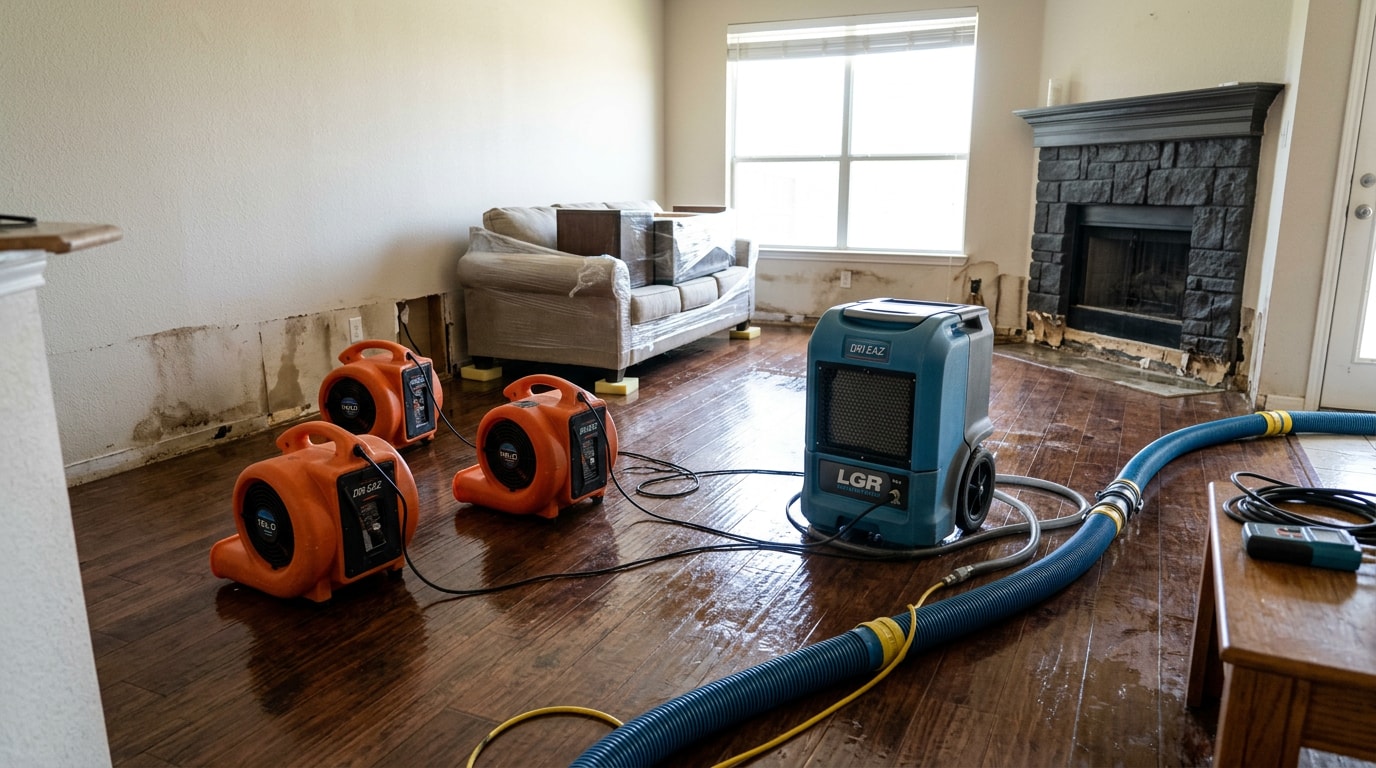
- Structural drying and dehumidification (typically 2 to 5 days): Industrial air movers and dehumidifiers run continuously, with daily moisture checks tracking progress against dry-standard benchmarks. Full details on equipment and monitoring are on our structural drying services page.
- Sanitization and mold treatment: Antimicrobial treatments are applied, especially on contaminated-water losses, before materials are considered stable.
- Reconstruction, if needed: Drywall, flooring, or trim removed during mitigation is rebuilt to restore the space to pre-loss condition.
Drying is never considered done on a calendar guess. It ends when moisture readings in the affected materials match the readings of unaffected areas nearby.
Benefits of Professional Emergency Water Damage Restoration
Hiring a trained crew instead of attempting DIY cleanup changes the outcome in measurable ways. Professional teams use commercial-grade extraction and drying equipment that moves far more air and moisture than household fans or shop vacuums, which shortens drying time significantly.
One of the biggest benefits is documentation. Technicians record moisture readings, photos, and affected materials as they work, creating a paper trail that supports insurance claims rather than leaving you to reconstruct the timeline from memory later.
Speed also protects your budget. Restoration methods that follow recognized industry standards are built specifically to limit secondary damage. The ANSI/IICRC S500 standard describes the procedures to be followed and the precautions to be taken when performing water damage restoration in residential, commercial, and institutional buildings , and following it is one of the most effective ways to reduce the odds of a second, more expensive repair round. Delayed drying lets moisture sit in wall cavities long enough for mold to take hold; mold prevention work done during the drying phase is far cheaper than remediation after the fact.
Ready to get a crew moving? Request a consultation and we'll walk through your situation before anyone steps on-site.
If your loss is tied to a larger storm event rather than a single pipe or appliance, our guide to flood restoration companies in Plano, TX covers what to check before you hire for a bigger claim. You can also see examples of completed jobs on our projects page.
FAQ
How fast can you respond to emergency water damage in Plano?
Most emergency crews aim to arrive on-site within roughly one to two hours of your call, 24 hours a day, every day of the year. Faster arrival limits how far water spreads, which directly reduces drying time and total repair cost.
What causes water damage in Plano homes?
Common local causes include burst pipes, roof leaks, failed appliances, HVAC condensation lines, slab leaks tied to shifting clay soil, and seasonal storm flooding. Several of these develop slowly before becoming sudden emergencies.
How long does water damage restoration take?
Mitigation, meaning extraction and structural drying, generally takes three to five days for a typical residential loss. Full reconstruction, if drywall or flooring needs replacing, can add one to several weeks depending on scope.
Can water damage cause mold in my home?
Yes. According to EPA-based guidance, mold growth on wet building materials typically begins within 24 to 48 hours of water exposure , and North Texas humidity can push that timeline toward the faster end. Fast extraction and drying are the most reliable ways to prevent mold after a water loss.
What should I do while waiting for help to arrive?
Shut off water at the main valve or meter box, not just the fixture. Move furniture and electronics off wet flooring if it's safe, and stay away from standing water near outlets or a breaker panel until a technician confirms it's safe.
Will homeowners insurance cover my water damage claim?
It depends on the source. A sudden pipe burst is typically a standard homeowners claim, but most homeowners insurance does not cover flood damage from rising or surface water, which usually requires a separate flood policy. Restoration crews typically document damage with photos and moisture logs that support either type of claim.
About the Author
This guide was reviewed by the restoration team at Spotless Restoration USA, an IICRC-trained water damage crew serving Plano and the greater Dallas Fort Worth Metro. For a direct line to a technician, visit our contact page or start at our homepage to see our full service lineup.