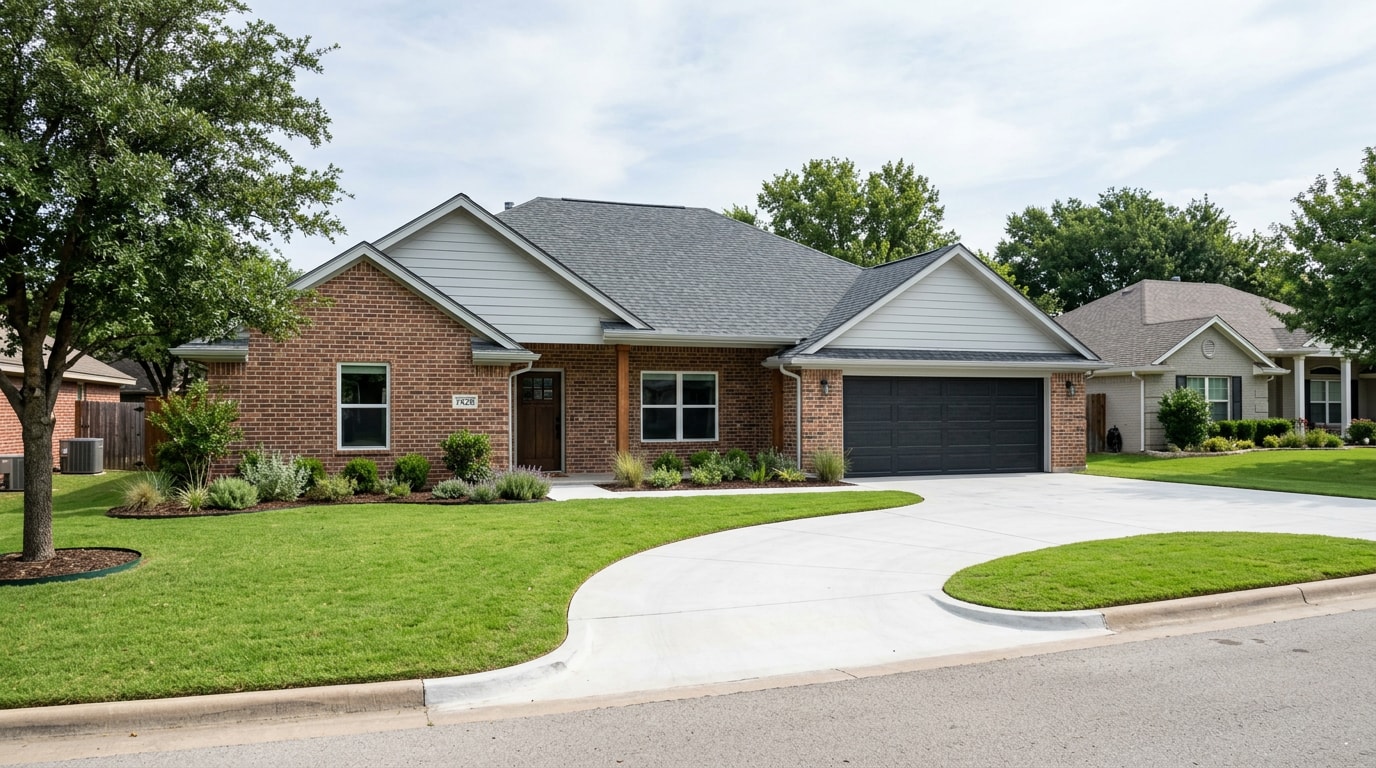
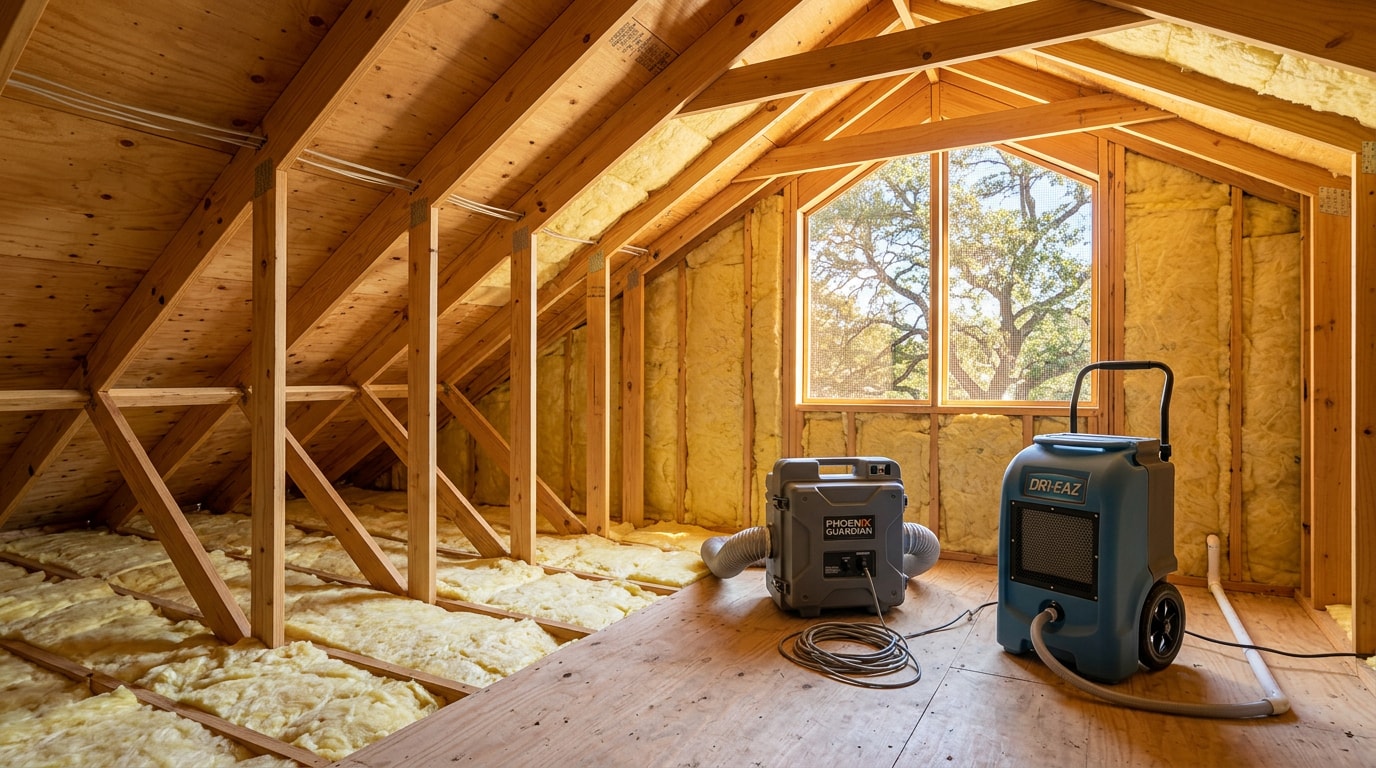
Mold remediation financing in Fort Worth, TX turns a surprise inspection finding into a project you can actually start this week instead of next year. Most homeowners don't have $3,000-$10,000 sitting in a savings account earmarked for mold, which is exactly why financing exists. Here's how the payment options actually stack up, and which one fits a given timeline, credit profile, and budget.
How Much Does Mold Remediation Cost in Fort Worth?
Figuring out financing starts with knowing what you're actually paying for. Most local jobs run between $1,500 and $7,500, though severe infestations that reach framing or insulation can push the total well past $10,000. Price depends on square footage, the moisture source, and how many rooms are affected.
Typical cost ranges contractors in the Dallas-Fort Worth area quote by location:
- Bathrooms and kitchens with isolated leaks: $500-$1,500
- HVAC systems (cleaning or replacing contaminated components): $2,000-$6,000
- Crawl spaces (encapsulation and moisture-barrier work included): $3,000-$8,000
- Whole-house or commercial infestations reaching structural materials: $8,000-$30,000
Texas also requires a licensed Mold Assessment Consultant on any job where contamination affects 25 contiguous square feet or more. For non-residential properties, an owner or tenant is not required to be licensed to do mold assessment or remediation unless the mold contamination affects a total surface area of 25 contiguous square feet or more , according to the Texas Department of Licensing and Regulation. That inspection and protocol fee gets added to your total bill before financing even enters the picture, and property owners managing compliance on a larger scale can get more detail in our regulatory remediation compliance guide for Fort Worth.
Does Climate Affect Mold Remediation Costs in Fort Worth?
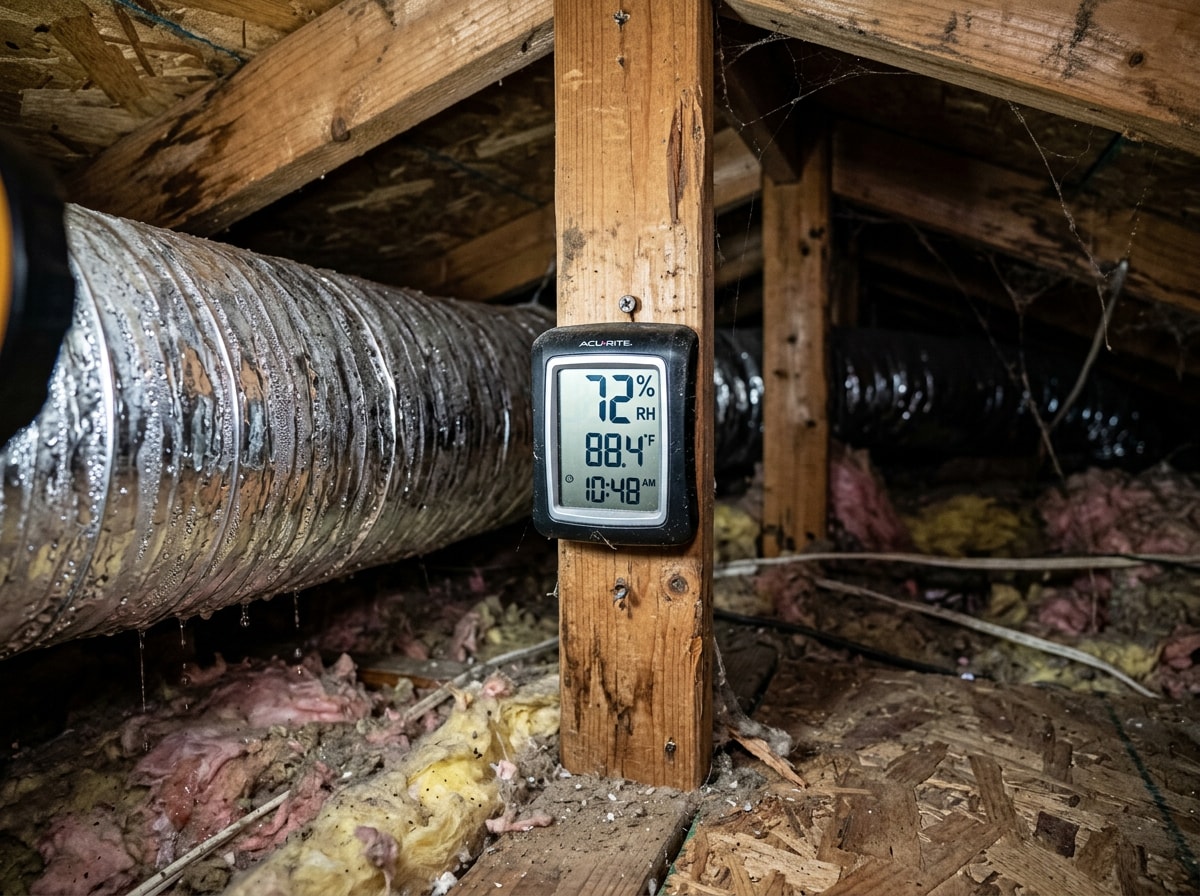
Climate affects both the price and durability of mold remediation more than most financing guides admit. Fort Worth's humid subtropical summers routinely push indoor relative humidity above the threshold where mold accelerates. The EPA recommends keeping indoor humidity below 60 percent, ideally between 30 and 50 percent relative humidity , since mold spores need that moisture to grow. Humidity tends to spike after spring storms and during prolonged AC use, when condensation collects in attics, crawl spaces, and HVAC systems faster than it can dry out.
That recurring moisture risk is why climate and remediation cost are linked. A job that doesn't address the underlying humidity source sometimes needs repeat treatment within a year or two, meaning a second, smaller project to finance down the road. Homeowners in our Fort Worth, TX service area should budget for moisture-control add-ons, such as dehumidifiers, vapor barriers, and better attic ventilation, as part of the original loan or payment plan rather than treating them as optional extras. A moisture control assessment before you finalize financing can prevent that second bill entirely.
Why Finance Mold Remediation Instead of Paying Cash?
Mold spreads while homeowners scramble to save up cash, which is the core argument for financing. Say an inspection during a home sale turns up mold in the attic. The closing deadline doesn't wait for a savings account to refill.
The real benefits come down to timing and flexibility:
- Work can start within days instead of months
- A $6,000 bill becomes a manageable monthly payment instead of a lump sum
- The homeowner's emergency fund stays intact for the next unrelated crisis
For many families, financing is simply what makes it possible to afford mold removal without draining savings meant for other emergencies.
Mold Remediation Financing Options for Fort Worth Homeowners
Once you know the likely price tag, the next question is how to pay without disrupting your budget. Our mold remediation team sees four realistic payment paths most often: filing an insurance claim, borrowing against home equity, using contractor financing, or taking out a personal loan. The right option depends heavily on how fast the work needs to start and how strong a borrower's credit profile is.
| Financing Option | Typical Speed to Funding | Collateral Required | Best For |
|---|---|---|---|
| Insurance claim | 2-6 weeks | None | Sudden, covered water events |
| HELOC / cash-out refinance | 3-6 weeks | Home equity | Large whole-house projects |
| Contractor / in-house financing | Minutes to hours | None | Fast-moving, mid-size jobs |
| Personal loan | 1-3 business days | None | Mid-size jobs needing speed without home equity |
Does Insurance Cover Mold Removal Costs?
Most Texas homeowners insurance policies only cover mold removal when it results from a sudden, accidental covered peril, such as a burst pipe or storm-driven roof leak. Claims are typically denied when the damage stems from long-term humidity, a slow plumbing leak, or deferred maintenance, since insurers treat those as preventable rather than sudden. Even when approved, coverage often caps payouts at a few thousand dollars, far below what a whole-house job can cost. That gap between the policy limit and the actual remediation bill is exactly why financing becomes necessary even for insured homeowners; the claim covers part of the job, and a loan or payment plan covers the rest.
Home Equity Options (HELOC & Cash-Out Refinance)
A HELOC and a cash-out refinance both let homeowners borrow against equity, but they work differently. A HELOC functions like a revolving credit line against the home, often with a variable rate and interest-only payments early on. A cash-out refinance replaces the existing mortgage with a larger one and hands over the difference in cash, usually at a more stable fixed rate.
Both can work for larger projects, but both share the same drawback: appraisal and underwriting can take several weeks, sometimes over a month. For a mold problem that's actively spreading, that waiting period alone can rule out home equity borrowing as the only option.
Contractor Financing
Many remediation companies offer financing directly, often through a partnership with a third-party lender rather than true in-house financing. The process usually involves:
- A soft credit check that won't affect your score
- Approval within minutes to a few hours
- Promotional same-as-cash windows, typically 6 to 18 months, with no interest accrued if paid off in time
It's often the fastest way to get work started without waiting on a bank's timeline. If you want to see what financing-friendly scheduling looks like for your project, request a consultation and we'll walk through the options with your quote in hand.
Using a Personal Loan to Finance Mold Remediation
A personal loan works differently than contractor financing or home equity borrowing. It's unsecured, meaning no collateral is attached to the home, paid out as a lump sum, and repaid in fixed monthly installments over two to seven years. For many homeowners, it's the middle-ground choice: faster to secure than a HELOC, and usually at a lower rate than putting the job on a credit card.
What to Look for in a Personal Loan Lender
Start with APR rather than the advertised interest rate alone, since APR includes origination fees and other costs the base rate hides. A lower rate with a high origination fee can end up costing more than a slightly higher rate with no fees attached.
Loan term matters just as much. A longer term lowers the monthly payment but increases total interest paid over the life of the loan. Also compare maximum loan amounts against your actual remediation quote, since some lenders cap unsecured loans well below what a whole-house job requires, and check for prepayment penalties that could erase the benefit of paying off the balance early.
Qualifying for a Personal Loan
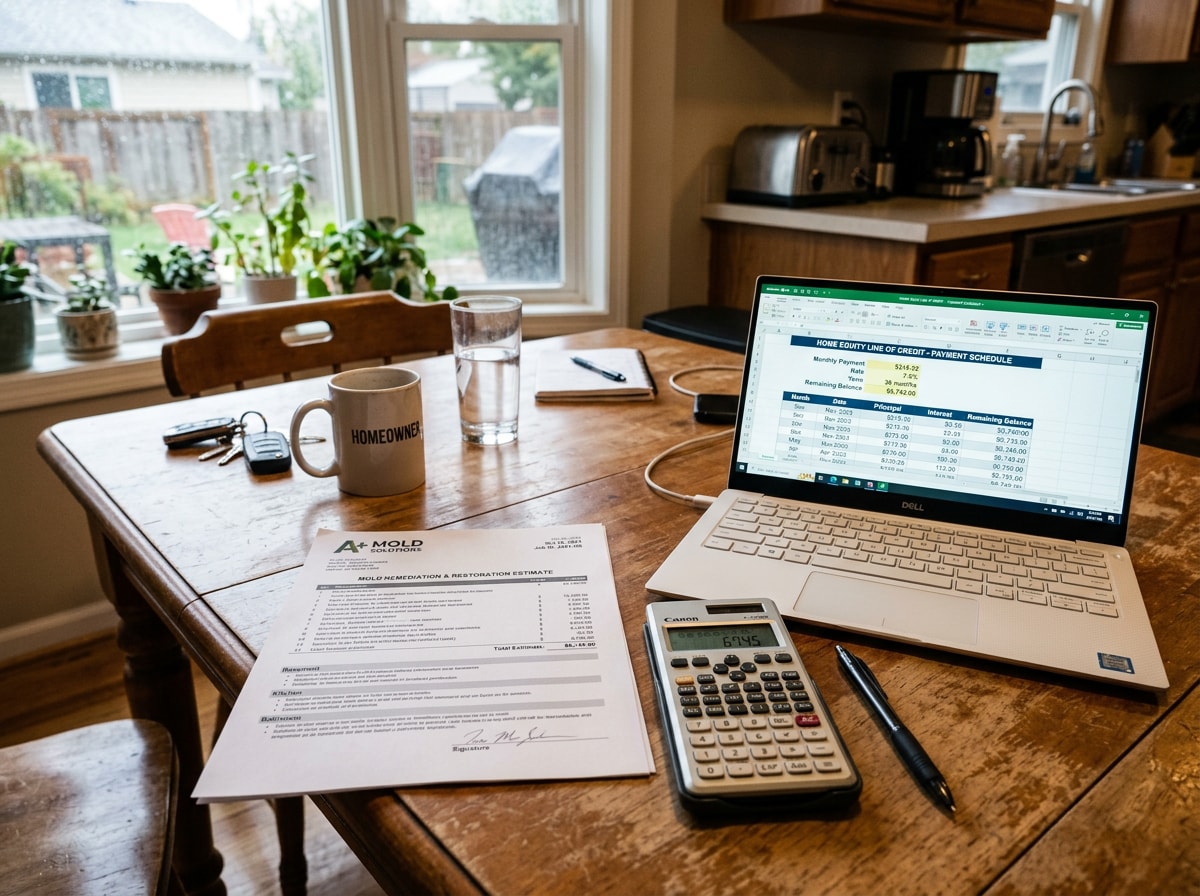
Typical requirements include proof of steady income or employment, a reasonable debt-to-income ratio, and a credit score that usually starts around 600 for approval, though the best rates go to borrowers above 700. Lenders may also ask for a copy of the mold remediation estimate to confirm the loan amount matches the project scope. Most online lenders can approve and fund a loan within one to three business days, though applicants with lower credit scores or incomplete paperwork should expect closer to a week.
Alternatives to Financing Mold Remediation
Not every homeowner wants to take on debt for a remediation project. A few alternatives are worth considering first:
- Paying in phases: Treat the active health hazard immediately and defer cosmetic repairs like drywall or flooring replacement, which shrinks the upfront cash needed substantially.
- Government repair assistance: Rural, income-qualified homeowners may have access to the USDA's Section 504 program.
Also known as the Section 504 Home Repair program, this provides loans to very-low-income homeowners to repair, improve or modernize their homes, or grants to elderly very-low-income homeowners to remove health and safety hazards , with loan terms running 20 years at a fixed rate and a lifetime grant cap for qualifying seniors.
- Scope reduction: A licensed mold inspection can sometimes confirm the problem is smaller than feared, lowering the quote before financing is even needed.
These programs have strict eligibility rules and limited funding, so it's worth checking early rather than assuming they'll cover the full cost.
A Typical Financing Scenario for Fort Worth Homeowners
Here's how the numbers tend to play out on a mid-size job, based on the quotes and timelines we see most often across Tarrant County. A homeowner discovers HVAC mold during a pre-sale inspection, with a remediation quote of $5,200. They choose a 36-month personal loan at a rate in the typical 10-16% APR range for good-to-fair credit, which works out to a monthly payment of roughly $170-$195. Approval comes back the same day, and the remediation crew starts work within 48 hours, well before the sale's closing deadline. By the time the loan is paid off three years later, the total cost including interest lands somewhere between $6,100 and $7,000.
In our own fieldwork across the metro, the jobs that hit that 25-square-foot licensing threshold are almost always found in attics and HVAC closets, where condensation builds quietly for months before anyone notices a stain. Homeowners comparing their own project against a quote like this can request a financing-friendly estimate to see where they'd likely fall in that range. For a broader look at how we handle projects across North Texas, see our completed projects or visit the Spotless Restoration homepage.
FAQ
Do Mold Remediation Companies Offer Financing?
Yes, most remediation companies offer financing, usually through a third-party lending partner. The three most common arrangements are in-house payment plans, same-as-cash promotional financing, and partnerships with personal loan lenders that fund approved projects within a day or two.
What Are the Mold Remediation Financing Options?
Financing options generally fall into four categories: personal loans, contractor or in-house financing, home equity borrowing such as a HELOC or cash-out refinance, and insurance claims where the damage qualifies as a covered peril. Each fits a different combination of timeline, credit profile, and project size.
Does Texas Require a License for Mold Remediation?
Yes, above a specific size. Mold contamination affecting a total surface area of 25 contiguous square feet or more generally requires a licensed consultant and contractor . Below that threshold, a homeowner can often clean it up themselves without hiring a licensed company.
What Factors Influence the Cost of Mold Remediation?
Cost depends on the size of the affected area, the type and severity of mold present, and where in the home the problem is located. A small bathroom leak costs far less to treat than a crawl space or HVAC system contaminated throughout, which is why quotes for seemingly similar homes can vary so widely.
Can I Deduct Mold Remediation From My Taxes?
Generally, no, for a typical owner-occupied home. If the amounts paid are not for an improvement to tangible property under the IRS's tangible property regulations, they generally are deductible as repairs and maintenance instead , but repairs on a personal residence aren't deductible the way they can be for a rental or business property. Rental property owners may have different options and should confirm their specific situation with a tax professional before filing.
Does a Home Warranty Cover Mold?
Most home warranty plans exclude mold entirely, since they're built to cover mechanical failures in systems and appliances rather than environmental damage. When coverage exists at all, it usually applies only if mold resulted directly from a covered mechanical failure, like a burst water heater. For nearly everyone else, financing remains the realistic path to getting remediation done.
---
About the Author: This guide was reviewed by the restoration team at Spotless Restoration, an IICRC-affiliated mold remediation and water damage restoration company serving Fort Worth and the greater Dallas-Fort Worth Metro. For a project-specific quote or financing walkthrough, contact our team.