Commercial restoration services in Fort Worth, TX have one job: get your business back open before downtime turns into real financial loss. Whether a burst pipe flooded your retail floor overnight or a kitchen fire shut down service, the clock starts the moment damage happens, not when it's convenient. This guide breaks down what commercial restoration actually covers, what drives the cost, and what to check before you hand a crew the keys to your building.
What Is Commercial Restoration?
Commercial restoration is the professional process of mitigating and repairing damage to business properties, offices, retail stores, warehouses, healthcare facilities, and schools, caused by water, fire, storms, or mold. In Fort Worth, all four show up on a regular rotation thanks to expansive clay soils, an aging commercial building stock, and a spring storm season that can turn a quiet Tuesday into a roof-tarp emergency.
A commercial loss pulls in more people than a typical homeowner claim. Property managers, tenants, insurance adjusters, and sometimes a code inspector or fire marshal all need to sign off before a business reopens. That means more detailed scope reports, more documentation, and a sharper focus on minimizing operational downtime.
Fort Worth's permitting and life-safety requirements add another layer to that process. We cover the compliance side in more depth in our regulatory remediation guide for Fort Worth property owners, which walks through what inspectors typically check before a damaged commercial space can reopen.
At Spotless Restoration, our Fort Worth commercial division is built around that reality. Our crews are IICRC-trained, carry commercial general liability coverage, and run every job on a documented scope so your insurance claim moves instead of stalling.
Our Fort Worth commercial restoration services cover:
- Water damage mitigation and structural drying
- Fire, smoke, and soot cleanup
- Storm and wind damage response
- Mold remediation and moisture control
- Post-loss reconstruction and build-back
- Industrial loss and hazardous-material-adjacent cleanup
- Large loss and multi-building recovery
- Pre-loss disaster planning
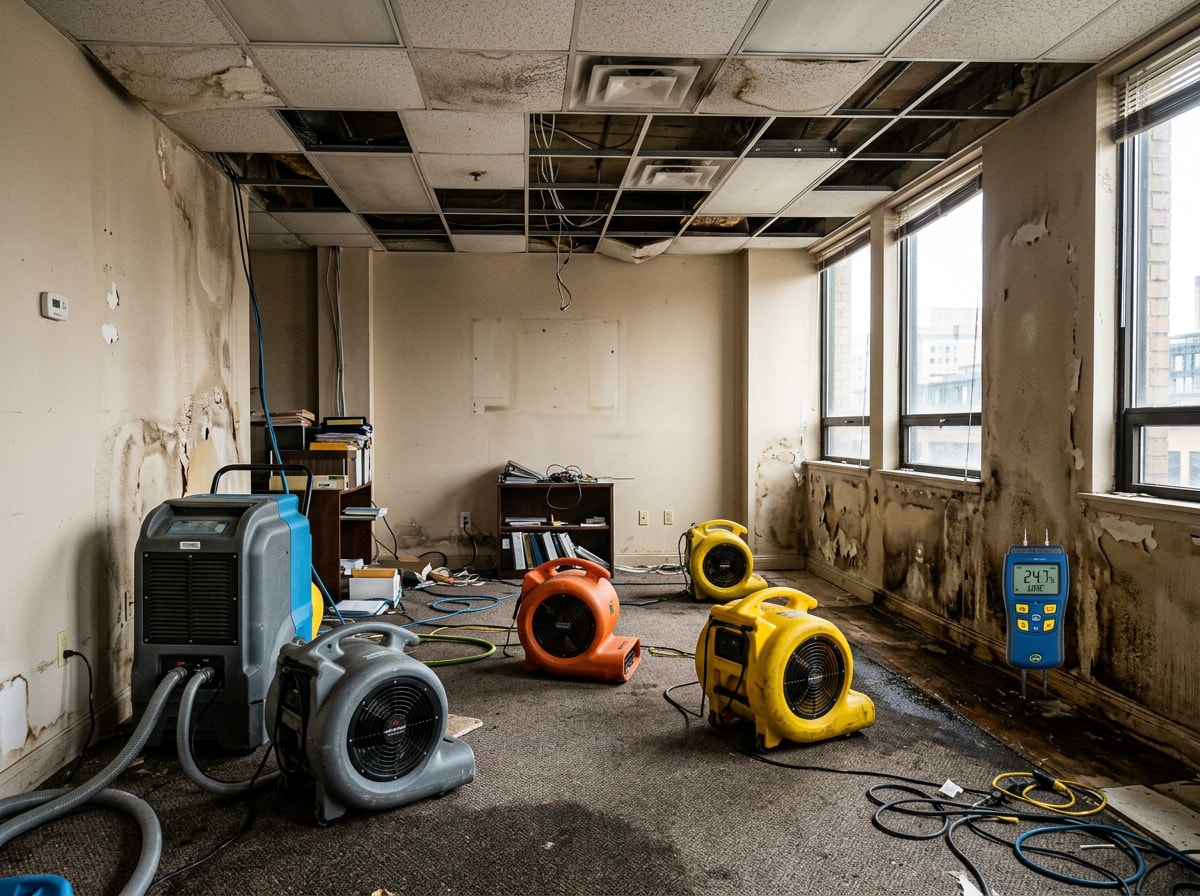
Commercial Restoration Services We Offer
Commercial Water Damage Restoration
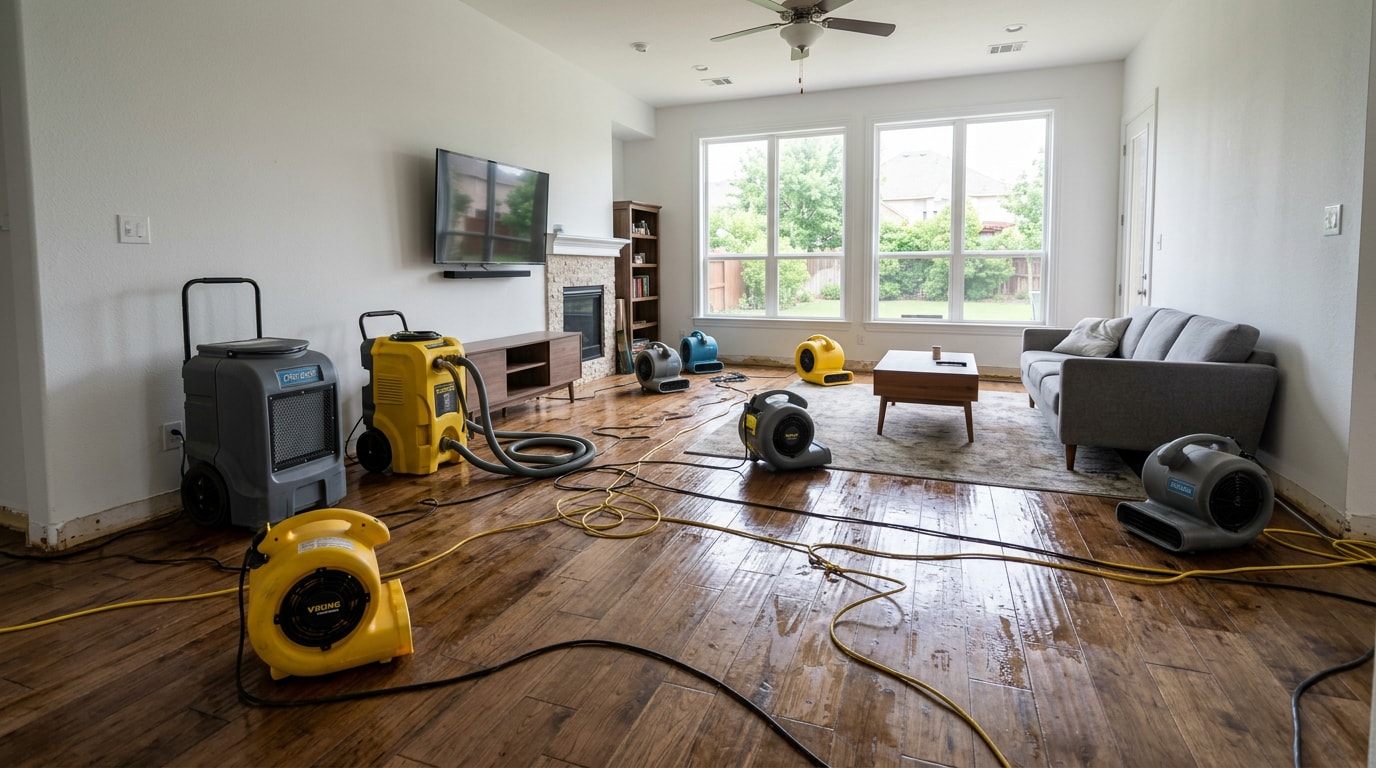
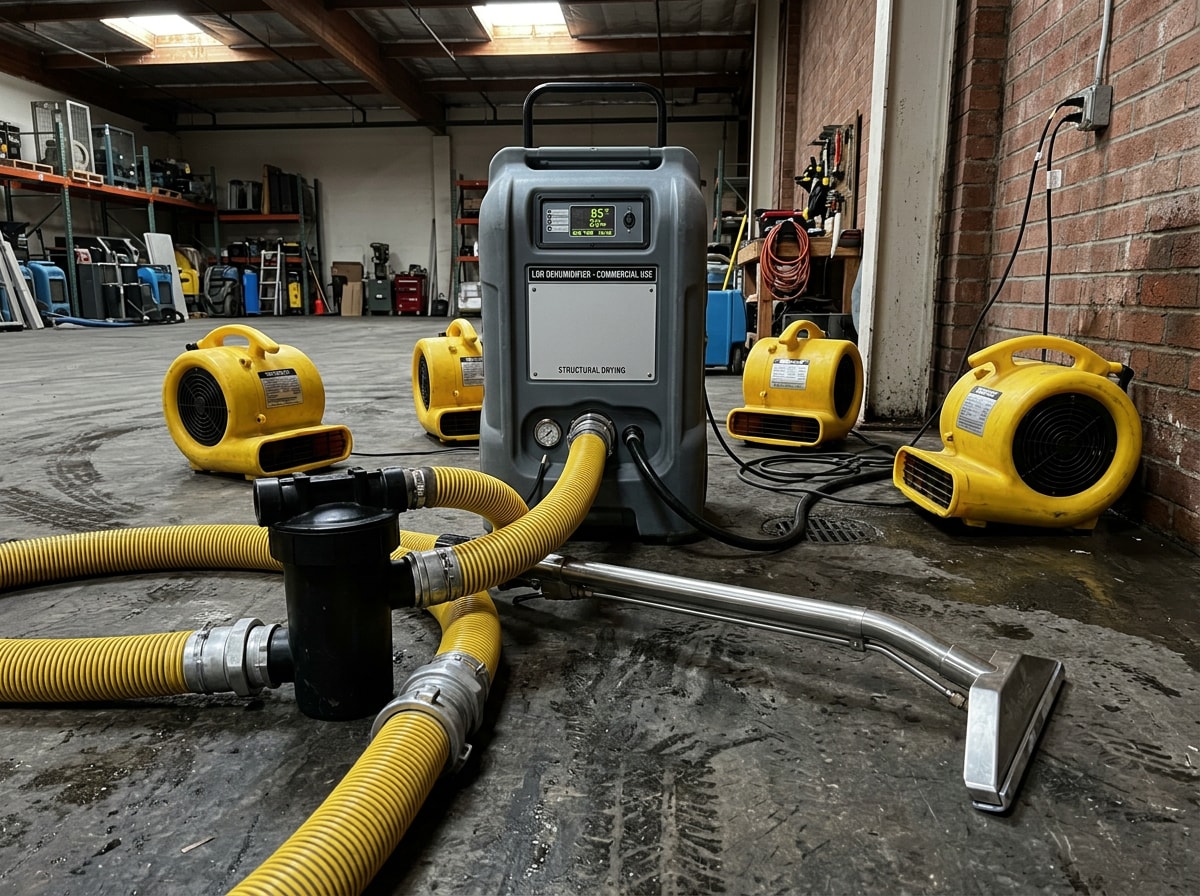
Water is the most common disaster commercial properties face, whether from a burst supply line, a failed roof membrane, or flooding that backs up into a ground-floor suite. Mitigation starts with extraction, then moves to structural drying, dehumidification, and ongoing moisture monitoring across offices, retail floors, and warehouse space.
Timing matters more than most owners expect. It is important to dry water-damaged areas and items within 24-48 hours to prevent mold growth. That's why extraction always happens before drying begins, not after. In our own Fort Worth projects, slab and wall-cavity moisture in older warehouse buildings often takes several days to a week of continuous monitoring before readings return to a safe range, longer than most owners initially expect.
This service line includes:
Full details are on the Water Damage Restoration category page.
Commercial Fire & Smoke Damage Restoration
Fire damage rarely stays contained to the flames alone. Smoke travels through HVAC systems, soot etches into porous surfaces, and suppression water adds a second damage category on top of the fire itself. Commercial fire restoration covers structural repairs, smoke cleanup, and soot removal, with crews sequencing work so a business can reopen as soon as the space is cleared for occupancy.
NFPA 921 sets the bar for scientific-based investigation and analysis of fire and explosion incidents, and is referenced in the field, in training, and in court as the foremost guide for rendering accurate opinions as to incident origin, cause, responsibility, and prevention. That framework shapes how fire marshals clear a building for re-entry, which in turn determines when restoration work can legally start.
This service line includes:
See the Fire Damage Restoration category page for the full breakdown.
Commercial Storm & Disaster Restoration
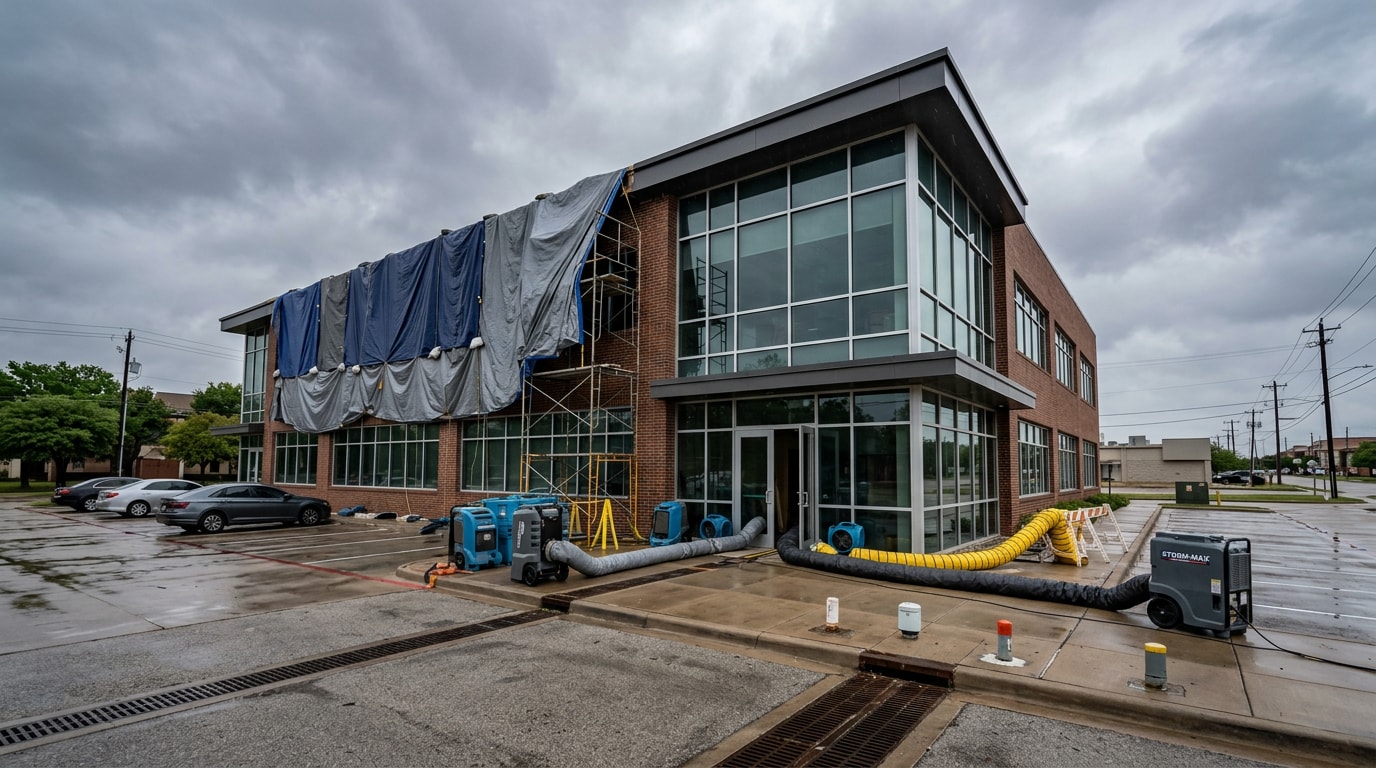
North Texas weather brings its own risk profile. Hail, straight-line wind, and heavy rain can tear into roofing, facades, and exterior glazing in a single afternoon. Storms in Fort Worth, TX tend to move fast, so disaster crews prioritize tarping and water-intrusion control before full repairs start, the same sequence used across the Dallas-Fort Worth Metroplex.
Commercial Mold Remediation
Mold remediation covers inspection, containment, and removal for offices, schools, and healthcare facilities where air quality can't be compromised. It often follows a water intrusion event, though long-term humidity in older Fort Worth buildings can trigger growth on its own. Containment keeps spores from spreading while crews remove affected materials.
This service line includes:
Full scope is on the Mold Removal category page, including Mold Remediation.
Commercial Reconstruction & Construction Services
Mitigation stops the damage. Reconstruction brings the property back to full use. These services range from drywall and flooring repairs to complete rebuilds after major structural losses, bridging the gap between cleanup and reopening.
This service line includes:
Find the full range on the General Contractors category page, including General Construction.
Industrial Loss Services
Industrial properties carry risks a standard office building doesn't: chemical storage, heavy equipment, and complex structural systems. The HAZWOPER standard applies to all operations that require, or have the potential to require, emergency response operations involving exposure to hazardous substances. That standard shapes how crews assess and stage an industrial loss before cleanup begins, especially on sites with chemical storage or process equipment.
Large Loss Restorations
A large loss involves real scale: multiple buildings, extended timelines, or damage affecting an entire facility. These projects call for heavier staffing, specialized equipment, and project management built around recovery from day one. You can see examples of completed large-scale work on our Projects page.
Disaster Planning Services
Restoration doesn't have to wait for a disaster to happen. Pre-loss planning includes property assessments and restoration consultations that help facility managers spot vulnerabilities before an emergency hits. A business preparedness plan should encompass communications planning, IT support and recovery, and continuity plans. Pairing that kind of plan with a restoration partner who already knows your building cuts response time significantly when something does go wrong.
If you manage property anywhere in the Dallas Fort Worth Metro, request a consultation to build a response plan before you need one.
What Affects Commercial Restoration Cost in Fort Worth
Every commercial loss is different, so an accurate number always comes from an on-site assessment rather than a flat rate. That said, a few factors consistently move the price up or down.
| Cost Factor | Why It Matters |
|---|---|
| Square footage affected | Larger footprints mean more extraction, drying equipment, and labor hours |
| Water category or contamination level | Clean water costs less to mitigate than contaminated or Category 3 water |
| Response time | Calling within hours of a loss limits secondary damage like mold and structural decay |
| Building systems involved | HVAC, electrical, and fire suppression systems add inspection and repair steps |
| Reconstruction scope | Cosmetic repairs cost less than structural rebuilds or full interior renovation |
| Insurance documentation needs | Detailed scope reports and photo logs take time but speed up claim approval |
Why Fort Worth Businesses Choose Our Team
Property managers and business owners usually compare a short list of things before hiring a commercial restoration crew:
- 24/7 emergency response, because water and fire damage don't wait for business hours
- Direct insurance coordination, with adjusters working from the same scope documentation as your claim
- IICRC-trained technicians who follow documented drying and remediation protocols, not guesswork
- Local crews who already know Fort Worth's permitting process and common building types
- One point of contact from mitigation through reconstruction, instead of handing the project off between companies
If your property has sustained damage, request a consultation and we'll walk the site, document the scope, and get mitigation started the same day where possible.
FAQ
What types of commercial restoration services are offered in Fort Worth, TX?
Full-service restoration spans water, fire, storm, and mold damage, plus reconstruction and industrial loss handling, covering nearly any property damage situation a Fort Worth business might face.
How fast can a commercial restoration crew respond after a loss?
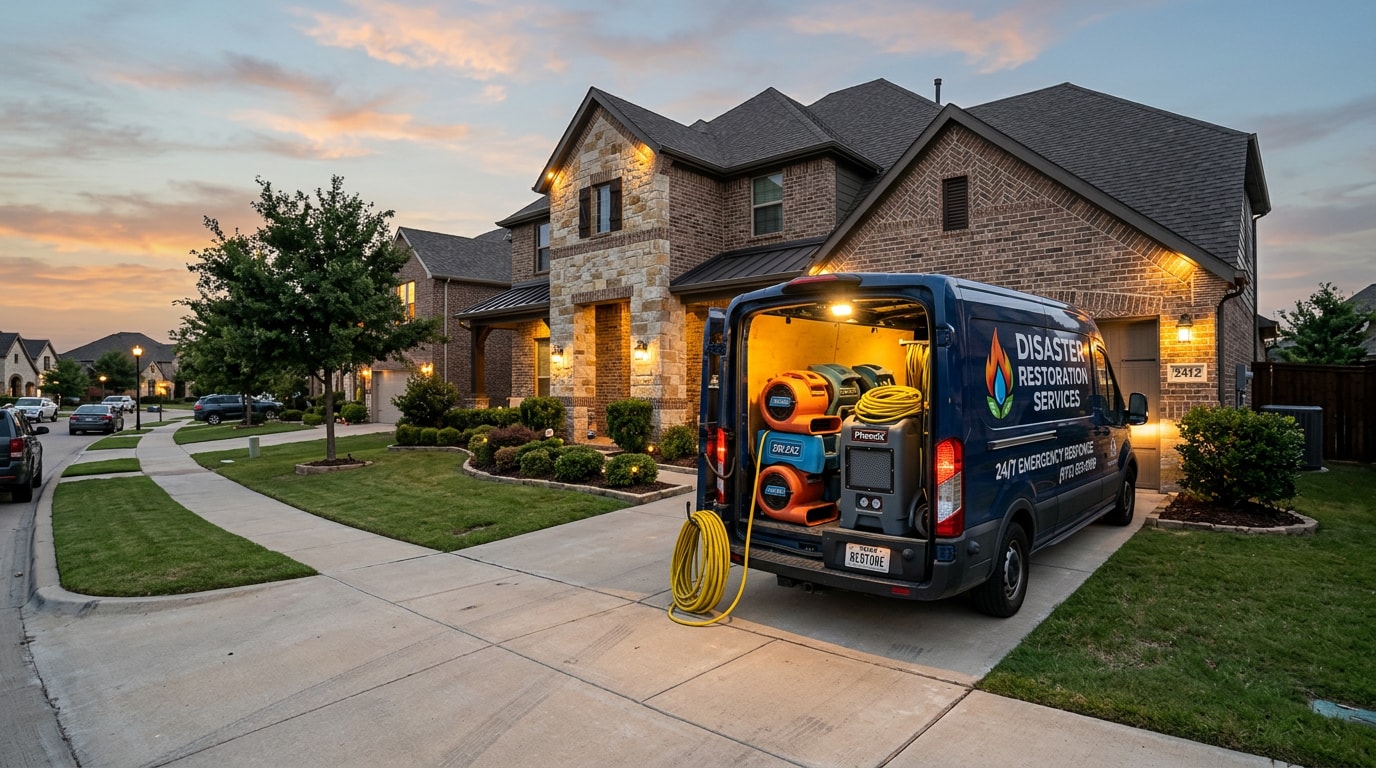
Emergency crews should be dispatched 24/7, with on-site arrival typically within a few hours of the call. Faster response directly limits secondary damage, since mold and structural decay both accelerate the longer water or smoke sits untreated.
How long does commercial restoration take?
Timelines vary widely. Small losses may wrap up in days, while large-scale damage can stretch into weeks or months. Severity, not damage type, is usually the biggest factor behind the timeline.
How much does commercial restoration cost?
Cost depends on square footage, damage category, and how quickly mitigation begins. Every project differs, so accurate pricing comes from an on-site assessment rather than a flat estimate.
Do you work with commercial insurance carriers?
Yes. Direct coordination with carriers and adjusters is standard practice, backed by detailed documentation, scope reports, photos, and video logs, that helps move commercial insurance claims along from start to finish.
What should Fort Worth businesses look for when hiring a commercial restoration company?
Look for 24/7 availability, IICRC-trained technicians, direct insurance coordination, and a single point of contact that covers mitigation through reconstruction. Local experience with Fort Worth permitting and inspection requirements also speeds up reopening.
Do you handle hazardous materials during commercial restoration?
Crews follow hazard assessment protocols before work begins on any site with suspected chemical storage, asbestos, or lead-containing materials, and bring in licensed specialists for abatement work outside standard mitigation scope.