Regulatory remediation in Fort Worth, TX means cleaning up a hazard such as asbestos, lead, mold, or contaminated soil in a way that satisfies TCEQ and EPA rules, not just removing the visible problem. Skip a step on sampling, containment, or disposal paperwork and a regulator can force the work redone, even after you've already paid for it once. Here's what actually has to happen, in order, to reach regulatory closure on a Fort Worth property.
What Makes Remediation "Regulatory"
Standard cleanup and regulatory remediation look similar on the surface. The difference shows up in the paperwork trail.
Every step, from pre-work testing to final waste manifests, has to hold up if a state or federal agency reviews the file later. That's true whether the trigger is an emergency water loss, a planned renovation, or a property sale that surfaced old contamination.
As a full-service restoration and remediation contractor, Spotless Restoration USA handles projects at every stage of that process, from the first inspection through the documentation a regulator signs off on.
Common Regulated Hazards in Older Fort Worth Properties
Fort Worth's building stock spans Depression-era bungalows in Fairmount to 1970s industrial parks near the Stockyards, and each era hides its own regulated materials. Knowing which hazard applies determines who needs to be on the job and what paperwork follows.
- Asbestos and lead in insulation, flooring, and paint, common in buildings constructed before 1978
- Mold and moisture damage, often following an undetected leak or flood
- Biohazard and medical waste, regulated separately from standard hazardous waste
- Soil and groundwater contamination, typically tied to industrial, dry-cleaning, or fueling operations
- Air duct and HVAC contamination, which can recirculate particulates after any of the above
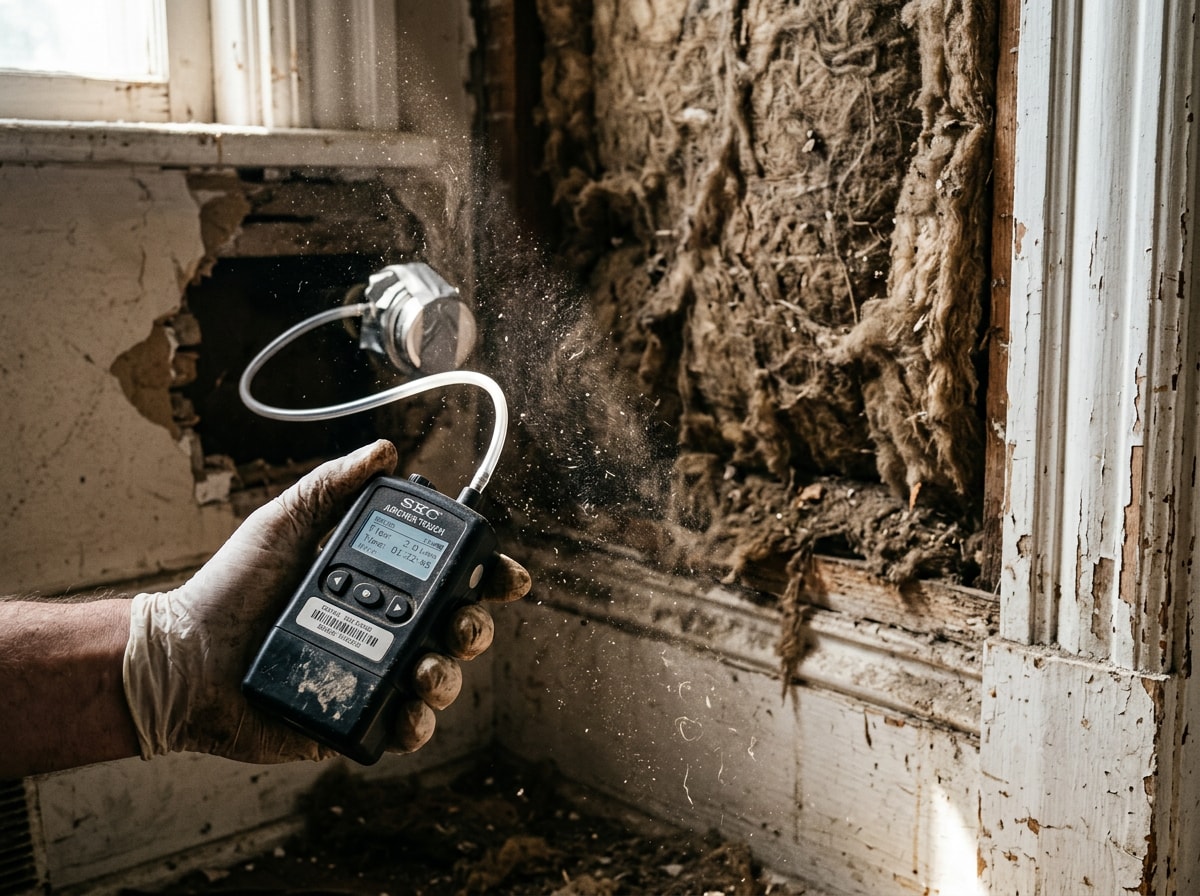
Lead-based paint work specifically falls under the EPA's Renovation, Repair and Painting Rule, which requires firms performing renovation, repair and painting projects that disturb lead-based paint in homes, child care facilities, and kindergartens built before 1978 to be EPA- or state-certified . Crews that skip this certification put the property owner at risk of federal penalties, not just a failed inspection.
Mold findings often start with a mold inspection and move into mold remediation once testing confirms the scope. If the mold traces back to a past leak, a water damage inspection can identify the moisture source so it doesn't come back after cleanup.
Regulatory Compliance Services for Fort Worth Businesses
Not every regulatory remediation project starts with a spill or a damaged building. Industrial and oil and gas facilities around Fort Worth carry ongoing compliance obligations even when nothing has gone wrong yet.
Two recurring deliverables illustrate this:
| Plan | What It Covers | Who Needs It |
|---|---|---|
| Storm Water Pollution Prevention Plan (SWP3) | Identifies where stormwater could pick up pollutants on-site and puts controls in place before runoff reaches a storm drain | Industrial and construction sites with regulated discharge points |
| Spill Prevention, Control, and Countermeasure (SPCC) Plan | Requires secondary containment, inspections, and a written response plan | Sites storing certain volumes of oil or fuel |
Both plans are preventive. They exist so a facility never has to go through full remediation in the first place.
Remediation Design, Oversight, and Site Assessment
Once contamination is confirmed, the work shifts from identifying the problem to designing a fix a regulator will accept. That typically includes:
- Bidding the project and selecting a qualified contractor
- Developing a remediation design and work plan
- Overseeing the contractor through execution
- Sampling during and after cleanup
- Tracking costs and documentation along the way
Many Fort Worth projects also lean on risk-based strategies, like a Municipal Setting Designation, when full removal of every trace of contamination isn't practical or necessary to protect public health. The Texas MSD law gives TCEQ authority to certify these designations for properties with contaminated groundwater located inside a city or its extraterritorial jurisdiction, provided the city supports the application. Past project examples, including commercial site cleanups, are documented on our projects page.
Closure Through Texas Regulatory Programs
Closure is the point where a site has met TCEQ's requirements and no longer carries open regulatory liability for contamination. Several TCEQ programs reach that point differently depending on the site's history:
| Program | Best For | What It Resolves |
|---|---|---|
| Voluntary Cleanup Program (VCP) | Current owners, often ahead of a sale or redevelopment | Liability protection via a certificate of completion |
| Innocent Owner/Operator Program (IOP) | Owners who didn't cause the contamination | Shields from certain enforcement liability |
| Dry Cleaner Remediation Program (DCRP) | Current and former dry-cleaning sites | State-administered fund for solvent contamination cleanup |
| Corrective Action | Sites where TCEQ identified contamination | Enforcement-driven investigation and cleanup |
| Municipal Setting Designation (MSD) | Sites where groundwater use can be restricted | Limits exposure pathways to speed closure |
The VCP is a brownfields program designed to address sites burdened by real or perceived environmental issues that may hamper real estate transactions or redevelopment , and non-responsible parties who complete it receive liability protection, which removes most of the constraints on completing real estate transactions at those sites . The Dry Cleaner Remediation Program establishes a prioritization list of dry cleaner sites and administers a fund to assist with remediation of contamination caused by dry cleaning solvents .
For a full breakdown of these programs, see TCEQ's Voluntary Cleanup Program page. Which program applies depends heavily on how contamination was discovered and who's requesting closure, so confirm this early with a consultant rather than assuming.
Who Actually Regulates This in Texas
The TCEQ handles most environmental remediation oversight in Texas, but it isn't the only agency with jurisdiction. For oil and gas production sites specifically, the Railroad Commission of Texas runs its own Voluntary Cleanup Program, open to parties that did not cause or contribute to the contamination, which releases them and future landowners, lenders, and operators from state liability in exchange for a successful cleanup . RRC staff provide technical assistance during investigation and remediation and oversee cleanup to standards outlined in the Texas Risk Reduction Program .
Knowing which agency has jurisdiction, TCEQ, the Railroad Commission, or the EPA, determines which program and paperwork apply to your site. More detail is available directly from the Railroad Commission's oil and gas remediation program.
Why OSHA HAZWOPER Training Matters on Fort Worth Sites
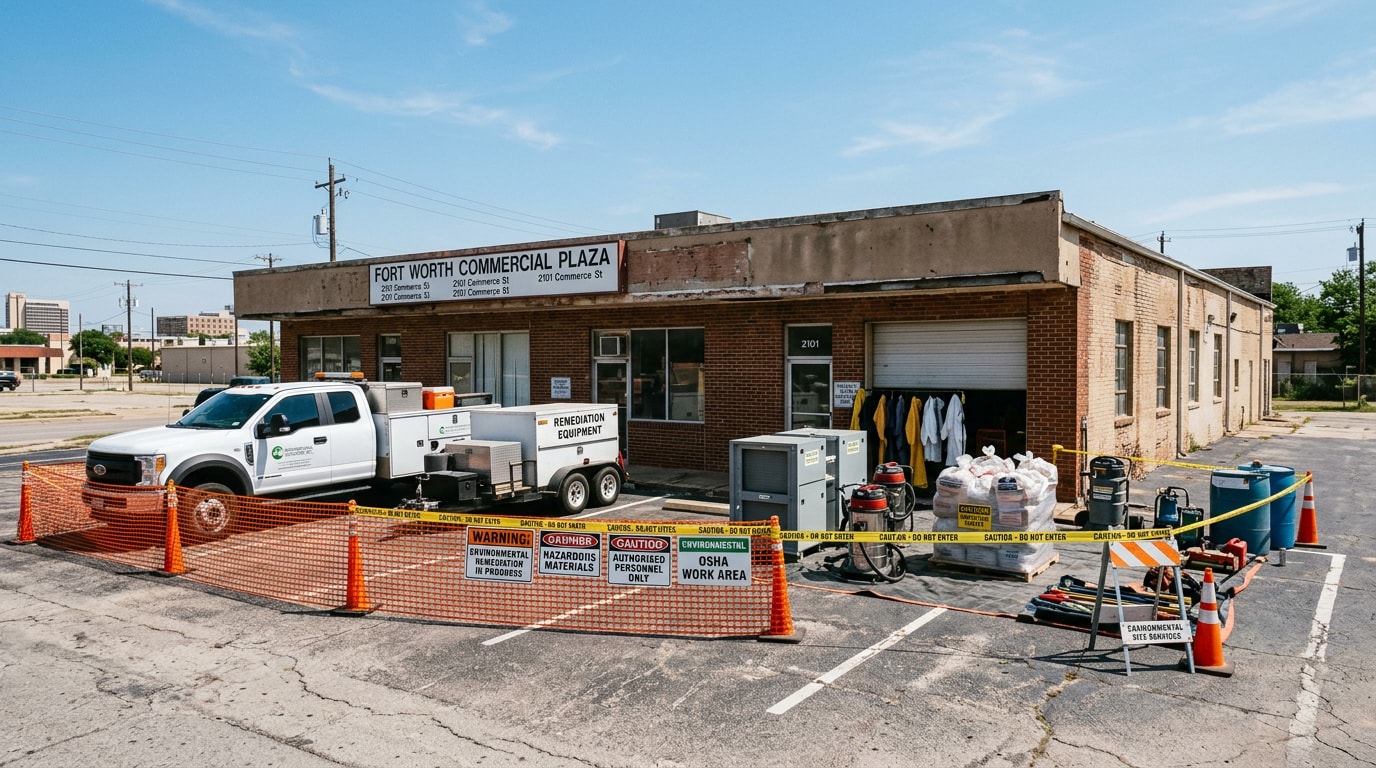
Field personnel on industrial remediation projects are typically OSHA HAZWOPER-trained, and that requirement isn't optional for regulated sites. The Hazardous Waste Operations and Emergency Response standard, 29 CFR 1910.120, was published in the Federal Register in March 1989 and became effective in March 1990 . The standard's cleanup operations cover environmental remediation activities at locations such as Superfund sites, brownfield sites, and abandoned industrial sites recognized by a governmental agency as having the potential for worker exposure to hazardous substances .
Businesses vetting a contractor for industrial remediation in Fort Worth should ask directly whether field crews hold current HAZWOPER certification, not just general safety training. Details on the standard itself are available from OSHA's HAZWOPER program page.
Commercial and Industrial Remediation Services
Fort Worth facilities dealing with ongoing waste streams or industrial processes need a provider that covers more than a single cleanup event. A full-service lineup typically includes:
- Field and in-plant services
- Tank and vessel line cleaning
- Hazardous waste analysis, removal, and disposal
- Industrial vacuum services
- 24-hour emergency spill response
- Confined space entry and rescue
- Grit and sand trap cleaning
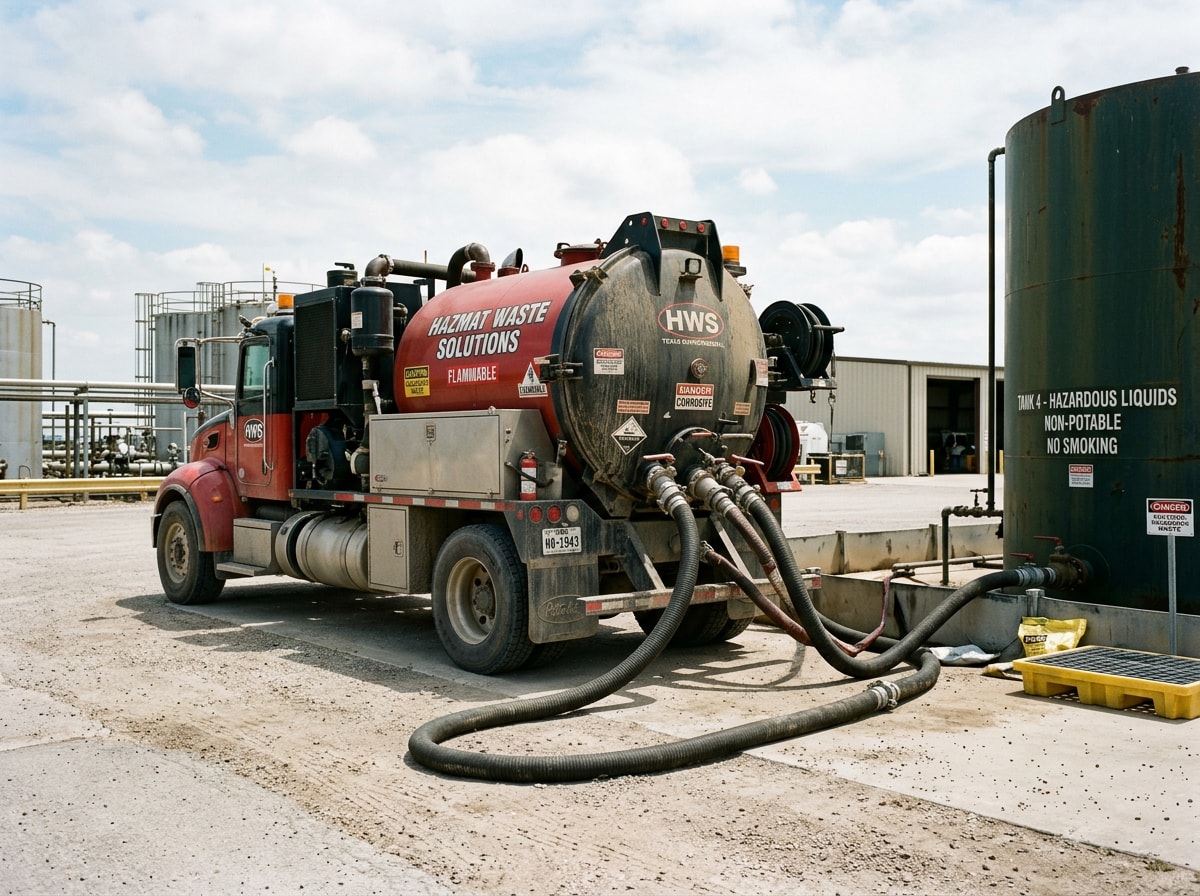
Licensing matters as much as the service list. A provider should maintain every federal, state, and local license required to operate in Fort Worth so work is performed in compliance with current regulations, not just general industry habits.
Hazmat Response and Spill Cleanup in Fort Worth
Hazmat response covers situations beyond planned remediation: leaking drums, toxic waste cleanup, medical waste disposal, confined space rescue, and condemned property cleanup. These scenarios typically arrive without warning, which is why providers keep crews on call around the clock.
Spill response has an authorization issue worth knowing before you call the first number you find. Not every company that shows up quickly to a fuel spill is actually authorized by TCEQ to perform hazmat cleanup. Before hiring anyone for emergency spill response, confirm TCEQ authorization directly rather than assuming a fast response means a qualified one.
If a water event is part of the spill, structural drying services and flood damage repair often run alongside the hazmat response rather than after it.
A Real-World Example: Dry Cleaner Site Closure
A dry-cleaning facility in a Fort Worth retail corridor had solvent contamination surface during a property sale. Rather than face open-ended liability, the new owner enrolled the site in TCEQ's Dry Cleaner Remediation Program, which covers investigation and cleanup tied to historical solvent use.
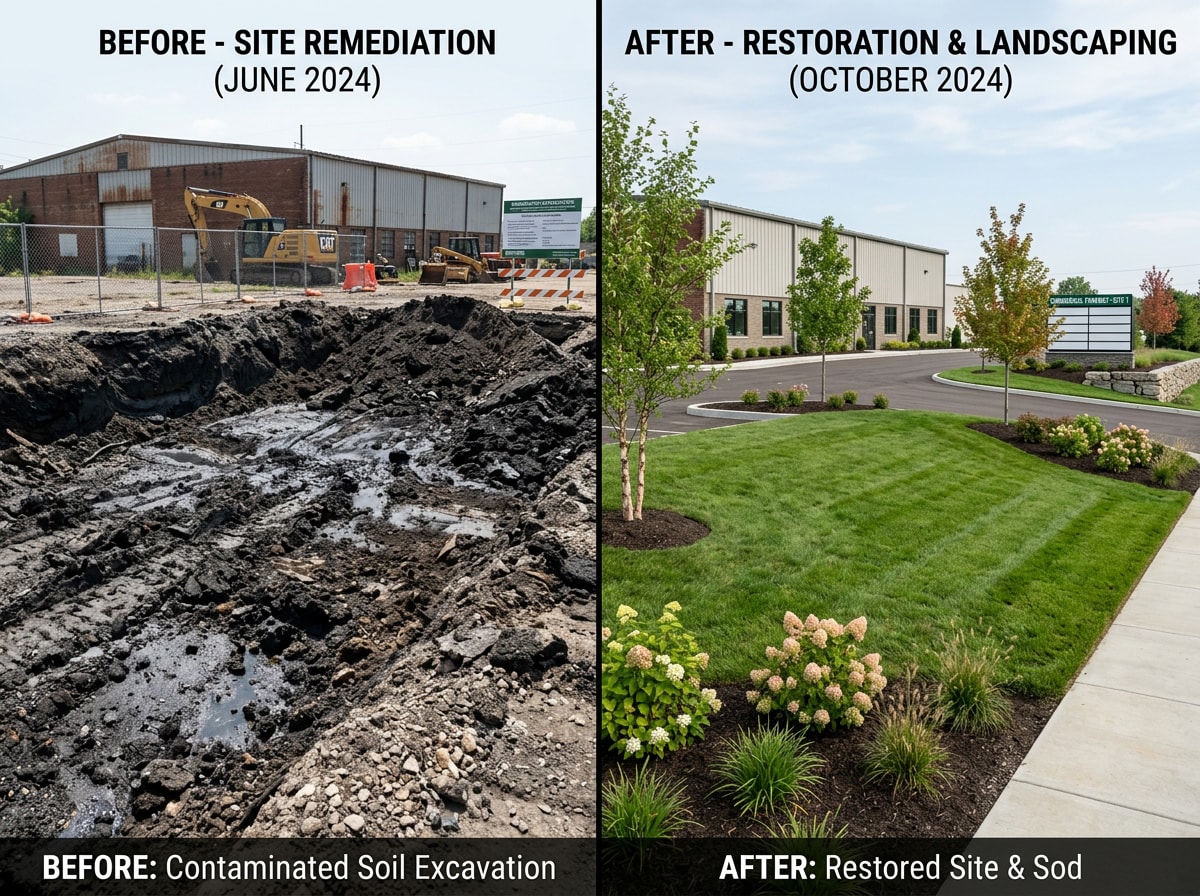
Sampling confirmed the contamination plume, a remediation design targeted the affected soil and groundwater, and ongoing monitoring tracked progress toward closure. Groundwater-involved cases like this commonly take one to several years to reach final closure, depending on plume size and monitoring requirements, which is a realistic timeline rather than a quick fix. Once a site reaches closure, reconstruction work like home reconstruction or interior buildout can proceed without the contamination flag following the property.
Choosing a Fort Worth Regulatory Remediation Contractor
Before signing with any provider, confirm:
- Current TCEQ authorization and all required federal, state, and local licenses
- Field staff carry current OSHA HAZWOPER certification, not expired training
- Direct experience with the specific TCEQ program your site may fall under (VCP, DCRP, MSD, etc.)
- A documented process for sampling, disposal manifests, and closure reporting
- Service coverage across Fort Worth, TX and the broader Dallas-Fort Worth Metro if the project spans multiple sites
If your project started as water or fire damage and only later turned up a regulated hazard, our guide on what remediation actually means in construction) walks through how the two processes connect.
Ready to find out which program applies to your property? Get a free consultation and we'll walk you through the testing, design, and closure steps specific to your site.
FAQ
What does "regulatory remediation" actually mean?
It means cleaning up a hazard, like mold, asbestos, lead, or contaminated soil, in a way that satisfies the specific state and federal rules governing that contaminant. The process includes testing, containment, disposal documentation, and often a formal closure step, not just physical removal.
Who regulates environmental remediation in Texas?
TCEQ handles most environmental remediation oversight in Texas, while the EPA sets the federal standards TCEQ programs must follow. For oil and gas production sites specifically, the Railroad Commission of Texas runs its own voluntary cleanup program instead of TCEQ. Knowing which agency has jurisdiction determines which paperwork and program apply.
How long does regulatory remediation take in Fort Worth?
Timelines vary by project type. A minor spill cleanup might wrap up in days or weeks, while a TCEQ-overseen groundwater case moving through Corrective Action or the Voluntary Cleanup Program can take one to several years depending on contamination extent and monitoring requirements.
How can I remove mold in a commercial building the right way?
Start with a third-party assessment to test samples before any work begins. Based on those results, the remediation plan may range from targeted cleaning to full containment and material removal, depending on the extent of growth and moisture source.
What should I check before hiring a Fort Worth remediation company?
Verify the company holds current TCEQ authorization and all required federal, state, and local licenses. Confirm field staff carry current OSHA HAZWOPER training, and ask about direct experience with the specific TCEQ program your site may fall under before requesting a quote.
Is regulatory remediation required before I can sell a contaminated Fort Worth property?
Not always required by law, but most buyers, lenders, and title companies will require it in practice. Enrolling in a program like the VCP before closing often moves the transaction forward faster than leaving the contamination unaddressed.
---
About this guide: Prepared by the Spotless Restoration USA remediation team, which handles TCEQ- and EPA-regulated cleanup projects across Fort Worth and the Dallas-Fort Worth Metro. For project-specific questions, contact our team directly.