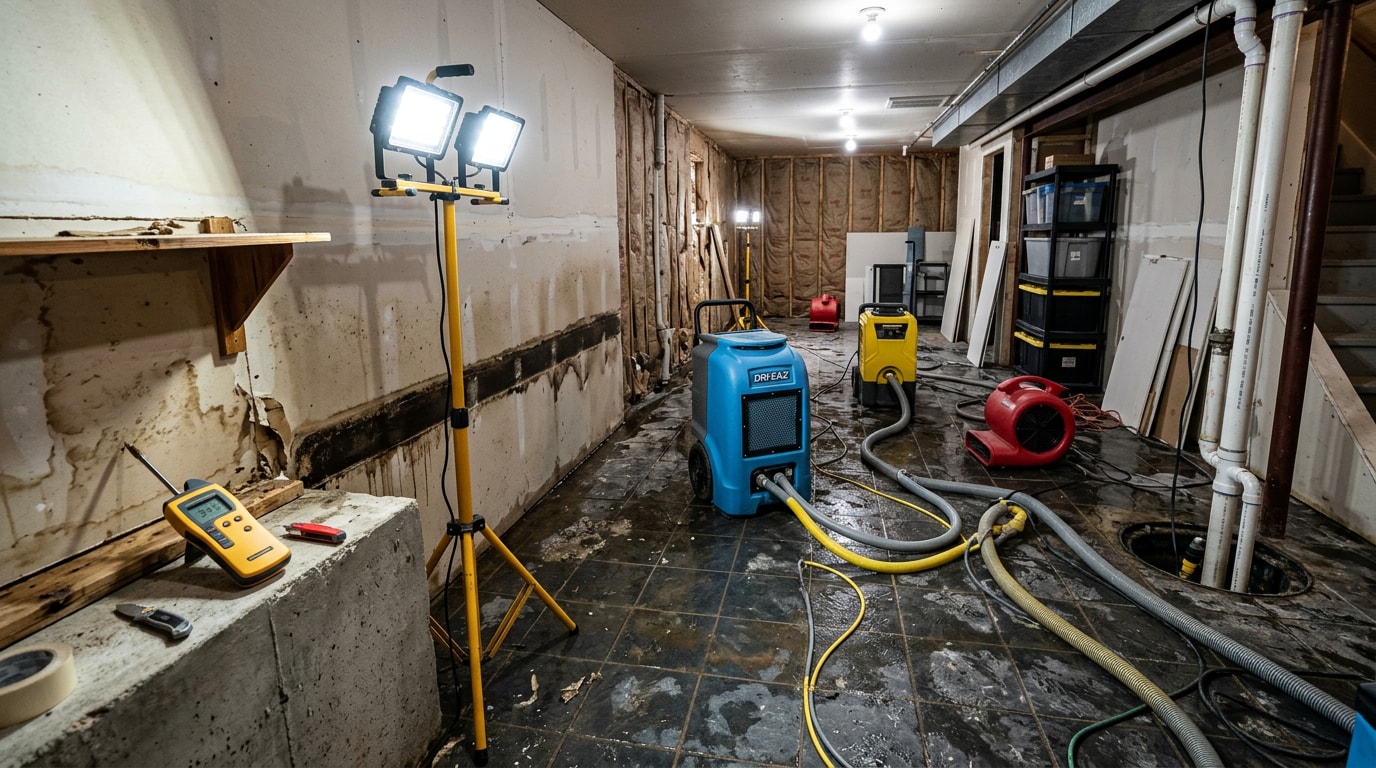
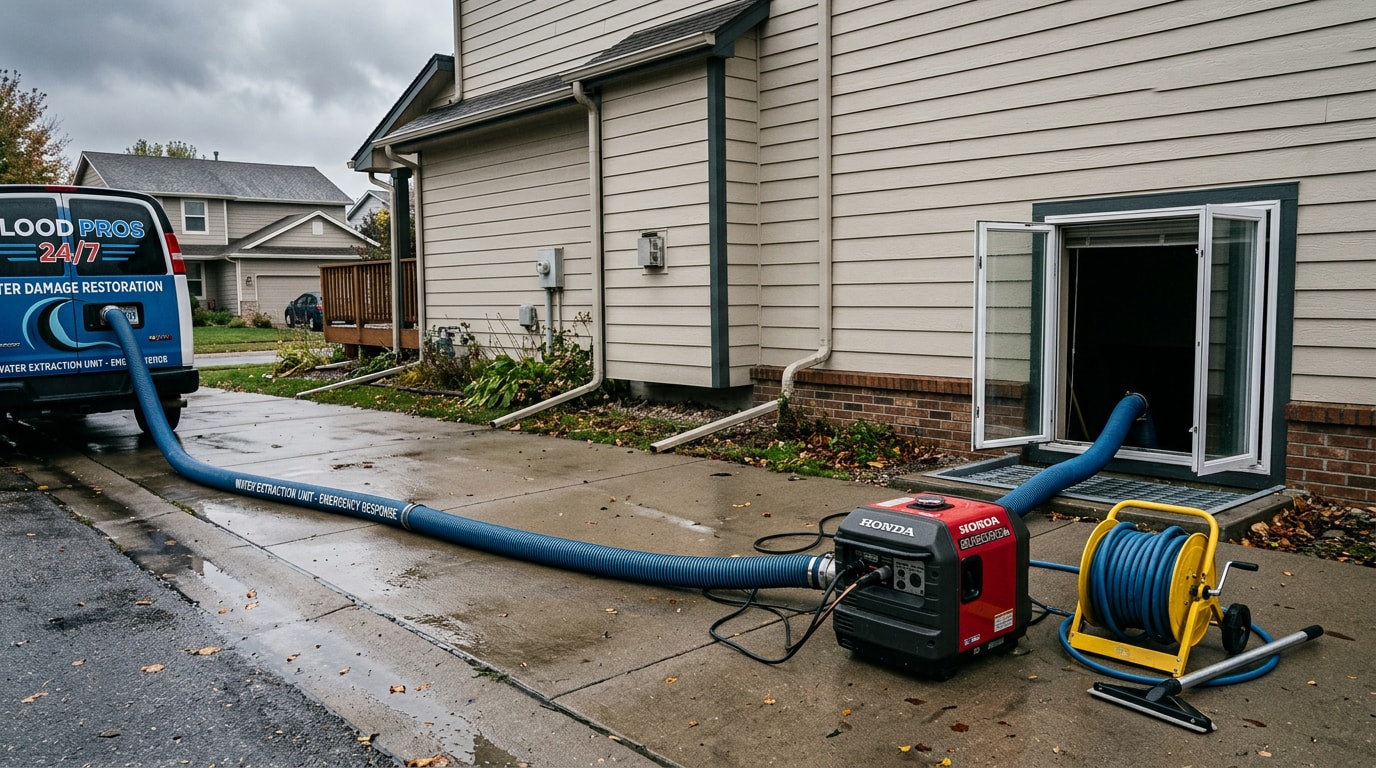
Basement flood clean up in Fort Worth, TX has to move faster than most homeowners expect, because Tarrant County's expansive clay soil keeps pushing groundwater against foundation walls long after a storm passes. A flooded basement left standing for even a day can let mold colonize drywall and framing. This guide walks through the exact steps our IICRC-trained crews follow on every Fort Worth call, starting with the safety check you need to make before you touch anything.
Flooded Basement Right Now: What To Do First
If you're standing at the top of the basement stairs looking at standing water, stop before you go any further. Water near outlets, a water heater, or a furnace can carry a live electrical charge.
If water has been present anywhere near electrical circuits and electrical equipment, turn off the power at the main breaker or fuse on the service panel, and never enter flooded areas or touch electrical equipment if the ground is wet. If you can't reach the breaker safely from a dry, elevated spot, leave the area and wait for a professional.
Once power is confirmed off, work through this short checklist:
- Identify the water source. Clean groundwater, a burst pipe, and sewage all call for different equipment and PPE.
- Avoid wading through standing water. It can hide submerged hazards and electrical risk.
- Photograph the damage for your insurance claim before anything is moved or removed.
- Call for professional extraction rather than waiting to see if it dries on its own.
These steps buy time until help arrives. They are not a substitute for extraction, since standing water can hide structural damage that only trained technicians can assess safely. If you need a crew dispatched now, contact us for 24/7 emergency response.
Why Fort Worth Basements Flood: Causes, Signs & the Clay Soil Factor
Full basements are less common in Fort Worth than in much of the country, and there's a specific reason for that. The primary reason basements are uncommon in Texas is due to the state's unique soil composition, since much of Texas is built on expansive clay soil, also called "shrink-swell" soil, that expands significantly when wet and contracts when dry.
Clay soils that shrink and swell seasonally exert enormous lateral and heaving pressure on below-grade walls, powerful enough to crack even reinforced concrete.
That's exactly why the basements, cellars, and below-grade rooms that do exist in older Fort Worth homes, and in newer custom builds, face a flooding risk that homes in other regions don't: hydrostatic pressure from swelling clay can keep forcing water through foundation walls for days after a storm ends, even once the rain has stopped.
Beyond that regional quirk, the usual causes still apply:
- Heavy spring storms overwhelming yard drainage and window wells
- Sump pump failure during a downpour, which can flood a basement in under an hour
- Aging or cracked plumbing feeding a slow, hidden leak
- Sewer backups, where a city main surcharge or a collapsed lateral pushes water up through the lowest drain in the house
Watch for standing water, musty odors, warped flooring, and mold along baseboards. Sewer backup water is Category 3 and carries bacteria and waste contaminants, so it needs disinfection, not just fans and mopping. If you see signs of mold already forming on walls or belongings, our mold remediation team can inspect and treat it as part of the same visit. (Note: this link uses the on-site token format below.)
If you spot mold, our mold remediation team can inspect and treat it as part of the same visit, since basement humidity lingers longer than it does in rooms above grade.
Basement Flood Cleanup Services in Fort Worth, TX
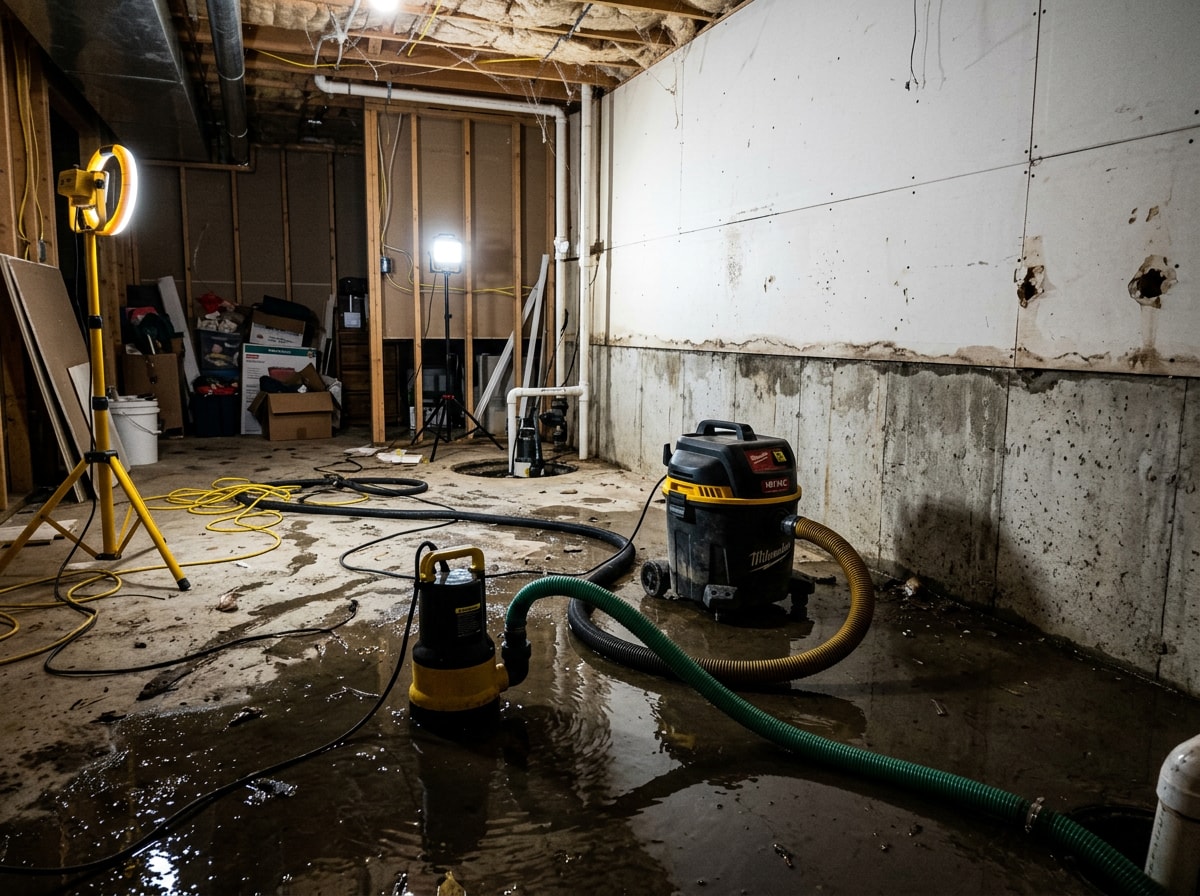
A basement flood rarely touches just one surface. Floodwater reaches framing, flooring, wiring, and belongings all at once, so our crews handle the full scope under one roof:
- Water extraction – Truck-mounted pumps and submersible vacuums pull out standing water fast, often within the first hour on site. For large or multi-room losses, our emergency water removal service scales up equipment accordingly.
- Inspection and documentation – A water damage inspection maps how far water traveled into walls, subfloor, and framing before any demolition starts.
- Structural drying – Industrial air movers and dehumidifiers run until daily readings confirm the slab, framing, and wall cavities are actually dry. Learn more about our structural drying services.
- Flood damage repair – Damaged drywall, subfloor, and trim get replaced through our flood damage repair process once drying is verified.
- Mold remediation – Technicians inspect damp cavities and treat affected materials before spores spread.
- Content restoration – Furniture, boxes, and belongings are cleaned, dried, or packed out for specialized cleaning.
- Sewage cleanup – Contaminated water from sewer backups is treated as a biohazard, with disinfection before any drying begins.
A quick appliance overflow might only need extraction and drying. A sewer backup touches nearly every service on this list. See our full water damage restoration category for everything we cover beyond the basement itself.
Our 8-Step Basement Flood Cleanup Process
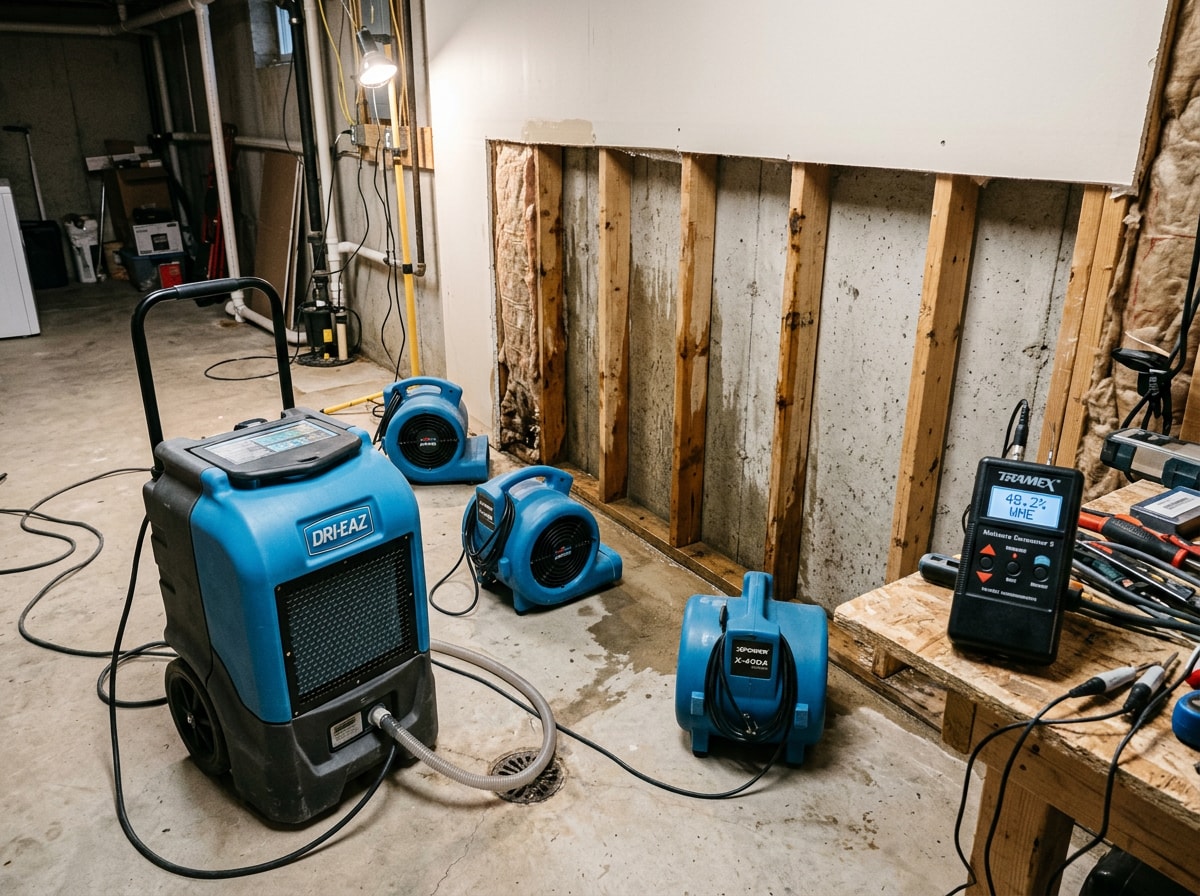
Every job follows the same general arc, though the details shift depending on water category and how long it sat before crews arrived.
- Safety assessment – Confirm power is off and identify the contamination level.
- Water extraction – Pumps and vacuums remove standing water, often within the first hour.
- Inspection and moisture mapping – Moisture meters track how far water traveled into walls, framing, and subfloor.
- Removal of unsalvageable materials – Soaked drywall, insulation, and carpet padding that can't dry come out.
- Cleaning and disinfection – Affected surfaces are treated, which is especially critical after sewage jobs.
- Structural drying – Air movers and dehumidifiers run until readings confirm the structure is dry, not just dry to the touch.
- Monitoring – Technicians verify readings hold steady, following procedures consistent with the official ANSI/IICRC S500 standard for professional water damage restoration.
- Repair and rebuild – Drywall, flooring, and trim go back in once drying is verified.
Drying time and cost both depend heavily on water category. Here's roughly what Fort Worth homeowners can expect:
| Water Category | Typical Cause | Avg. Cleanup Cost | Typical Drying Time |
|---|---|---|---|
| Category 1 (clean) | Supply line break, appliance overflow | $500 to $1,500 | 1 to 3 days |
| Category 2 (gray) | Sump pump failure, washing machine discharge | $1,000 to $5,000 | 3 to 5 days |
| Category 3 (black) | Sewer backup, storm or groundwater flooding | $3,000 to $12,000+ | 5 to 14+ days |
The average cost to remove standing water and dry out a flooded basement is about $3,000 to $5,000, though the price can vary widely depending on the cause and extent of the damage.
More extensive basement flood repair, including contamination level and volume of water, can run from $3,000 to $12,000. A Category 2 appliance-overflow basement might finish structural drying in three to five days, while a Category 3 sewer-backup basement often needs extra disinfection cycles and can take a week or more, since clay soil in this region keeps pushing groundwater against foundation walls after storms, slowing drying even after extraction is done.
Why Fort Worth Homeowners Choose Us for Basement Flood Cleanup
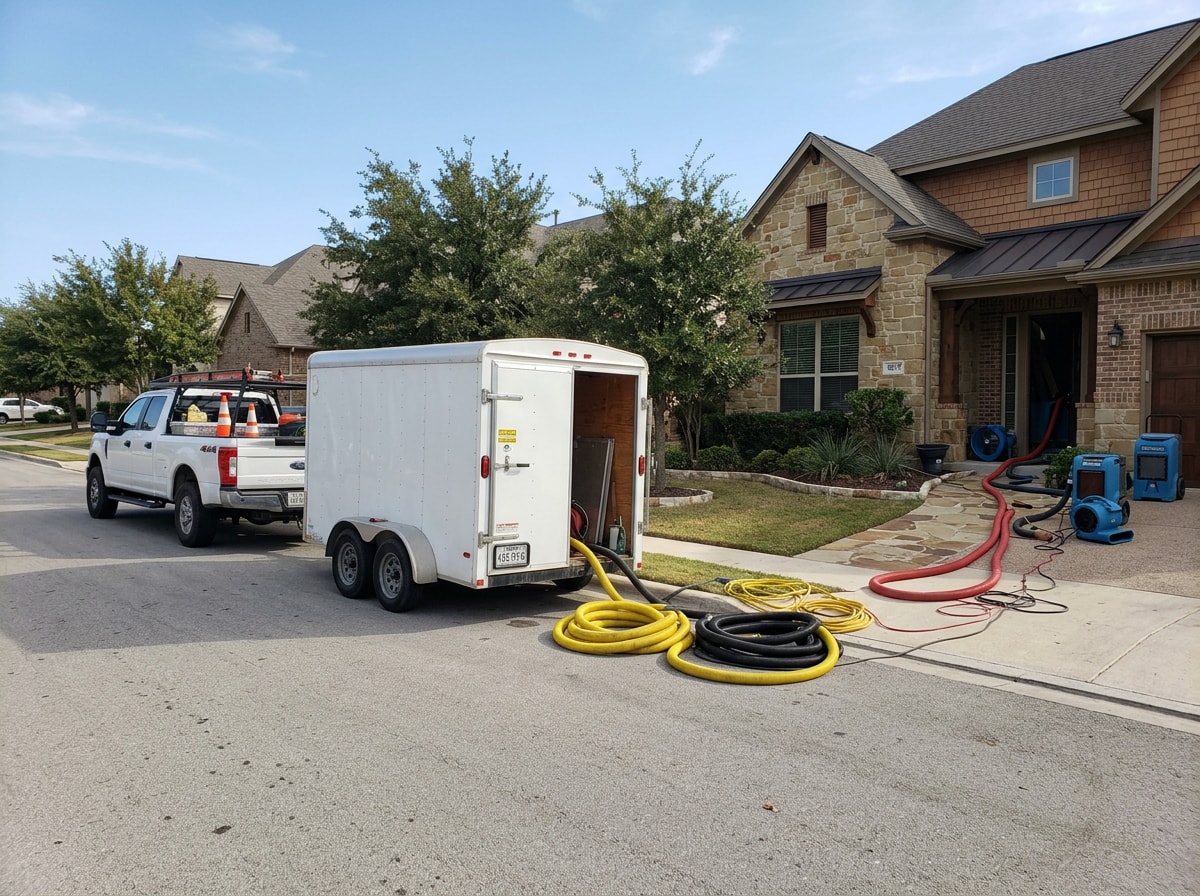
Our crews have answered Tarrant County basement calls after spring storm systems stall over the metroplex for days at a time, the exact conditions that cause slow, repeated seepage rather than a single flash flood. That pattern changes how we scope a job: we check moisture readings for longer and schedule a follow-up visit before closing out a claim, because clay-soil seepage can re-wet a dried basement days after the first visit.
We follow IICRC-aligned procedures, work directly with insurance adjusters, and stay available 24/7 across Fort Worth and the surrounding metro. You can see examples of completed jobs on our projects page, browse our full service lineup on the homepage, or check our Fort Worth service area page for neighborhood-specific response details. If you're comparing restoration companies before you call, our guide on flood restoration companies in Plano, TX covers the same vetting questions worth asking any crew in the Dallas-Fort Worth metro.
Ready to get help on-site? Get a free consultation and we'll walk through next steps before a technician even arrives.
FAQ
How long does it take to clean up and dry out a flooded basement?
Most flooded basements take three to seven days to fully dry, depending on water category and how much material needs removal. Clean-water appliance overflows dry fastest, while sewage or groundwater flooding that soaked framing and subfloor can take ten days or longer. Daily moisture readings, not guesswork, determine when drying is truly complete.
Does homeowners insurance cover a flooded basement?
Homeowners insurance typically covers sudden, internal water events, like a burst pipe or failed water heater, but usually excludes outside flooding or groundwater seepage unless you carry a separate flood policy. Flood insurance policies generally exclude personal property in basements, so the odds are low that furniture, electronics, and other items would be covered. Building coverage is different: building property coverage includes the physical structure of a home and its foundation, plumbing and electrical systems, and central air and heating systems. For a full breakdown, see FEMA's guidance on flood insurance coverage for homeowners.
How much does basement flood cleanup cost in Fort Worth, TX?
Costs scale with contamination level. Clean-water jobs (Category 1) typically run $500 to $1,500, gray-water jobs land between $1,000 and $5,000, and Category 3 sewage or storm flooding can run $3,000 to $12,000 or more once structural repairs are included. Your final number depends on square footage, how long water sat, and whether drywall, flooring, or framing needs replacement.
Is mold a concern after a basement flood, and how quickly does it grow?
Yes. It is important to dry water-damaged areas and items within 24 to 48 hours to prevent mold growth , which makes prompt extraction critical in a below-grade space where humidity lingers longer than it does upstairs. The EPA's guide to mold and moisture control explains why fast drying matters most in basements specifically.
Why do Fort Worth basements flood even after the rain has stopped?
Because of the region's expansive clay soil. The soil absorbs rainwater and swells for days after a storm, building hydrostatic pressure against foundation walls that can keep pushing water into a below-grade space long after skies clear. This is also part of why full basements are rarer here than in other parts of the country, and why the few that exist often need extra drying time compared to basements built on more stable soil.
Can I clean up a flooded basement myself, or do I need a professional?
Minor puddles from a quick appliance leak can sometimes be managed with towels and a wet-dry vac. Significant flooding usually calls for a professional, since basement water often carries contaminants and concrete is porous enough to trap moisture that ordinary fans can't reach. If you're unsure which category your situation falls into, contact us for an inspection before you start pulling up flooring.