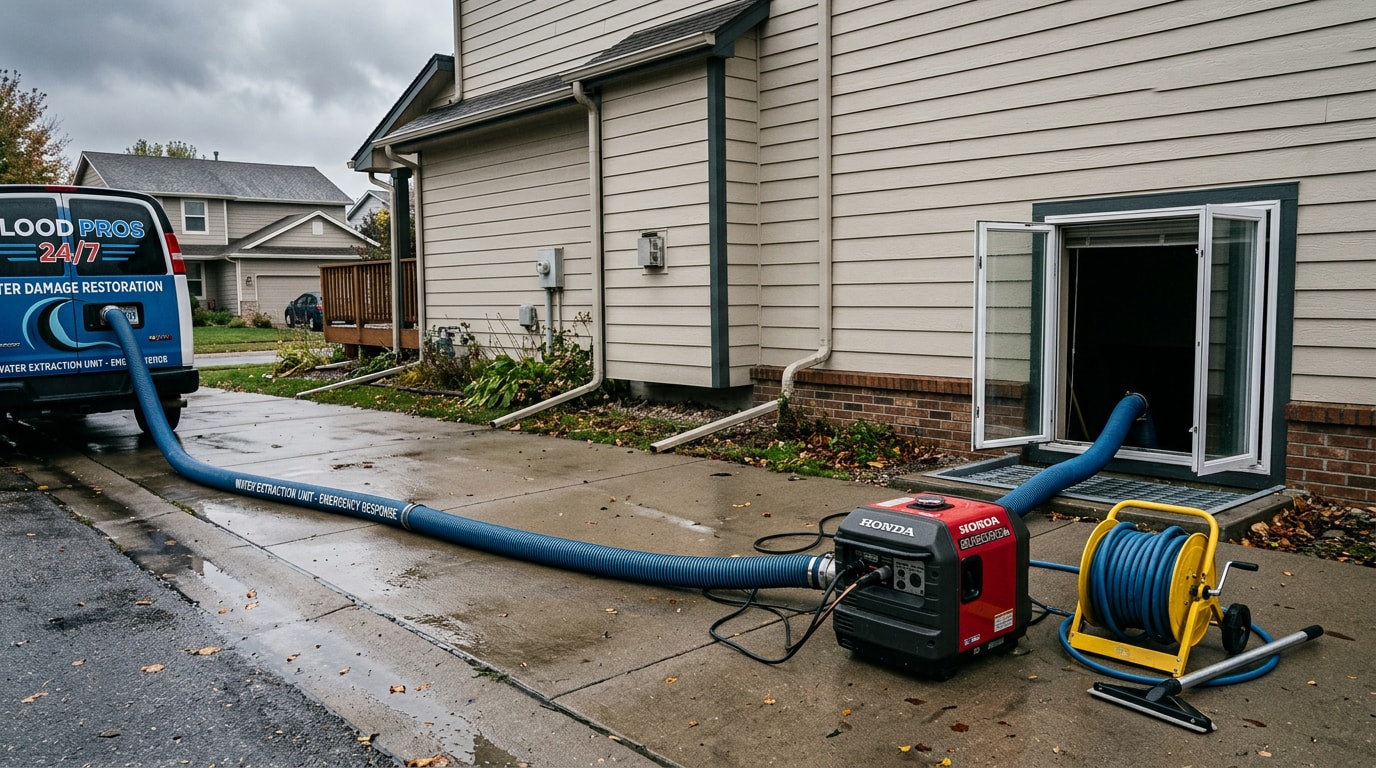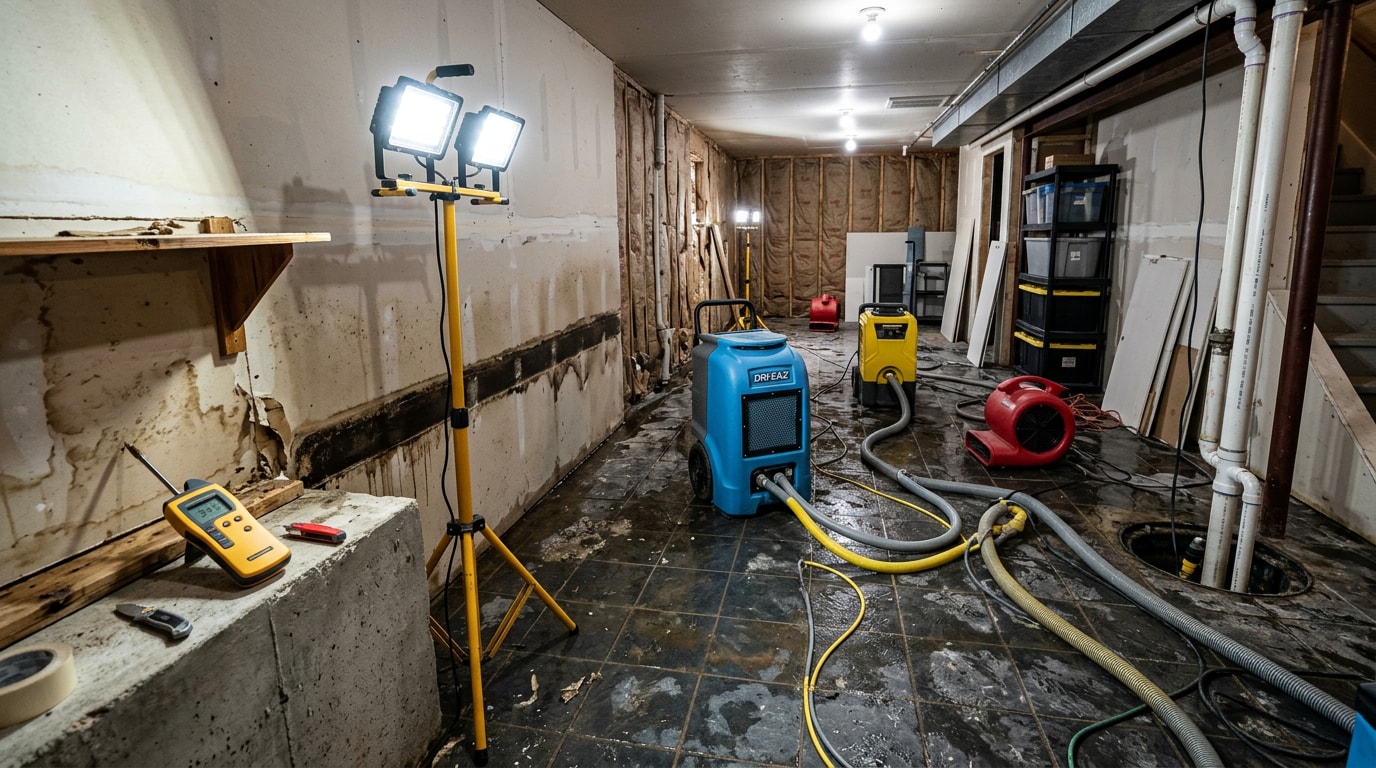
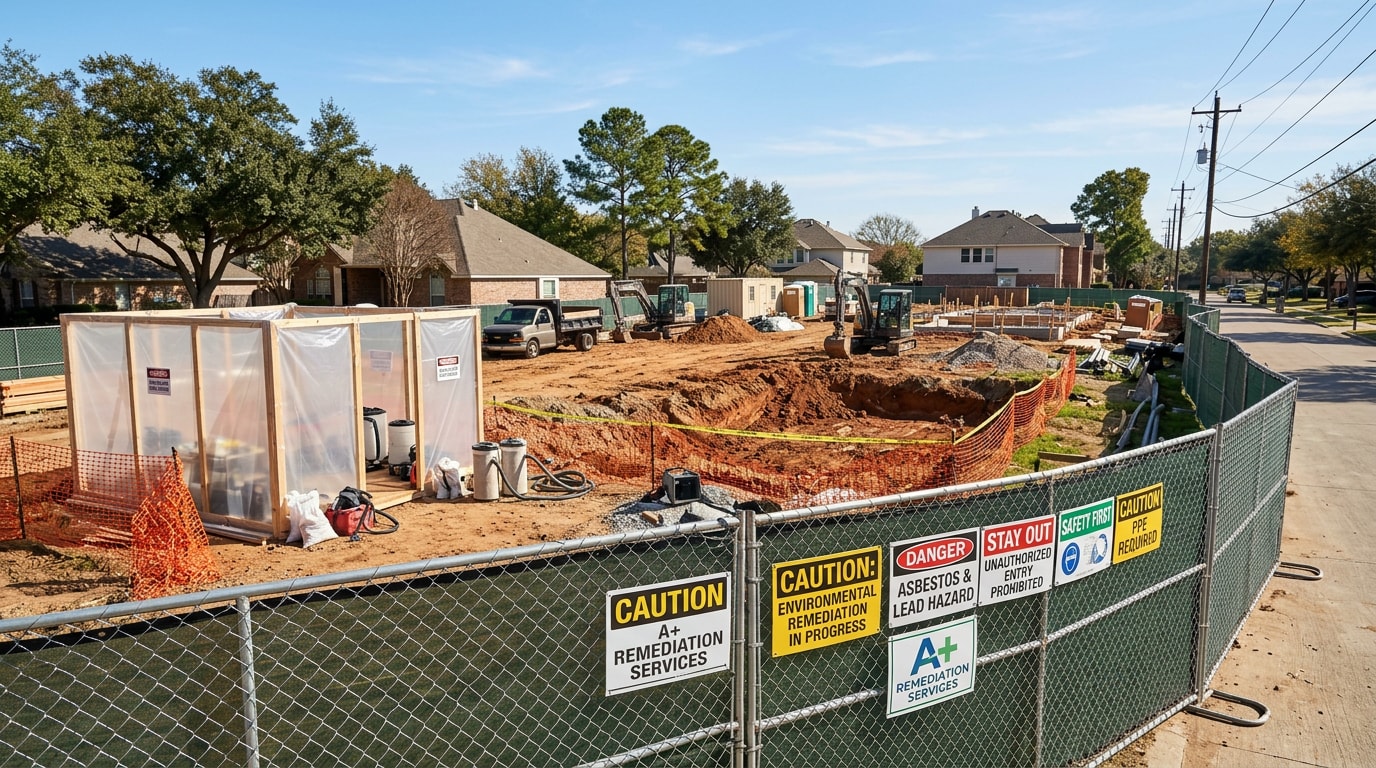
What is remediation in construction in Dallas, TX? It's the licensed, regulated process of removing or neutralizing a hazard, contamination, or structural defect so a site meets current safety and building codes before work can legally continue. Dallas adds a wrinkle most national guides skip entirely: Texas requires the assessor who writes the remediation plan and the contractor who performs the work to be two separate, state-licensed companies. Getting that sequence wrong can void an insurance claim or stall a home sale.
Key Takeaways
- Remediation fixes hidden hazards like contamination, mold, or structural defects, not cosmetic damage.
- Texas licenses mold remediation separately from mold assessment, and the same company can't legally do both on one project.
- Liability for cleanup costs can follow a property to its current owner, even if they didn't cause the original contamination.
- The process runs through assessment, a written plan, execution, and a final clearance inspection before it's considered complete.
What Is Remediation in Construction, Exactly?
Remediation in construction means identifying and correcting conditions, contamination, environmental hazards, or structural defects, that threaten a project's safety, legality, or long-term durability. Unlike routine maintenance or cosmetic repairs, remediation targets hidden conditions, contaminated soil, toxic building materials, persistent mold, that threaten the health of occupants or violate federal and state regulations.
A cracked driveway gets repaired. Soil contaminated by an old underground fuel tank gets remediated. The difference isn't severity, it's regulatory exposure. Remediation projects trigger oversight that a standard repair invoice never will.
Remediation vs. Repair, Restoration, and Mitigation
These four terms get used interchangeably on job sites, and that's exactly how miscommunication and change orders happen.
| Term | What it actually does | When it applies in Dallas |
|---|---|---|
| Mitigation | Stops active damage from getting worse | Tarping a roof, shutting off a leaking supply line |
| Remediation | Removes or neutralizes the underlying hazard | Mold, asbestos, lead paint, contaminated soil |
| Repair | Fixes a specific broken component | A cracked slab section, a damaged wall panel |
| Restoration | Returns the space to pre-loss, usable condition | Rebuilding drywall, flooring, and finishes after remediation |
Each step has a distinct legal function. Skipping straight from mitigation to restoration without documented remediation is one of the most common reasons insurance claims get denied or reopened in North Texas.
The Three Types of Remediation Work You'll Encounter in Dallas
Remediation splits into three categories, and each one requires different licensing, equipment, and documentation.
- Environmental remediation addresses contaminated soil and groundwater, often tied to old industrial sites, fuel storage, or dry-cleaning operations common along Dallas's older commercial corridors.
- Structural remediation targets foundation and framing damage. North Texas's expansive clay soil shrinks and swells with seasonal moisture, which is why slab cracking and foundation movement show up so consistently across Dallas-Fort Worth.
- Hazardous material remediation covers asbestos, lead paint, and mold, typically in structures built before the 1980s.
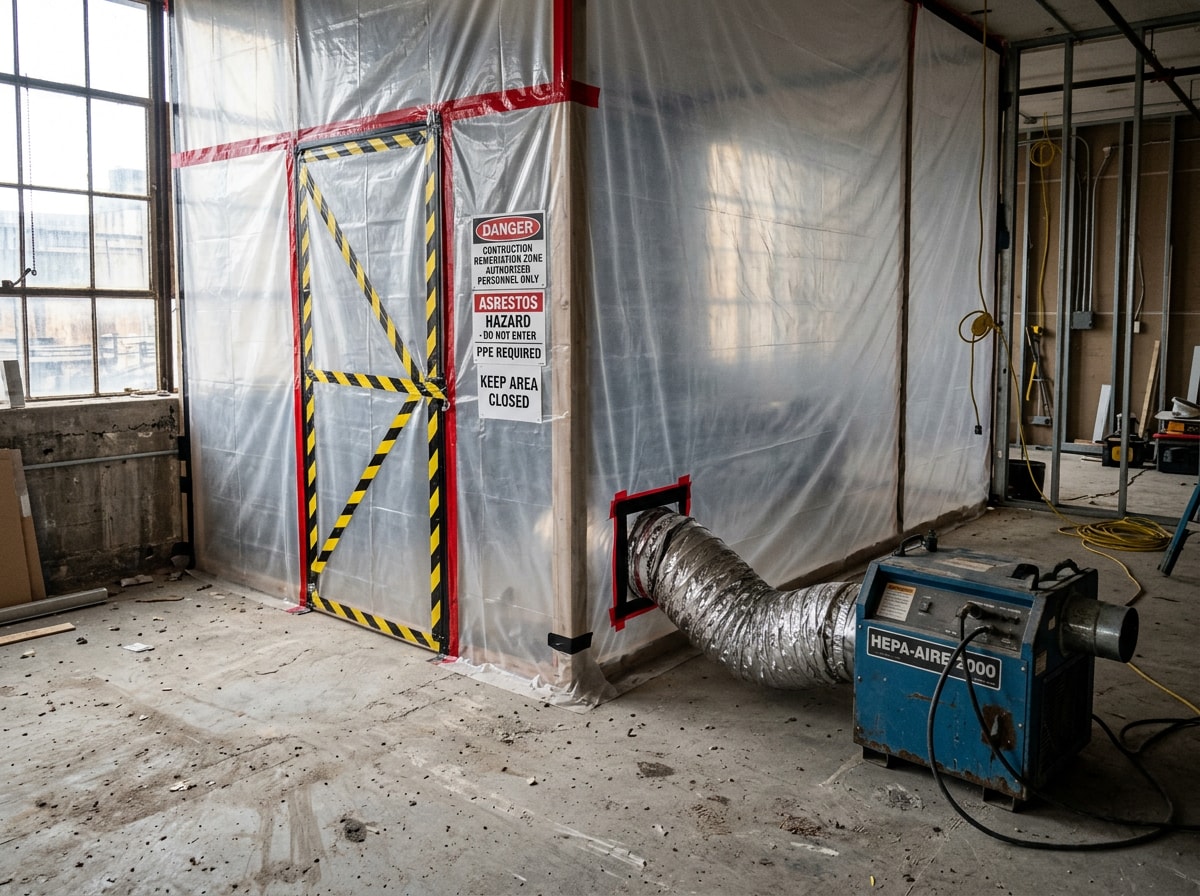
On any job where asbestos-containing material is disturbed, whether that's demolition, renovation, or routine maintenance, OSHA's construction standard regulates asbestos exposure in demolition or salvage of structures, removal or encapsulation of materials, and construction, alteration, repair, maintenance, or renovation of structures that contain asbestos . That means a contractor can't treat asbestos removal as a judgment call. OSHA's construction industry asbestos standard spells out exposure limits, containment methods, and training requirements before a single wall gets opened.
Texas Licensing Rules You Need Before Hiring a Remediation Contractor
This is the part most "what is remediation" guides never mention, and it's the part that actually protects Dallas property owners.
A person must hold a mold remediation or mold assessment license to provide those services in Texas. More importantly, the two roles can't overlap on the same project, the company that assesses the mold can't be the same company that removes it. This prevents a conflict of interest where a remediator inflates the scope of work they just "discovered."
Project size matters too. A license holder must notify the Texas Department of Licensing and Regulation of a mold remediation project at least five days before it is to begin, but there is no notification requirement for projects with mold that contaminates less than 25 contiguous square feet. If your contractor skips this step on a larger job, that's a compliance red flag worth asking about before signing anything.
Full program details are published by the Texas Department of Licensing and Regulation, including exemptions for small residential projects and owner-occupied homes.
Mold isn't the only regulated category, but it's the one Dallas homeowners and HOAs run into most often, which is why we built this guide around it rather than generic national language.
The Remediation Process, Step by Step
Remediation almost always follows the same four phases, regardless of the hazard type:
- Site assessment. For environmental projects, this starts with a Phase I Environmental Site Assessment, a records-and-history review with no physical sampling.
- Remediation plan. A licensed professional documents the scope, method, and timeline before any work begins.
- Execution. Containment, removal, and treatment happen according to the written plan, not improvised on-site.
- Monitoring and clearance. Follow-up testing confirms the hazard is actually gone, not just visually absent.
Phase I assessments follow a specific framework. ASTM E1527-21, "Standard Practice for Environmental Site Assessments: Phase I Environmental Site Assessment Process," was reviewed by EPA and recognized as compliant with the All Appropriate Inquiries Rule , which is what lets a buyer or lender rely on that assessment for liability protection. You can review the federal recognition of ASTM E1527-21 directly if you're working through a commercial transaction.
If you're dealing with active water intrusion right now rather than a planned assessment, speed matters more than paperwork. Our guide to basement flood cleanup in Fort Worth, TX walks through the first 24 hours, which is often the window that determines whether you're looking at remediation or just restoration.
Who's Liable for Remediation Costs in Dallas?
This surprises almost every buyer and investor we talk to: liability doesn't always follow fault.
CERCLA identifies four categories of potentially responsible parties, generators who produced the hazardous substances, transporters who moved waste to the site, current owners and operators of contaminated facilities, and former owners who operated the site during disposal. A current owner can inherit cleanup responsibility for contamination they had nothing to do with.
Noncompliance isn't a minor risk either. The current maximum daily amount of the statutory civil penalty a court can assess for a CERCLA Section 106(b)(1) violation is $69,733 , and that figure adjusts upward for inflation most years. A proper Phase I assessment before closing is often the only real protection against inheriting someone else's problem.
If you're buying, managing, or inspecting a property anywhere in Dallas-Fort Worth and want a second set of eyes on remediation history or liability exposure, get a free consultation before you sign anything.
Remediation After Construction Defect Litigation in Dallas-Fort Worth
A meaningful share of remediation work in Dallas doesn't start with an environmental trigger at all. It starts with a lawsuit.
Stucco failures, window leakage, and waterproofing deficiencies are common defect claims across Dallas condominiums and HOA properties. When litigation settles, the resulting work is a court-approved remediation plan, not a standard repair job, and it has to meet whatever edition of the building code is currently adopted locally, even if the original construction predates it.
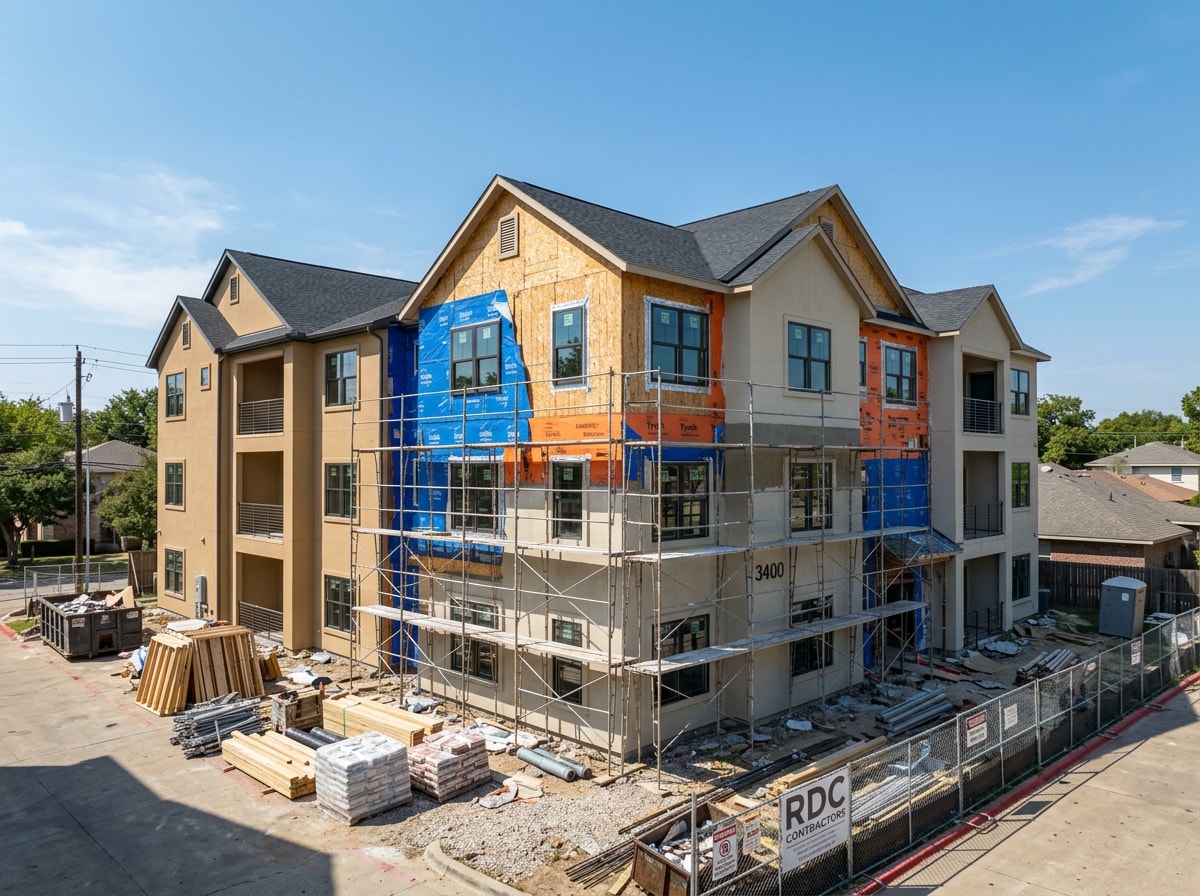
HOA remediation projects also tend to involve phased work across multiple units, which adds a coordination layer that a single-family repair never faces. Comprehensive building envelope reconstruction in Dallas typically runs six to twelve months from plan approval to final sign-off, while smaller, isolated window or waterproofing fixes often wrap in four to eight weeks depending on permitting and weather.
Why This Matters to Spotless Restoration USA Clients
Our technicians work TDLR-regulated mold remediation protocols across Dallas-Fort Worth every week, and we coordinate directly with the separately licensed assessor on every project that requires one, because that's not optional under Texas law. We've seen firsthand how often a remediation job gets delayed simply because a homeowner didn't know the assessment and the removal had to come from two different companies. Visit Spotless Restoration USA to see how we structure that handoff so it doesn't cost you time.
For specific hazard types, our teams handle:
- Mold remediation and mold inspection
- Structural drying services after a slab leak or flood event
- Fire damage restoration and soot removal
- Home reconstruction once remediation clears
We serve Dallas, Fort Worth, Arlington, Plano, Irving, and the broader Dallas-Fort Worth Metro area. You can see completed work on our projects page.
FAQ
Is remediation disruptive to active construction work?
It depends on scope. A small, contained mold or asbestos job can often proceed alongside other trades with minimal schedule impact. Large-scale contamination usually requires halting work entirely until testing and cleanup clear.
What's the real difference between remediation, mitigation, and restoration?
Mitigation stops damage from getting worse right now. Remediation removes the hazard causing it. Restoration rebuilds the space afterward. They're sequential steps, not interchangeable words, and insurance adjusters treat them differently.
Do I need a licensed contractor for mold remediation in Dallas?
Yes, if the affected area is 25 contiguous square feet or more. Below that threshold, Texas doesn't require TDLR notification, though hiring a trained contractor is still recommended for anything beyond a small, isolated spot.
Who pays for remediation if contamination existed before I bought the property?
It's not automatic that the original polluter pays. Current owners can be held responsible under federal law regardless of who caused the contamination, which is why a Phase I assessment before closing matters so much.
How long does the remediation process take from start to finish?
A straightforward hazardous-material job can clear in one to two weeks. Environmental remediation involving soil or groundwater, or anything requiring a Phase II assessment, can stretch to several months depending on contaminant type and site conditions.
What's the typical timeline for building envelope reconstruction in Dallas?
Full envelope reconstruction after defect litigation usually runs six to twelve months. Isolated window or waterproofing repairs typically finish in four to eight weeks, weather and permitting permitting.