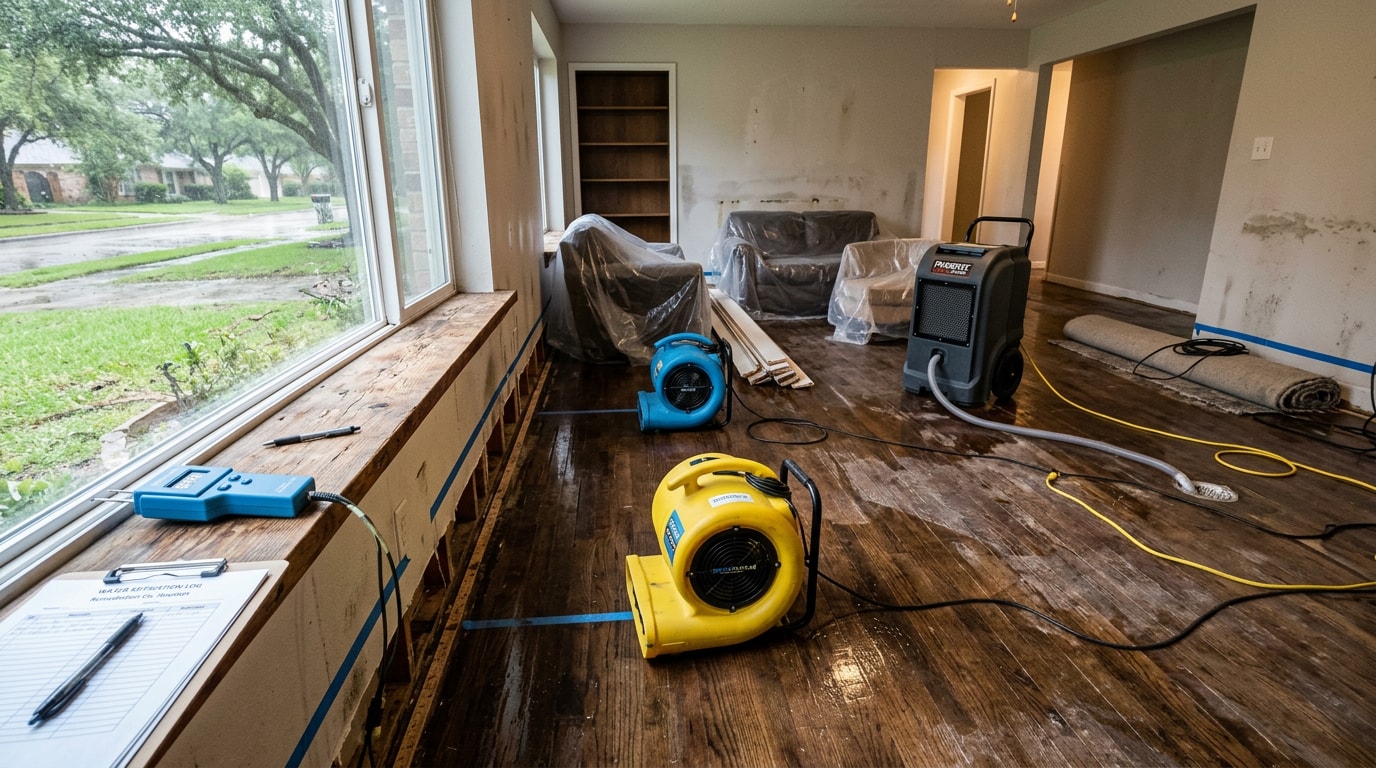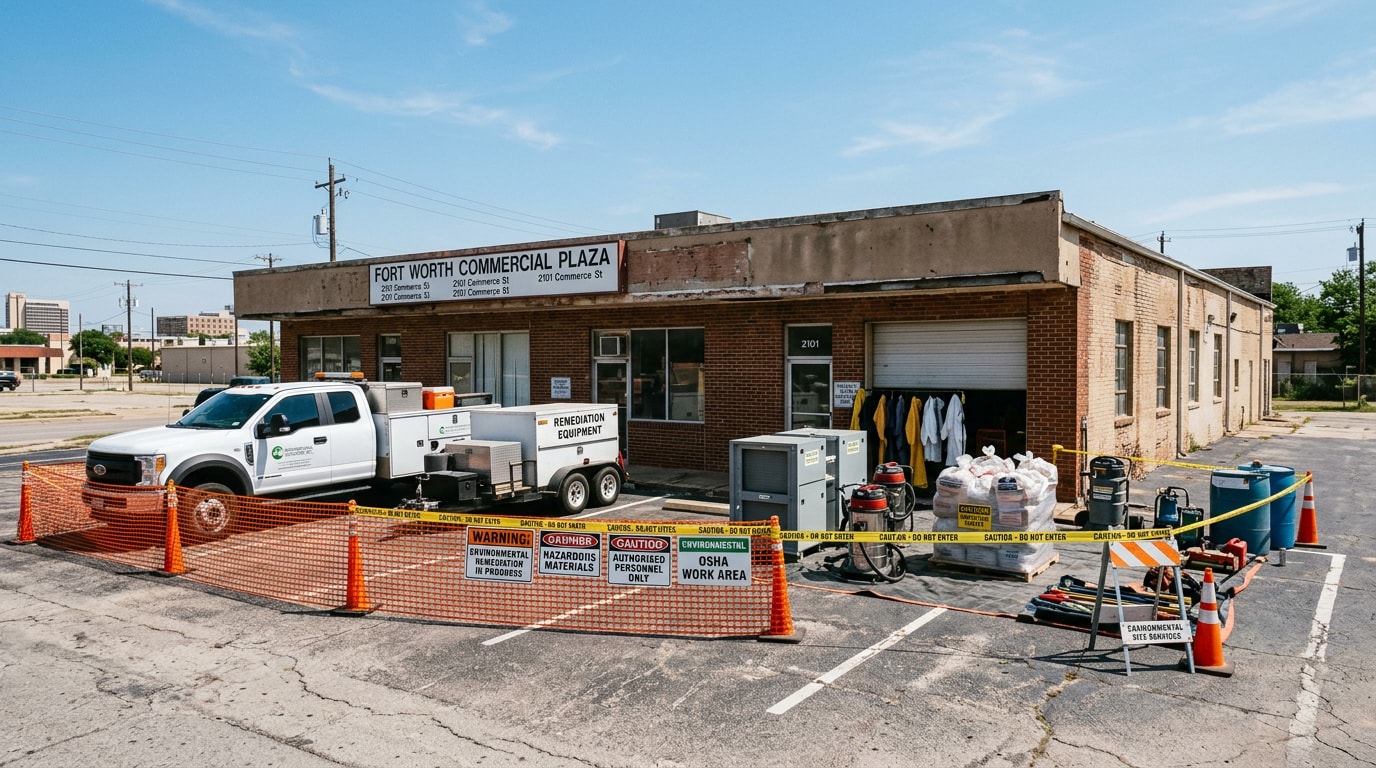
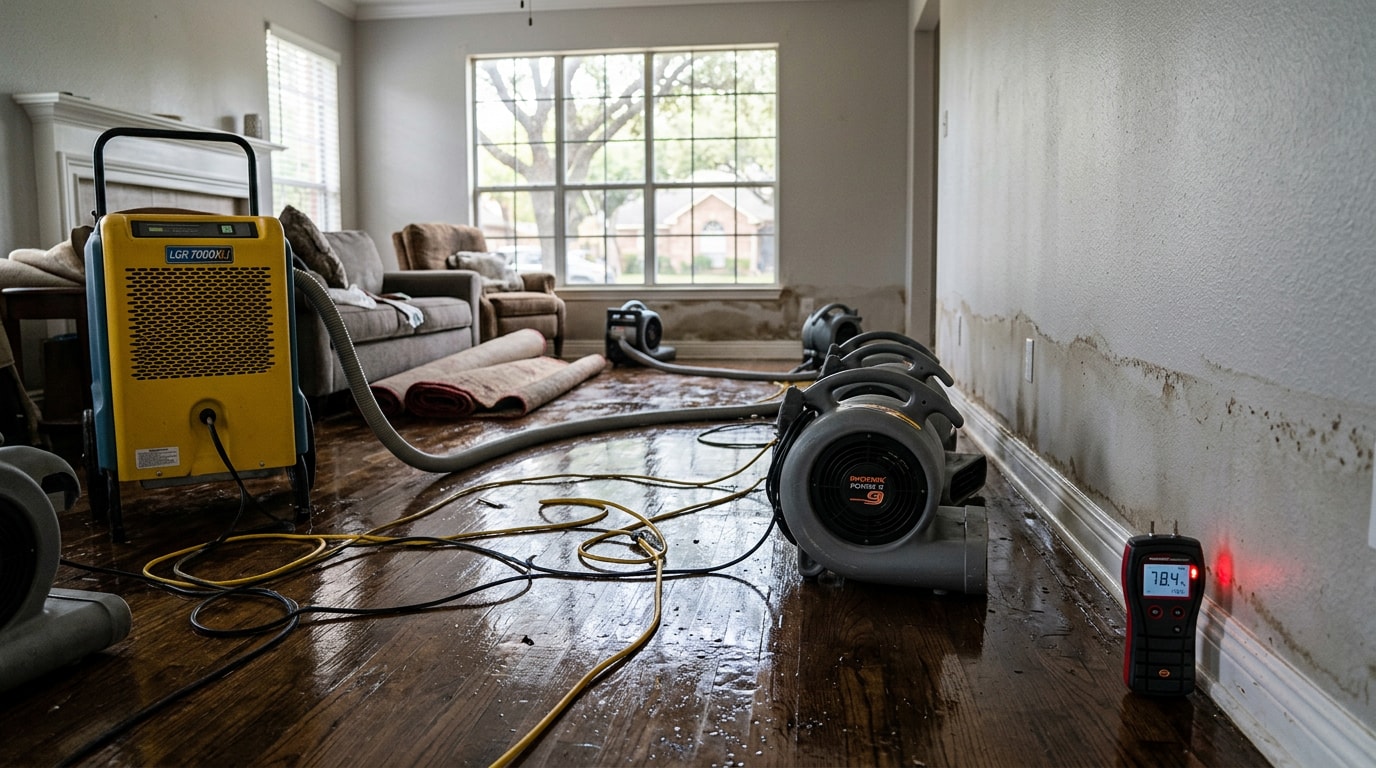
Water flood damage in Plano, TX can turn a wet floor into a structural loss faster than most homeowners expect. Clay soil, aging storm drains, and creek overflow each push water into homes a different way, and the first hour after it happens decides how much is actually repairable. This guide covers the exact steps to take, what professional restoration involves, realistic cost ranges, and how to tell a qualified Plano crew from one that's just fast with a shop vac.
What to Do Immediately After a Flood
The first hour sets the tone for the entire recovery. Skip a step here and small damage can turn into a full rebuild.
Shut Off Power and Protect Yourself
- Cut power at the breaker before stepping into any flooded room. Standing water and live wiring are a serious shock hazard.
- Treat all floodwater as contaminated until proven otherwise, especially after storm or creek flooding.
- Wear rubber boots and gloves before touching anything wet.
- Photograph the damage room by room before you move or discard anything, for insurance purposes.
Get the Water Out Fast
Once the space is safe to enter, remove standing water immediately with a wet vacuum, sump pump, or submersible pump. Quick extraction limits how far moisture travels into walls, subfloors, and framing, which shapes the entire recovery timeline that follows. A professional crew running emergency water removal equipment can typically pull far more water, far faster, than anything available to rent.
Why Plano Homes Are Vulnerable to Water Damage
Plano's expansive clay soil shifts with every moisture swing, stressing foundations and opening pathways for water intrusion that vary by how and when a home was built. Clay expands dramatically when wet and contracts when dry, creating a seasonal cycle that shifts foundations, stresses plumbing connections, and opens pathways for water intrusion that did not exist during initial construction.
Pre-1990s slab-on-grade homes tend to crack along the foundation as soil moves. Pier-and-beam homes from the same era face crawlspace flooding instead. Newer construction from the 2000s onward generally drains better, though it isn't immune to flash flooding during an intense storm.
The risk isn't theoretical. The city of Plano has minor risk from flooding, but there are 2,148 properties in Plano at risk of flooding over the next 30 years, representing 2.7% of all properties in Plano.
First Street's flood-risk modeling counts 1,184 of those as having a major or higher flood factor, out of roughly 80,172 properties citywide.
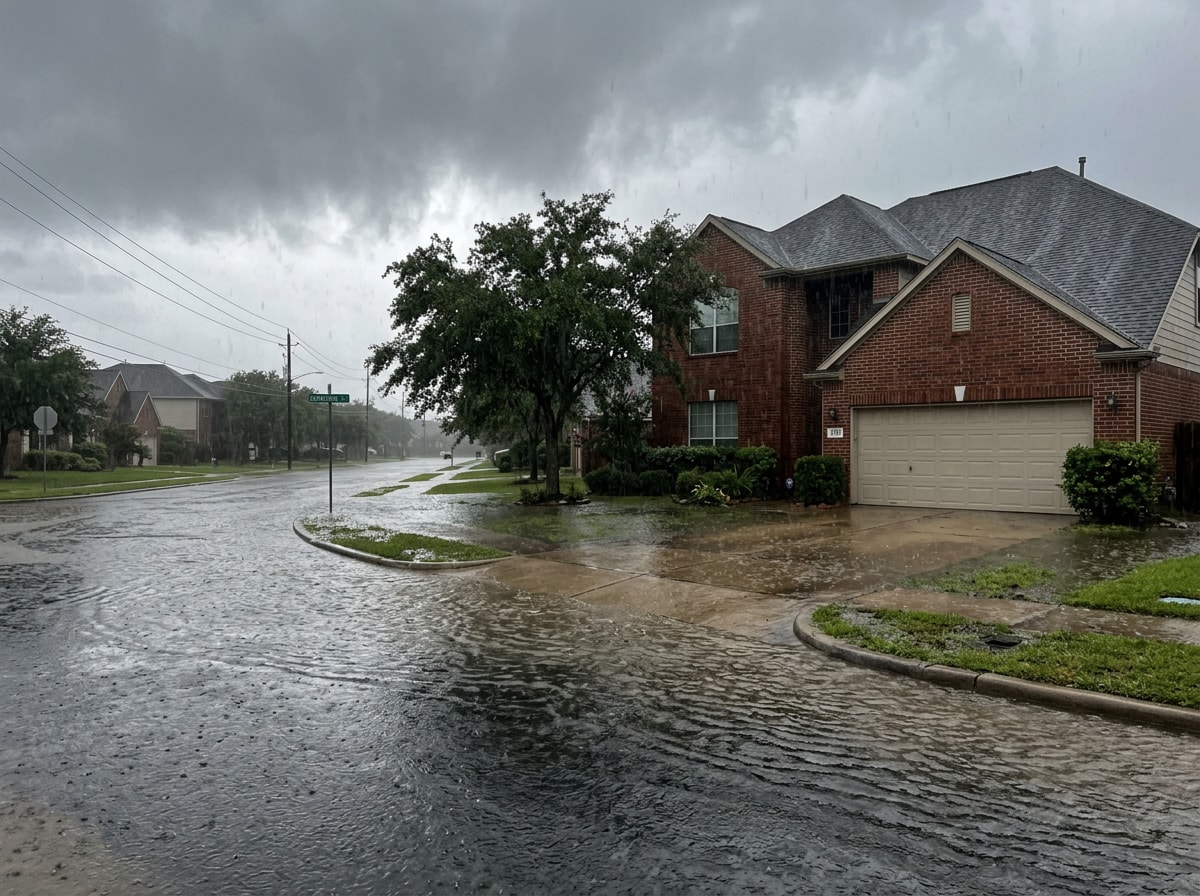
Flash Flood Risk: Rowlett Creek, White Rock Creek, and Plano's Flood Zones
Plano sits inside what the state itself flags as high-risk terrain. Texas is particularly prone to floods, especially in two large parts of the state: the coast and a wide band called Flash Flood Alley that extends through Central and North Texas.
Almost every major city in Texas is in an area at high risk of flooding.
Low-lying areas near Rowlett Creek and White Rock Creek see the fastest water rises during heavy rain, and that risk isn't abstract. The August 2022 storm dumped nearly 10 inches across North Texas in a matter of hours, flooding homes, businesses, and highways throughout Collin County.
The most common FEMA flood zone designations in Plano are Zone AE and Zone X, and FEMA's National Risk Index estimates the county's annual expected loss from inland flooding at over $153.3 million.
A flood zone designation isn't just a map line. A flood zone is an area that has a 1 percent chance of being flooded in any given year. The City of Plano maintains its own mapping and preparedness resources, and provides flood map information and maintains Elevation Certificates for structures in the city through its floodplain information program. Checking that resource before a storm, not after, is worth the ten minutes it takes.
What Professional Flood Damage Restoration in Plano Includes
Restoration covers far more than mopping up water. It means handling contaminated water safely and rebuilding structural materials the flood destroyed, not just drying a few wet spots.
Contaminated Water Removal
Storm water and creek overflow carry mud, bacteria, and runoff contaminants, so it gets handled as category 3 water, not a clean indoor spill. Skipping proper sanitizing is how a flood turns into a mold and odor problem months later.
Structural Drying and Rebuild
Crews dry the structure fully before replacing anything, since rebuilding over damp materials just invites future problems. Structural drying services typically run alongside flood damage repair work, which commonly includes flooring, drywall sections, and baseboards or trim that absorbed floodwater and warped beyond saving.
Warning Signs You Need to Call a Professional Today
Certain signs mean it's time to pick up the phone immediately rather than wait and see:
- A visible waterline or mud line on walls
- A sewage or musty odor that wasn't there before the storm
- Warped or soft flooring underfoot
- Discoloration spreading on drywall or ceilings
- Persistent dampness more than a day after the water stopped moving
Caught within the first day, most of this damage is fixable rather than a full structural loss. If you're seeing any of these signs in your home right now, get a free consultation before the damage spreads further.
Why Every Hour Counts: The Mold Growth Clock
Water damage follows a clock. Every hour it sits shifts more materials from the "save it" column into the "replace it" column. Drywall, flooring, and trim that stay wet for more than a day or two often cross from dryable to replaceable, driving repair costs up fast.
The mold timeline moves just as quickly. It is important to dry water-damaged areas and items within 24-48 hours to prevent mold growth , according to the EPA's mold and moisture guidance. If wet or damp materials or areas are dried 24-48 hours after a leak or spill happens, in most cases mold will not grow. Treating that window as a real deadline, not a suggestion, is the cheapest decision a homeowner can make after a flood.
The Plano Flood Restoration Process, Step by Step
Knowing the arc from first call to a dry, finished home sets realistic expectations:
- Call and assess. A crew documents what happened over the phone, then runs an on-site water damage inspection to trace exactly where water traveled.
- Extract and dry. Pumps and extractors remove standing water, then industrial dehumidifiers and air movers pull remaining moisture from walls, subfloors, and framing over several days.
- Sanitize. Technicians treat affected surfaces to address contamination from storm or creek water, not just visible dirt.
- Rebuild and restore belongings. Crews salvage furniture, documents, and other belongings wherever possible, then replace flooring, drywall, and trim that didn't survive.
If you're still comparing options at this stage, this breakdown of flood restoration companies in Plano, TX walks through what separates a solid contractor from a rushed one.
Choosing the Right Water Damage Restoration Company in Plano
Not every crew that shows up with a truck and a logo is equipped for storm flooding. Look for:
- Certification that's actually current.
The IICRC is a nonprofit organization that develops and publishes standards detailing the proper procedures for safe cleaning and restoration, and its standards are followed in 30 countries through over 4,600 certified firms and over 43,000 certified technicians. Ask to see the IICRC S500 standard a company follows, not just a logo on a truck.
- Flood-specific experience, not just pipe leaks. Storm flooding and sump-pump failures behave differently than a clean indoor leak.
- Written scope, cost, and timeline before work begins, not a verbal ballpark.
- 24/7 response, since the mold clock doesn't pause for business hours.
A reputable water damage restoration provider should walk you through all four before asking for a signature.
Typical Flood Damage Restoration Costs in Plano
Costs scale directly with how long water sat and how many rooms it reached. These are general industry ranges, not a quote, since every property and water source is different.
| Damage Severity | Typical Scope | Approximate Cost Range* |
|---|---|---|
| Minor / contained | Single room, water standing less than 24 hours, no material removal | $300 - $2,000 |
| Moderate | Multiple rooms, partial drywall or flooring removal, 2-4 days of drying | $2,000 - $7,500 |
| Major / structural | Whole-floor flooding, subfloor and framing replacement, contents loss | $7,500 - $25,000+ |
*Estimates vary by contractor, square footage, and water contamination level. Always get a written scope before work begins.
How Plano Homeowners Can Prevent the Next Flood
Knowing how to shut off the main water valve fast turns a burst pipe into a minor repair instead of a major loss. Beyond quick reaction, a few upgrades reduce risk before the next storm:
- Install a sump pump with battery backup in low-lying areas or crawlspaces.
- Add French drains and regrade soil around the foundation so water moves away from the house.
- Clear gutters and downspouts before storm season.
- Schedule periodic moisture control checks, especially in pier-and-beam homes with crawlspace exposure.
If you're unsure where your property stands, start at {{SITE_URL}}/ or reach out directly, flood prep is a lot cheaper than flood recovery.
Already dealing with water in your home? Get a free consultation and a crew can be assessing the damage the same day.
About the Author
This guide was reviewed by the restoration team at Spotless Restoration USA, serving Plano, TX and the greater Dallas-Fort Worth Metro area with IICRC-trained water damage technicians. Our crews have pulled water out of pier-and-beam crawlspaces along Rowlett Creek and dried out slab foundations in older Plano neighborhoods after back-to-back storm systems, and that field experience shapes every recommendation in this guide. Questions about a specific property? Contact us directly.
FAQ
How Much Does Water Damage Restoration Cost in Plano?
Minor, contained water damage restoration in Plano often runs a few hundred dollars to around $2,000. Major structural flooding with drywall and flooring replacement can reach well into five figures. Cost scales directly with how long water sat and how many rooms it reached.
Does Homeowners Insurance Cover Water Damage or Flood Damage?
Usually not the same way. A standard homeowners' or renters' insurance policy does not cover damage when water enters the home from a flood.
Most available flood insurance is backed by the federal government through the NFIP, and the max coverage offered for NFIP policies is $250,000 for a building and $100,000 for the contents. Check current terms directly with the Texas Department of Insurance before assuming you're covered either way.
Is Flood Damage the Same as Water Damage?
No. Flood damage refers to external rising water that affects multiple properties at once, like creek overflow during a storm. Water damage describes a sudden internal event, like a burst pipe or appliance failure, limited to one home. The water source determines which policy, if any, responds to a claim.
How Fast Does Mold Grow After a Flood in Plano?
Mold risk starts within 24 to 48 hours of materials staying wet, per EPA guidance. That window shrinks in Texas summer heat and humidity, so same-day extraction and drying matter more in July than in January.
What Neighborhoods in Plano Are Most at Risk for Flooding?
Low-lying lots near Rowlett Creek, White Rock Creek, and their tributaries see the fastest water rises during heavy rain. Older neighborhoods with aging storm drains can also back up faster than newer developments with updated grading.
How Can I Check My Property's Flood Zone in Plano?
The City of Plano's floodplain information page lists current flood maps and Elevation Certificates for properties in the city. It's the most direct way to confirm whether a specific address sits in a mapped flood zone before buying flood insurance or planning drainage work.