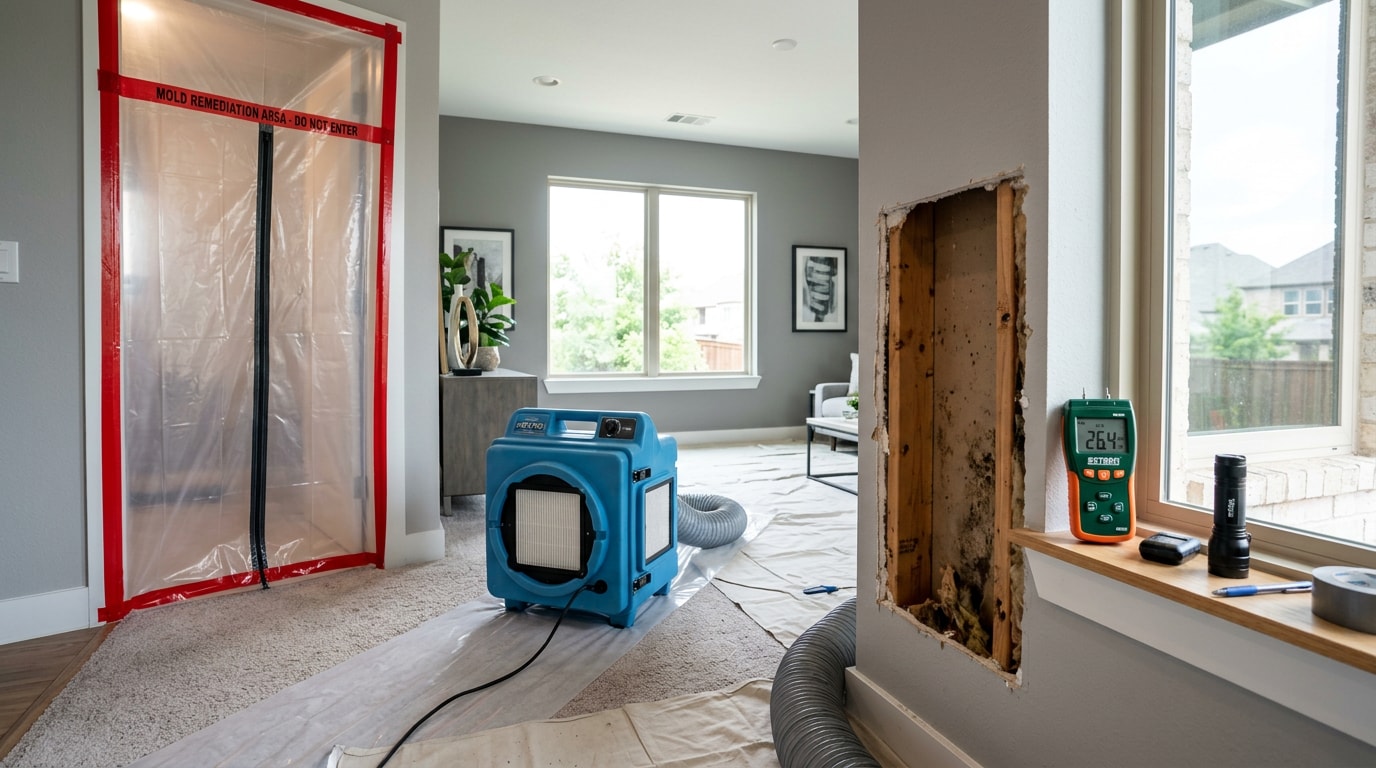
Basement water damage restoration Dallas Fort Worth Metro, TX homeowners call for usually starts the same way: a sump pump that couldn't keep up, a foundation crack that finally gave in, or a sewer line that backed up overnight. Below-grade spaces flood differently than upstairs rooms, dry slower, and hide mold faster if the wrong crew handles the first 24 hours. Here's what actually needs to happen, in order, before you sign anything.
Flooded Basement Right Now: What To Do First
Don't wade into standing water while the power is still on.
- Cut the breaker from a dry, elevated location, never from inside the wet area.
- Identify the source: clean groundwater or storm runoff, a pipe or water heater leak from above, or a sewage backup through a floor drain.
- If the water smells like sewage or backed up through a drain, stay out entirely. That's Category 3 water, and it requires protective gear and professional emergency water removal, not a DIY mop-up.
- Photograph the damage before moving anything, for your insurance claim.
The CDC's floodwater safety guidance is blunt about this sequence: unplug appliances to prevent electrical shock, and turn off gas, power, and water when power lines are down or water is in your home . That's not overcautious. It's the standard first move for any flooded structure, basement or not.
Why Basements Flood Across Dallas Fort Worth Metro
Basements and below-grade rooms in North Texas flood for a handful of recurring reasons, and the cause shapes both the repair and the insurance claim.
Expansive clay soil. The Blackland Prairie clay common across Dallas, Fort Worth, Arlington, Plano, and Irving swells when wet and shrinks when dry. That constant movement stresses foundation walls and opens new cracks that weren't there last year.
Flash-flood-prone rainfall. DFW regularly sees flash flood warnings and watches during spring and fall storm season, when slow-moving thunderstorms can drop several inches of rain in a few hours, faster than grading and storm drains can carry it away.
Sump pump failure. A battery backup matters here specifically because storm-related power outages and heavy rainfall tend to arrive together.
Sewer backups. Older clay or cast-iron lateral lines, tree root intrusion, and municipal systems overwhelmed by heavy rain can all push contaminated water back into a basement floor drain.
Every restoration decision after that point follows from classifying the water under the ANSI/IICRC S500 standard, the restoration industry's consensus framework. It serves as the primary technical and procedural reference for the restoration industry across the United States , separating Category 1 clean water from Category 2 gray water and Category 3 black water. The category drives everything from PPE requirements to whether drywall gets dried or torn out.
Our Basement Flood Cleanup Process
A thorough basement flood cleanup moves through the same core stages regardless of the source, but below-grade work adds extra verification steps that an upstairs room doesn't need.
- Extraction. Submersible pumps clear deep standing water; truck-mounted extraction units finish the rest.
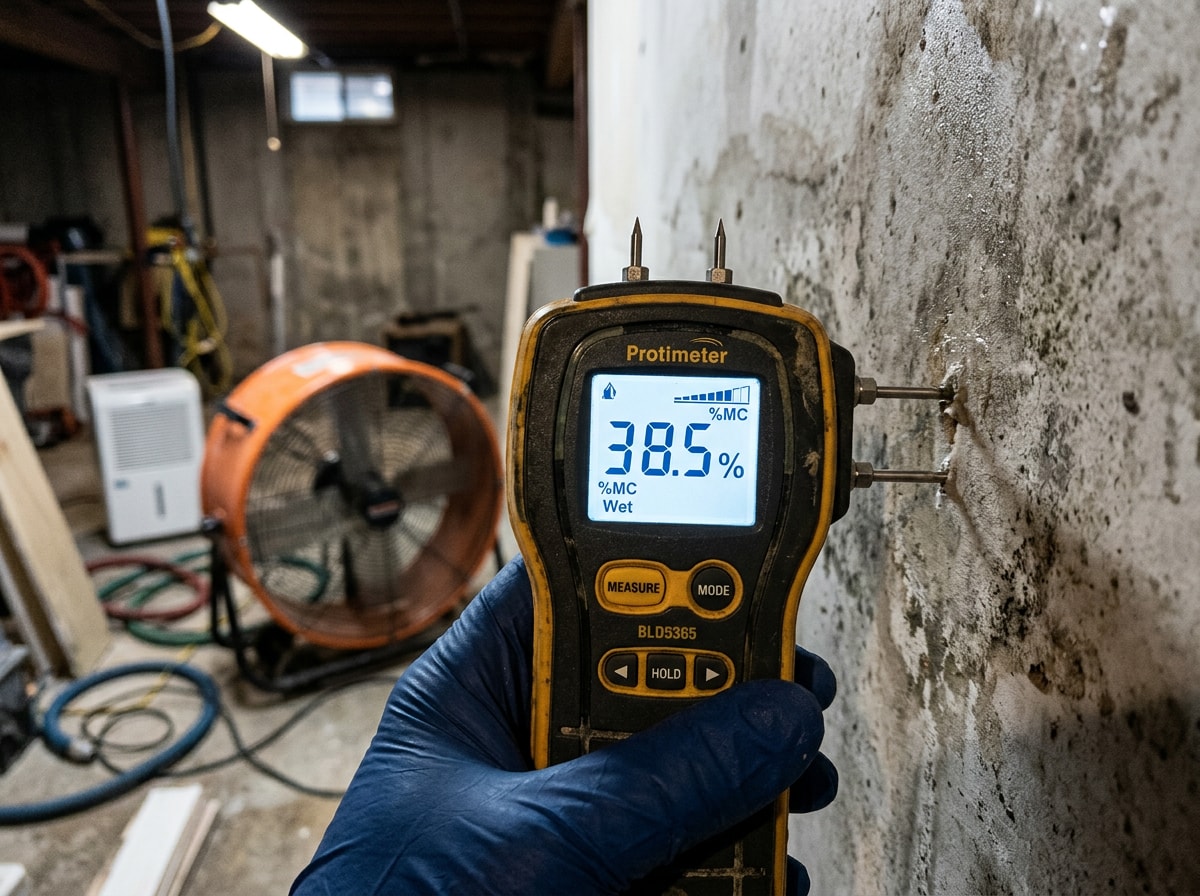
- Moisture mapping. Technicians document moisture levels in walls, slab, and flooring with meters, not guesswork, and classify the water category before touching a single wall.
- Removal of unsalvageable materials. Soaked drywall, insulation, carpet, and padding that contacted Category 2 or 3 water typically come out rather than get dried in place.
- Disinfection. Antimicrobial treatment on affected surfaces, especially after any sewage contact.
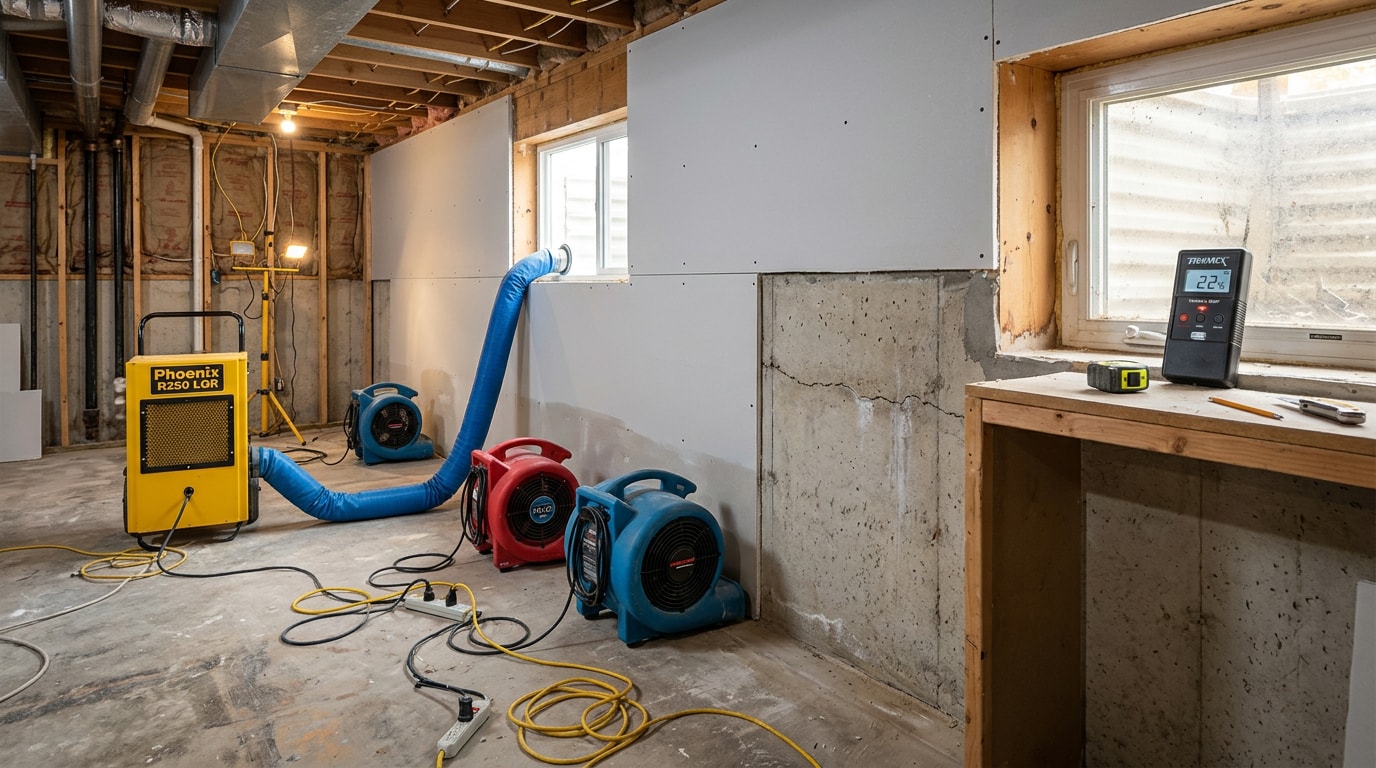
- Structural drying. Industrial air movers and dehumidifiers run until daily moisture readings confirm the slab, framing, and masonry are dry, not just dry to the touch.
- Verification. Final moisture readings documented for your insurance file.
- Reconstruction. Drywall, flooring, trim, and paint restored to match the pre-loss condition.
- Final walkthrough. Confirming the space is dry, clean, and ready to use.
Below-grade drying almost always takes longer than drying an upstairs room. Concrete slabs and masonry walls hold moisture deep inside their pores, so daily readings over several days, sometimes longer for large finished basements, confirm materials are truly dry. Skipping that step is how hidden mold problems start weeks later. The EPA's guidance on moisture control is specific about the window that matters most: it is important to dry water-damaged areas and items within 24-48 hours to prevent mold growth . Past that window, the job shifts from cleanup to remediation.
For larger or recurring issues, a full water damage restoration team manages the entire job from extraction through rebuild, and a pre-repair water damage inspection catches moisture that isn't visible yet. If the loss involved a creek overflow, storm surge, or widespread neighborhood flooding rather than an internal leak, that's a flood damage repair scope with its own documentation requirements for FEMA and private flood claims.
What Basement Flood Cleanup Costs
Cost scales with square footage, water category, and how long the water sat before anyone called for help. A small Category 1 pump-out and drying job sits at the low end. A finished basement needing multi-surface drying and some demolition costs more. Category 3 sewage cleanup runs highest because of disinfection, PPE, and mandatory disposal of porous materials.
| Scope | Typical Driver | Relative Cost |
|---|---|---|
| Clean-water pump-out and drying | Small area, Category 1, caught early | Lowest |
| Finished basement, multi-surface drying | Larger square footage, some material removal | Moderate |
| Category 2/3 contaminated water | Disinfection, demolition, disposal fees | High |
| Whole-level flood with structural rebuild | Framing, drywall, flooring replacement | Highest |
These are relative ranges for planning purposes, not a quote. Get an on-site estimate for your specific basement, since the only way to price a job accurately is to measure the actual moisture intrusion and material damage in person.
Does Insurance Cover a Flooded Basement?
It depends entirely on where the water came from, not how much damage it did.
- Sudden, internal losses like a burst supply line are typically covered by a standard homeowner policy.
- Sewer and drain backups usually need a separate sewer backup endorsement; standard policies exclude this by default.
- Groundwater and overland flooding require standalone flood insurance through the National Flood Insurance Program or a private carrier.
One detail most restoration sites skip: even a paid-up NFIP flood policy doesn't cover a basement the way homeowners expect. FEMA's own fact sheet spells out the limits plainly, noting that basement coverage under the Standard Flood Insurance Policy consists of specific building items in a basement , not finished flooring, drywall finishes, or most personal belongings stored below grade. Knowing that gap before a storm hits, not after, changes how you should insure a finished basement.
Basement Waterproofing: Stopping the Next Storm
Once a basement is dry, waterproofing is what keeps the next heavy rain from undoing the work.
What a Waterproofing System Addresses
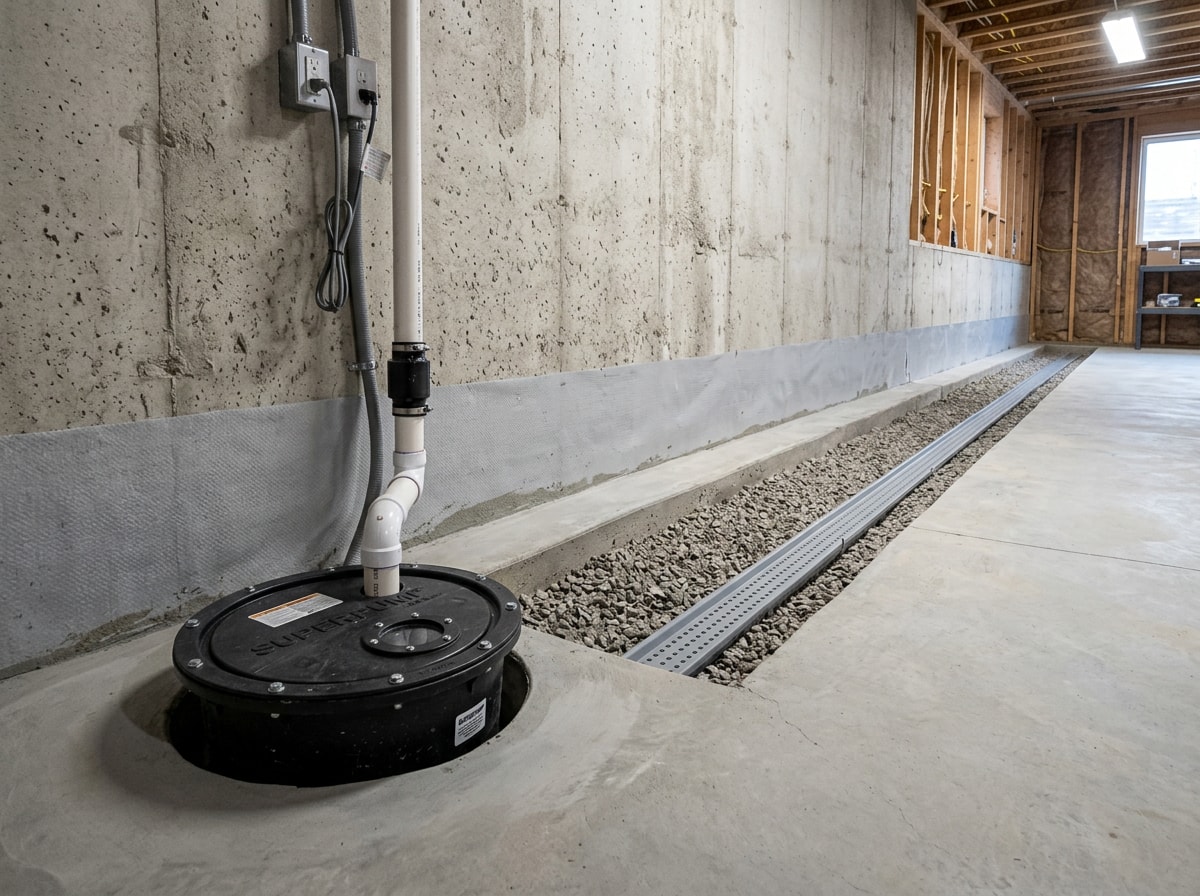
A basement waterproofing system typically targets active seepage, recurring water leaks, high humidity, and cracks around windows, doors, and walls that can threaten structural integrity over time. No system eliminates every risk, but a properly installed interior or exterior drainage system meaningfully reduces repeat water intrusion.
Why It's Worth Doing
Homeowners who waterproof after a flood usually notice lower humidity, fewer allergens, and a real reduction in repeat mold and structural issues. Keeping relative humidity controlled also matters for indoor air quality long after the drying equipment is gone, which is the exact point the EPA's mold guidance keeps coming back to: moisture control is the foundation of mold prevention, not an afterthought.
What the Process Looks Like
A typical waterproofing visit starts with an inspection to map leak points and drainage patterns, followed by sealing and interior or exterior drainage work. Most residential projects finish within a few days, though foundation type and scope affect the timeline. If moisture is a recurring issue rather than a one-time flood, pairing waterproofing with ongoing moisture control and ventilation adjustments closes the loop.
Flood Prevention Tips for DFW Homeowners
- Install a sump pump with a battery backup and test it seasonally. DFW's power outages during storms often coincide with the exact moments a pump is needed most.
- Check the float switch twice a year. It's the most common point of failure.
- Keep gutters clear and grading sloped away from the foundation.
- Ask about a water damage inspection before storm season if your basement has flooded before.
- If you've had a sewer backup once, assume it can happen again and talk to your insurance agent about an endorsement before the next storm, not after.
Homeowners in Fort Worth dealing with repeat below-grade flooding can also see our basement flood cleanup guide for Fort Worth for area-specific detail, and residents in Arlington, Plano, and Irving fall under the same regional soil and storm patterns.
Choosing a Professional Restoration Company
Not every crew that answers the phone at 2 a.m. is equipped to handle a below-grade loss correctly. Look for:
- IICRC-certified technicians, specifically trained in water damage restoration, not just general cleaning.
- True 24/7 dispatch, with a real person answering, not a voicemail queue.
- Direct insurance billing and documentation that matches what your adjuster needs.
- Structural drying equipment on the truck, not ordered after the first visit.
- Regional experience. Crews familiar with North Texas clay soil and storm patterns diagnose the cause faster instead of just treating the symptom.
Our teams serve the full Dallas Fort Worth Metro area, including Dallas and Fort Worth proper, and we've handled everything from a single wet corner after a heavy rain to full basement rebuilds after a sewer backup sat for days before anyone noticed. You can see examples of completed jobs on our projects page, and if mold has already started, our mold remediation team works the same job without a second company or a second delay.
Ready to get a crew out to assess the damage? Request a consultation and a technician will walk the space, classify the water, and give you a real scope before any work starts. For general questions about the company and service area, our homepage has the full list of what we cover.
FAQ
Is it safe to go into a flooded basement?
Not while the power is on. Water touching outlets, a furnace, a water heater, or extension cords creates a serious electrical hazard, so cut the breaker from a dry location first. Stay out entirely if the water smells like sewage. That's Category 3 water, and the CDC recommends protective equipment before any contact with contaminated floodwater.
How much does basement flood cleanup cost?
Costs scale with square footage and water category, from a simple pump-out at the low end to full Category 3 remediation with demolition at the high end. See the cost section above for the relative factors, then request an on-site estimate for an exact number.
Does insurance cover a flooded basement?
Sudden losses like a burst pipe are typically covered by a standard homeowner policy. Sewer backups usually need a separate sewer-and-drain endorsement, and groundwater or rising-water flooding requires standalone flood insurance. Even flood insurance has specific basement limits worth checking before a storm, not after.
How quickly can you respond to a flooded basement in Dallas-Fort Worth?
Reputable local crews offer 24/7/365 dispatch with arrival commitments often in the 60 to 90 minute range. Speed matters below grade, since standing water and trapped humidity accelerate mold growth faster than in above-ground rooms.
What's the difference between water mitigation and water damage restoration?
Mitigation is the immediate stop-the-bleeding phase: extraction, drying, and stabilizing the structure so damage doesn't spread. Restoration is everything after that, including demolition of unsalvageable materials, disinfection, and rebuilding the space to its pre-loss condition. Most jobs include both under one contract.
How long does it take to dry a flooded basement?
Longer than an upstairs room, because concrete and masonry hold moisture deep in their pores. A small, caught-early Category 1 loss might dry in a few days. A larger finished basement with saturated framing can take a week or more, confirmed by daily moisture readings rather than a visual check.