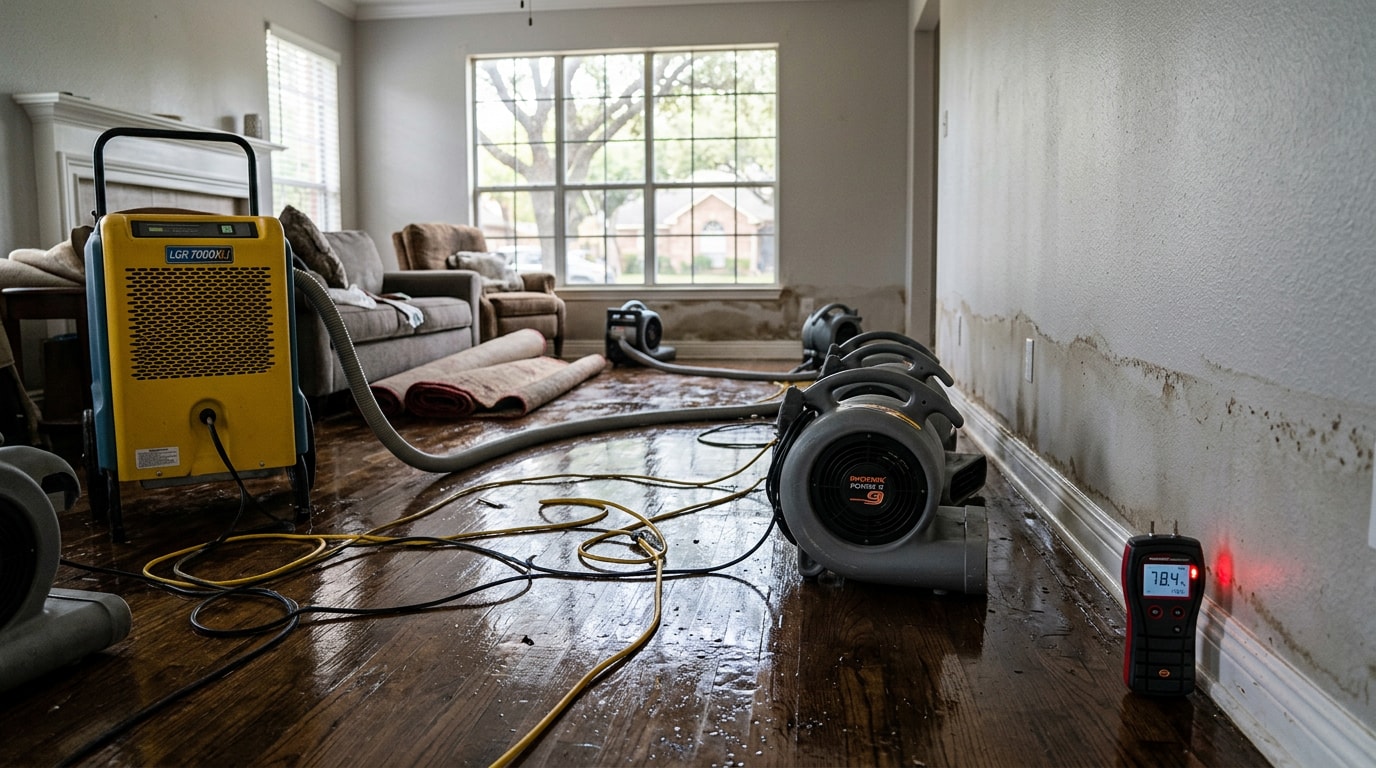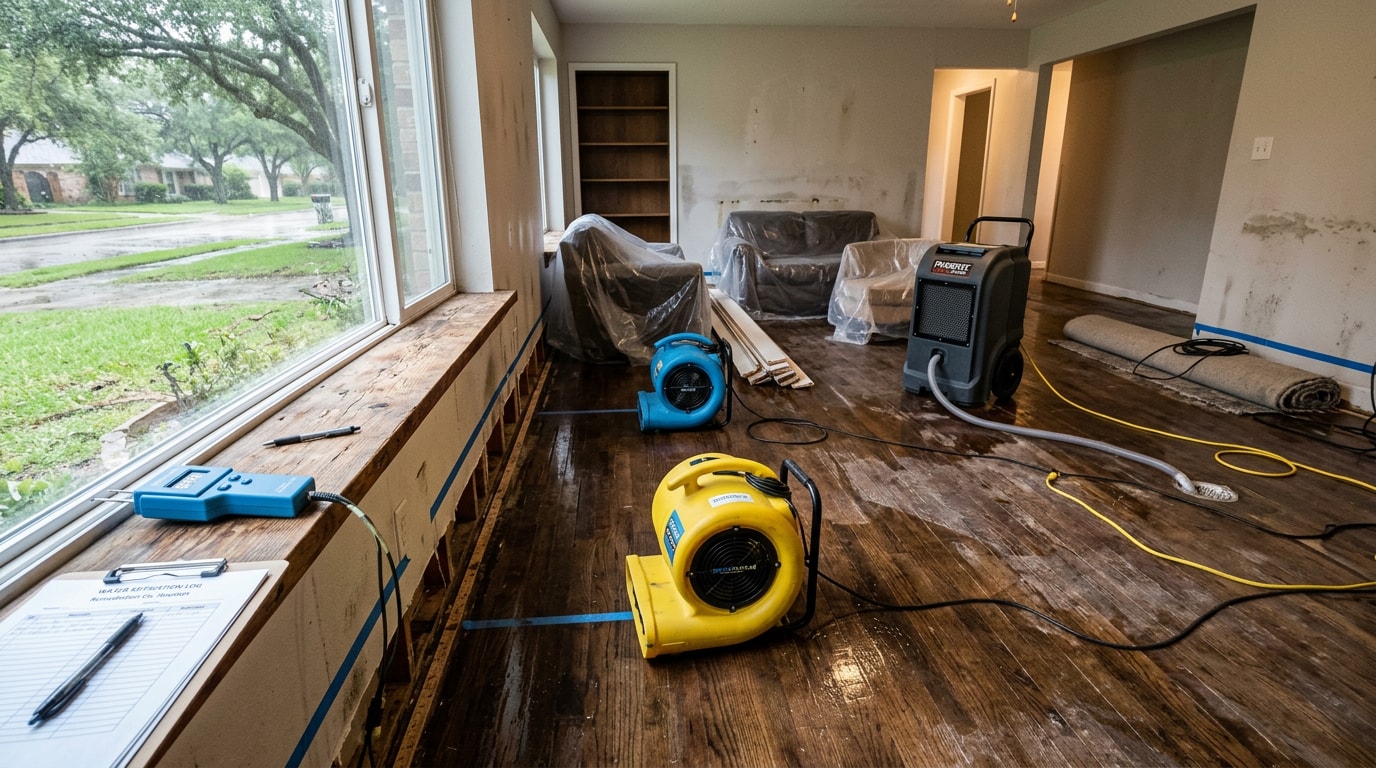

When a pipe bursts at 2 a.m. or a spring storm floods your crawl space, you need a water damage company Dallas Fort Worth Metro, TX homeowners can actually reach, not a voicemail. Water spreads fast, and every hour it sits untreated raises your repair bill and your mold risk. Here's what separates a crew that knows the Metroplex from one that's just passing through.
24/7 Emergency Water Damage Restoration in Dallas-Fort Worth
A reliable water damage company in DFW answers calls around the clock, with crews typically on-site within an hour or two. 24/7 emergency water damage response matters because burst pipes, storm intrusion, and sewage backups never check the calendar before they happen.
North Texas makes the stakes higher. In October 2026, flash flood warnings covered Fort Worth, Dallas, Denton, and Tarrant counties as storms dropped rainfall fast enough to overwhelm local drainage, with rates reaching 2 to 3 inches per hour in some spots. That kind of rainfall intensity is exactly why the National Weather Service's Fort Worth office tracks flood watches and warnings across the Metroplex year-round, and why a crew that understands this regional pattern responds with real urgency instead of a generic playbook.
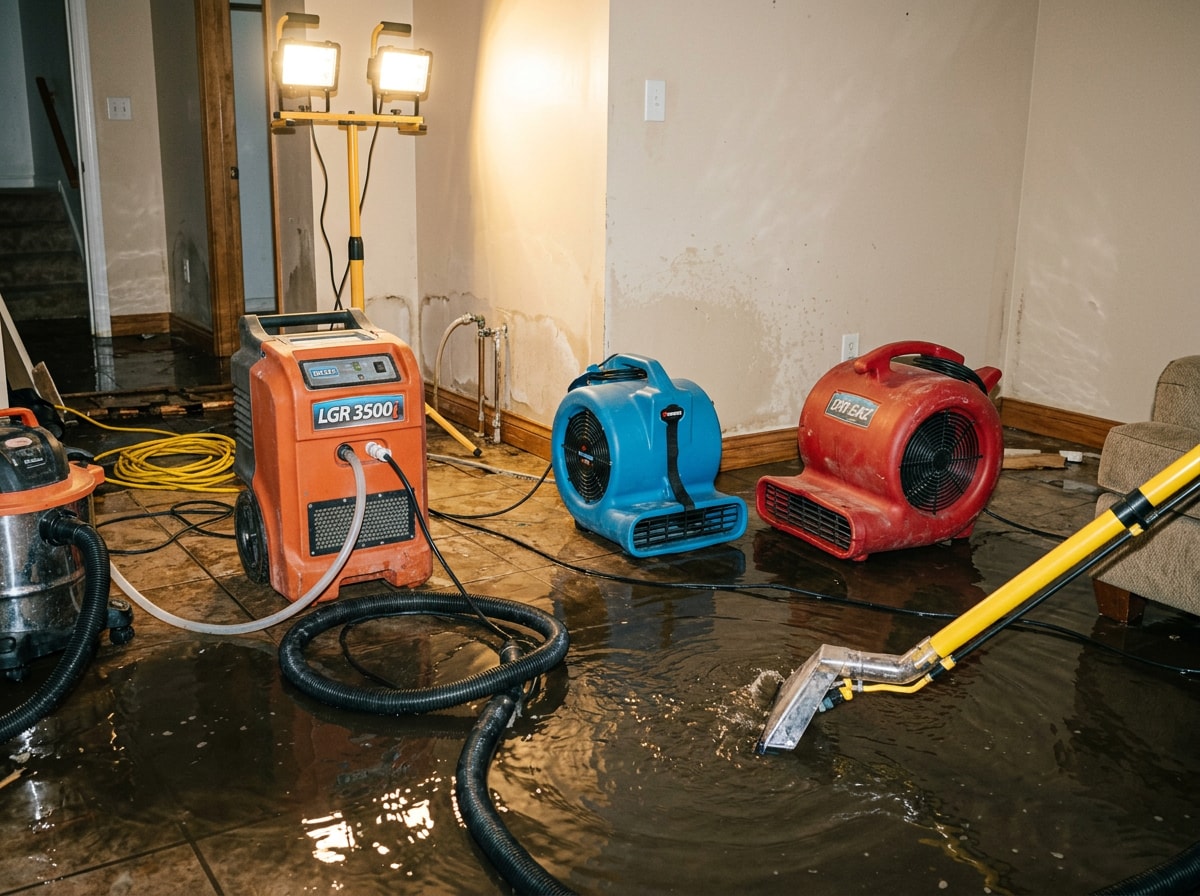
Fast emergency water cleanup limits structural damage and keeps a bad night from becoming a mold problem next month. For full details on how active losses are handled, see our water damage restoration services and our emergency water removal page, or get a free consultation if water is actively spreading right now.
Water Damage Warning Signs Homeowners Miss
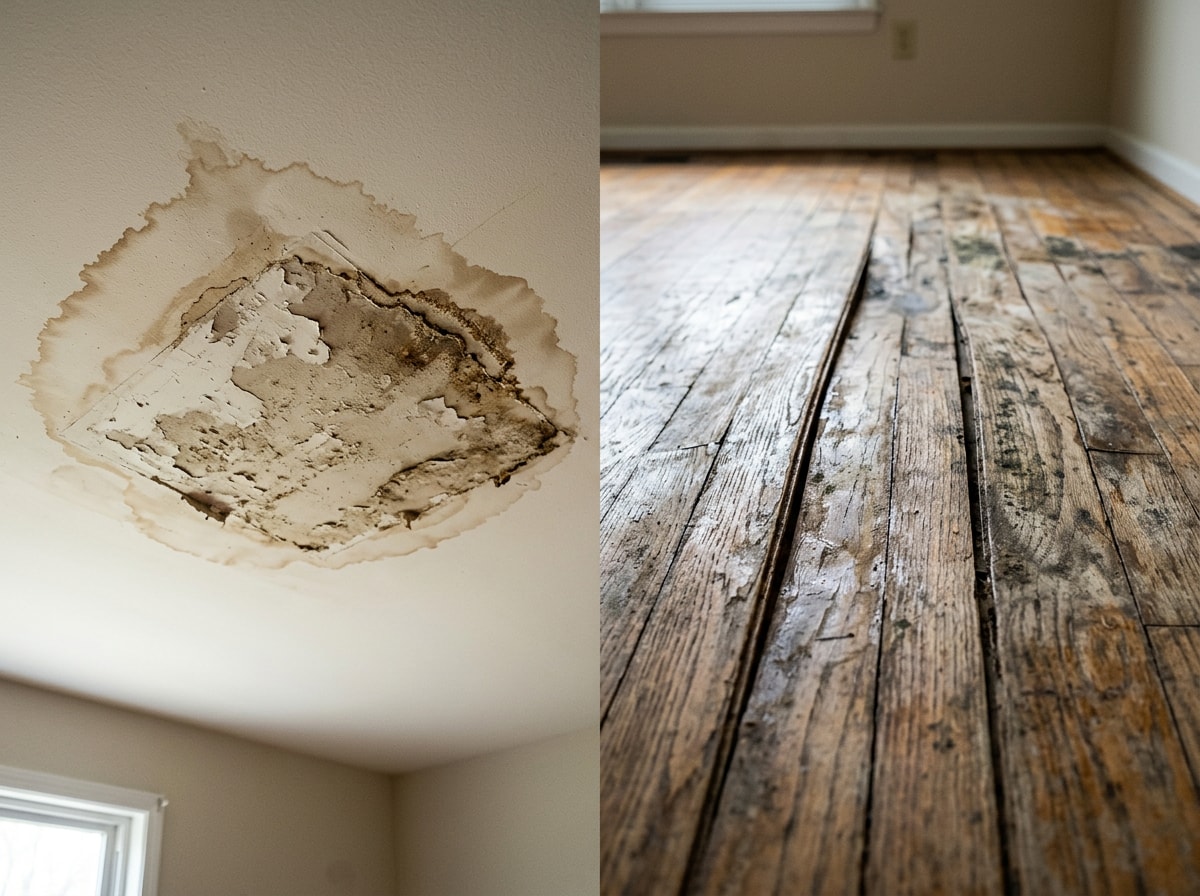
Signs of water damage include ceiling stains, musty odors, peeling paint, warped flooring, and unexplained spikes in your water bill. These indicators often show up before you ever notice standing water, which is why catching them early matters.
Hidden water damage tends to hide behind kitchen appliances, under bathroom fixtures, and inside walls near plumbing lines. DFW adds a regional wrinkle most generic checklists skip: expansive clay soil shifts with changes in moisture, which stresses slabs and the plumbing lines running beneath them. The Texas Department of Licensing and Regulation has documented how this shrink-swell behavior drives much of the state's residential foundation movement, and it's a common source of slab leaks that homeowners mistake for simple humidity or settling.
What to Do After Spotting Warning Signs
If you spot a warning sign, act in this order:
- Shut off the water source if it's safe to do so.
- Photograph the damage for your insurance records.
- Open windows or run a fan if conditions allow.
- Call a professional promptly, before the clock on mold resets.
Waiting even a day or two raises the mold risk significantly. The EPA's guidance on mold and moisture is blunt about the timeline: wet materials generally need to dry within 24 to 48 hours to prevent growth. If you suspect mold has already started, our mold remediation team can assess it alongside your water damage repair.
The Water Damage Restoration Process, Step by Step
A sound restoration process moves through clear stages, and skipping one usually means redoing work later:
- Inspection – locate the source and map how far moisture traveled.
- Categorization and classification – determine contamination level and drying difficulty.
- Extraction – remove standing water with pumps and truck-mounted equipment.
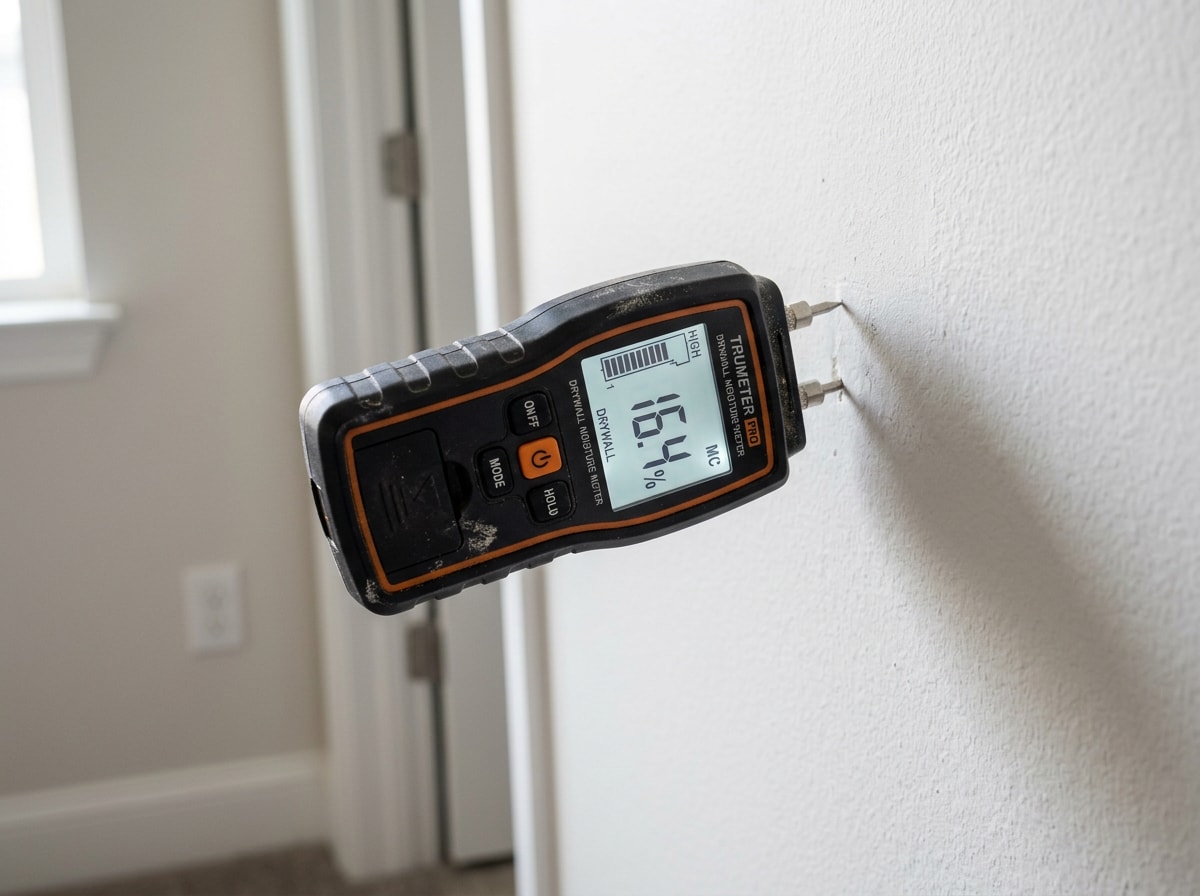
- Structural drying – deploy air movers and dehumidifiers, then verify with moisture meters.
- Repairs – rebuild drywall, flooring, and trim once drying is confirmed complete.
Structural drying crews don't just run equipment and leave. They verify moisture levels with meters before closing out the job, because a surface that feels dry can still be soaked inside a wall cavity. Learn more on our water damage restoration and structural drying services pages.
Water Damage Classification: Category and Class, Explained
Water damage classification actually involves two separate systems. Category measures contamination level. Class measures how hard the structure is to dry. These numbers are independent of each other, and confusing them is one of the most common ways a repair gets under-scoped.
| System | Measures | Levels |
|---|---|---|
| Category | Contamination | 1 (clean), 2 (gray), 3 (black) |
| Class | Drying difficulty | 1 (minimal), 2, 3, 4 (specialty materials) |
Both figures, drawn from the IICRC S500 standard, determine the safety precautions, equipment, and documentation your claim needs. A contractor who can't explain your category and class off the top of their head probably isn't following the standard closely.
Professional Water Damage Inspection Services
A professional inspection locates the source, maps how far moisture traveled, and classifies the damage before any cleanup begins. Moisture mapping often reveals that water has traveled into wall cavities or subfloors well beyond the visibly wet area, especially in DFW homes dealing with both clay-soil slab stress and fast-moving storms.
What's Included in a Water Damage Inspection
A thorough inspection covers:
- Visible and concealed moisture damage
- Mold risk flags behind walls and under flooring
- Secondary issues like drywall swelling or metal corrosion
- Documentation suitable for your insurance claim
This level of detail supports clean insurance documentation that adjusters can act on quickly, instead of a vague estimate that gets kicked back for more information. For drying-specific services, see our water damage inspection page.
Commercial Water Damage Restoration
Businesses and property managers face different stakes than homeowners: tenant safety, operational downtime, and lease obligations all come into play. Commercial restoration should prioritize minimizing downtime while producing clear documentation for the building's insurance carrier.
Whether you manage a single building or a multi-family portfolio, response needs to move fast and communicate clearly with tenants. If flooding has reached structural framing or multiple units, our flood damage repair page covers how larger-scale losses get scoped and rebuilt.
What to Look for in a Water Damage Company
Picking the right local water damage company comes down to a handful of concrete factors, not marketing copy:
- Direct insurance billing so you're not fronting the cost and waiting on reimbursement.
- IICRC-certified technicians who follow the S500 standard, not just a generic "we're certified" claim.
- Free on-site estimates before any work begins.
- Local crews who actually live and work in the Metroplex and know the difference between a 20-minute drive to Frisco and an hour in rush-hour traffic to Fort Worth.
- Photo documentation and a project history you can actually review, not just testimonials.
You can see examples of completed restoration work on our projects page, which shows the kind of documentation a legitimate claim should include. If you're comparing multiple quotes, our guide on flood remediation companies in Arlington, TX walks through red flags to watch for before signing anything.
What Water Damage Restoration Costs
Cost depends on three things: how much water category you're dealing with, how large the affected area is, and which materials got wet. A Category 1 leak caught within hours and limited to one room costs far less to dry than a Category 3 loss that's soaked carpet pad, drywall, and subfloor across multiple rooms.
Most homeowners policies cover the mitigation cost for sudden, accidental damage like a burst pipe, which is why direct insurance billing matters so much. The only way to get an accurate number for your specific situation is a free on-site estimate, since every structure, every material, and every category/class combination changes the scope.
Service Areas We Cover Across DFW
We serve the full Dallas Fort Worth Metro area, including Dallas, Fort Worth, Arlington, Plano, and Irving. If you're in Plano and dealing with recent storm flooding, our water flood damage guide for Plano homeowners covers what to expect from the claims process in your area specifically.
Whatever part of the Metroplex you're in, start with a free consultation rather than guessing at the scope yourself. For general information about our company, visit our homepage.
FAQ
Does Insurance Cover Water Damage Restoration?
Most homeowners policies cover sudden, accidental water damage like a burst pipe. Gradual leaks and flood water typically aren't covered and may require separate flood insurance, so check your policy's specific language.
What Should I Do Immediately After Water Damage Occurs?
Contact an emergency response team right away, avoid entering affected areas until they've been assessed for safety, and document the damage with photos before cleanup begins.
Do I Need a Water Damage Inspection If the Area Looks Small?
Yes. Water often travels beyond the visible wet spot through walls, floors, and ceilings, so a small surface area can hide much larger hidden spread underneath.
Is a Water Damage Inspection Necessary After a Storm?
Yes. Storm water can enter foundations, walls, and crawl spaces in ways that aren't immediately visible, making a post-storm inspection worthwhile even without standing water indoors.
How Long Does Water Damage Restoration Take?
A contained Category 1 loss in one room can dry in 3 to 5 days with proper equipment. Larger losses, multiple rooms, or Category 3 water can take one to two weeks or longer, including repairs.
How Much Does Water Damage Restoration Cost?
There's no single number. Cost scales with category, class, square footage, and materials affected. A free on-site estimate is the only reliable way to get a figure for your specific loss.